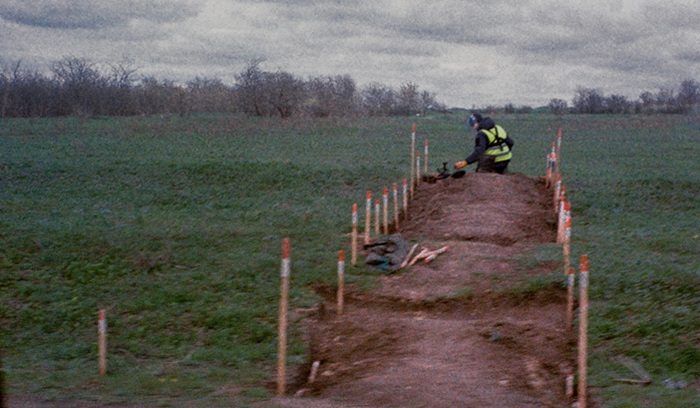
Croatia has officially declared its entire territory free of landmines, Interior Minister Davor Božinović announced in late February 2026. The milestone closes a painful chapter that began with the 1990s Homeland War and fulfills the country’s obligations under the international Ottawa Convention on anti-personnel mines. After 31 years of painstaking clearance work, every square kilometer of Croatian soil has been certified safe.
- Demining teams removed approximately 107,000 landmines and more than 407,000 pieces of unexploded ordnance across the country.
- The total cost of the national clearance effort reached an estimated 1.2 billion euros over three decades.
- The European Union contributed more than 100 million euros through its CROSS and CROSS II cohesion programs during the final clearance phases.
Croatia’s landmine clearance required decades of work in brutal terrain
The scale of contamination left behind after the Homeland War was staggering. Landmines and unexploded ordnance had been scattered across steep hillsides, dense forests, and remote rural areas that heavy machinery simply could not reach. Technicians and specially trained detection dogs had to survey these dangerous zones by hand, one painstaking meter at a time.
The Croatian Mine Action Centre coordinated the effort using comprehensive mapping systems and data-driven clearance strategies. State-of-the-art metal detectors and specialized equipment were deployed as technology improved over the decades. Every suspected area was meticulously surveyed and certified before it could be returned to public use.
The human cost of the contamination was real and lasting. Communities in affected regions lived for decades with restrictions on farming, movement, and access to forests and rivers. The announcement in February 2026 means those restrictions are now fully lifted, and residents can move freely across land their families have known for generations.
Croatia’s landmine-free declaration unlocks land for farming and wildlife
The clearance effort returns vast tracts of agricultural land to Croatian farmers, offering a major boost to rural economies that had been constrained since the 1990s. Fields that sat unused for a generation can now be cultivated again, and property values in previously contaminated regions are expected to rise. The government sees the economic recovery of these communities as a direct dividend of the demining investment.
Ecologists also stand to benefit. Large portions of Croatia’s protected natural areas overlapped with mined zones, limiting conservation work and restricting wildlife movement for decades. The European Environment Agency has documented how land restoration of this kind can dramatically accelerate the recovery of ecological networks, allowing plant and animal species to reclaim habitat without the threat of hidden explosives.
Tourism is another sector poised for growth. Croatia already draws millions of visitors each year to its Adriatic coast and national parks, and the complete clearance of previously inaccessible inland areas opens new terrain for hiking, cycling, and rural tourism. The government frames this not just as a logistical achievement but as a profound moral victory for a country that rebuilt itself from the ruins of conflict.
Croatia now offers a blueprint for mine-affected nations around the world
Dozens of countries still carry the deadly legacy of landmine contamination, from Cambodia and Angola to parts of Ukraine and the Western Balkans. Croatia’s structured, data-driven model — built around the Croatian Mine Action Centre’s mapping systems and international funding partnerships — demonstrates that even heavily contaminated territory can be fully restored. The International Campaign to Ban Landmines has highlighted Croatia’s approach as a model other nations can adapt to their own contexts.
The E.U.’s financial involvement through cohesion funding proved critical in accelerating the final phases of clearance. That partnership offers a template for how international institutions can help post-conflict states meet their humanitarian obligations under the Anti-Personnel Mine Ban Convention. Croatia signed that treaty in 1997 and has now fully honored its commitment, nearly three decades later.
The Croatian case also shows that patience and sustained political will matter as much as technology. Governments that treated demining as a long-term national priority — rather than a one-time emergency response — achieved the best results. Croatia’s 31-year effort stands as evidence that persistent, well-organized work can erase even the most deeply embedded remnants of war.
Land, safety, and restoration are at the heart of this story
Croatia’s achievement connects to a wider global movement to restore land to the communities and ecosystems that need it most. At COP30, Indigenous nations secured recognition of rights over 160 million hectares of land, a landmark moment that similarly links land restoration to justice and long-term sustainability. Off the coast of West Africa, Ghana established a new marine protected area at Cape Three Points, showing how deliberate policy can return fragile ecosystems to health. These stories are part of a pattern: when communities and governments make the long-term commitment to protect and restore land, the results can be extraordinary.
You can find more stories like these in the Good News for Humankind archive, sign up for the Good News for Humankind newsletter to get positive milestones delivered to your inbox, or explore the Antihero Project for deeper storytelling about the people driving change.
Sourcing
This story was generated by AI based on a template created by Peter Schulte. It was originally reported by Good News for Humankind.
More Good News
-

COP30 pledges recognition of 160 million hectares of Indigenous land rights
At the COP30 World Leaders Summit in Belém, Brazil in November 2025, 15 governments pledged to formally recognize Indigenous land rights over 160 million hectares by 2030 — an area the size of Iran — through the Intergovernmental Land Tenure Commitment. Brazil committed at least 59 million hectares. More than 35 donors renewed a $1.8 billion Forest and Land Tenure Pledge. The Tropical Forest Forever Facility secured nearly $7 billion, with 20% directed to Indigenous peoples. It was the largest Indigenous participation in COP history.
-

Ghana creates its first marine protected area to rescue depleted fish stocks
Ghana has declared its first marine protected area near Cape Three Points on the Gulf of Guinea, marking a historic step to reverse decades of overfishing. The protected zone aims to restore fish populations that have collapsed under pressure from industrial trawling and illegal fishing. The decision supports 2.7 million Ghanaians whose livelihoods depend on healthy coastal fisheries and aligns Ghana with the global goal of protecting 30 percent of the world’s oceans by 2030.
-

U.S. researchers cut Alzheimer’s risk by half in first-ever prevention trial
For the first time, researchers have evidence that removing amyloid plaques from the brain before symptoms appear can cut Alzheimer’s risk by roughly half. A clinical trial published in The Lancet Neurology, led by Washington University School of Medicine in St. Louis, found that long-term treatment with the antibody drug gantenerumab significantly delayed dementia onset in people with a rare genetic form of the disease. The findings provide the clearest signal yet that intervening years before symptoms emerge can change the course of Alzheimer’s disease.