
At a glance
- Wildlife overpass: The Greenland structure measures approximately 200 feet wide and 209 feet long, making it the largest wildlife overpass in the world upon completion.
- Habitat connectivity: The crossing links around 39,000 acres of conserved land in Douglas County with more than one million acres of Pike National Forest.
- Collision reduction: As part of an 18-mile network of crossings and fencing along I-25, the project is projected to cut wildlife-vehicle collisions by up to 90 percent.
Why this stretch of highway needed a solution
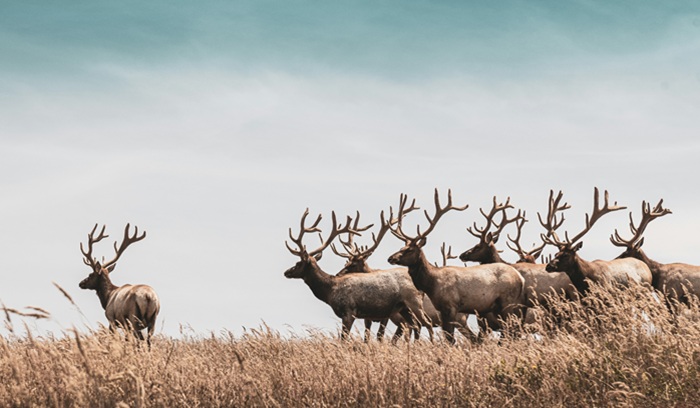
Interstate 25 between Denver and Colorado Springs cuts directly through land that elk, pronghorn, and mule deer have crossed for generations. The highway didn’t erase those instincts. It just made acting on them deadly. One collision per day is the current average along this section of I-25. That toll falls on both animals and drivers. Wildlife crossings have a strong track record of reducing that number dramatically — studies from the National Park Service and transportation agencies across North America consistently show reductions of 80 to 95 percent where crossing infrastructure is paired with guiding fences. The Greenland overpass is designed with that behavioral research in mind. Elk and pronghorn are open-country animals. They avoid confined spaces, which is why tunnels and underpasses often go unused by large ungulates. An overpass nearly 200 feet wide, covered in native vegetation and gently sloped, reads to these animals as an extension of the landscape — not an obstacle.A $15 million project halfway to the finish line
Construction reached its halfway point in mid-2025. Piers, girders, and primary structural elements are in place. The remaining work — deck, landscaping, and perimeter fencing — is on track to wrap up by December 2025, on time and within the Colorado Department of Transportation’s $15 million budget. That price tag is significant context. Fifteen million dollars sounds large. But a single serious wildlife-vehicle collision involving a large animal can cost tens of thousands in vehicle damage, emergency response, and medical care — not counting the animal. Across hundreds of collisions annually, the math shifts quickly. The overpass is also one piece of a larger system. Eighteen miles of coordinated infrastructure — crossings, underpasses, and directional fencing — channel wildlife toward safe crossing points rather than leaving movement to chance.Connecting a million acres of wild land
The ecological stakes go well beyond collision statistics. Highways don’t just create danger at the point of crossing. They fracture populations. Animals separated by a busy road can’t interbreed, can’t follow shifting food sources, can’t respond to drought or fire by moving to new range. Over decades, that isolation reduces genetic diversity and population resilience. The Greenland overpass stitches together 39,000 acres of conserved land on one side with over a million acres of Pike National Forest on the other. That’s not a minor restoration — it’s a meaningful reconnection of a functioning migration system. Colorado already has more than 100 wildlife crossing structures statewide. This overpass is its first attempt at bridging a fragmented habitat at this scale. It draws on lessons from Banff National Park in Canada, where wildlife crossings built in the 1990s have been used by wolves, bears, cougars, elk, and dozens of other species — and have been studied long enough to show real population-level benefits. Similar projects in Utah and elsewhere across the American West have followed Banff’s lead. Colorado’s Greenland overpass adds to that growing body of evidence. This kind of thinking about land and connectivity echoes work happening in other corners of the world. Indigenous communities fighting for land rights recognition ahead of COP30 are making a similar argument: that protecting and connecting large landscapes matters for everything living within them. And marine efforts like Ghana’s new marine protected area at Cape Three Points show that the impulse to set aside space for wildlife — on land or at sea — is gaining real momentum globally.What still needs watching
Wildlife crossings work best when the land on either side remains intact. Development pressure in Douglas County — one of Colorado’s fastest-growing areas — means the conserved land the overpass is meant to connect could face future fragmentation. The overpass itself is a fixed structure. The habitat it depends on is not. There’s also the question of which species actually use it. Elk and pronghorn are the primary targets. Whether mountain lions, black bears, or smaller mammals adopt the structure at meaningful rates will take years of monitoring to determine. Research published in Scientific Reports shows that camera trap monitoring over multiple years is typically needed before crossing effectiveness can be fully assessed. Colorado’s investment here is real and significant. What comes next — on both the ecological and the political side — will determine how much of that investment pays off.Read more
For more from Good News for Humankind, see:
- Indigenous land rights and 160 million hectares ahead of COP30
- Ghana’s new marine protected area at Cape Three Points
- The Good News for Humankind archive on wildlife
About this article
- 🤖 This article is AI-generated, based on a framework created by Peter Schulte.
- 🌍 It aims to be inspirational but clear-eyed, accurate, and evidence-based, and grounded in care for the Earth, peace and belonging for all, and human evolution.
- 💬 Leave your notes and suggestions in the comments — I will do my best to review and implement where appropriate and possible.
- 📬 One verified piece of good news, one insight from Antihero Project, every weekday morning. Subscribe free.
More Good News
-
COP30 pledges recognition of 160 million hectares of Indigenous land rights
At the COP30 World Leaders Summit in Belém, Brazil in November 2025, 15 governments pledged to formally recognize Indigenous land rights over 160 million hectares by 2030 — an area the size of Iran — through the Intergovernmental Land Tenure Commitment. Brazil committed at least 59 million hectares. More than 35 donors renewed a $1.8 billion Forest and Land Tenure Pledge. The Tropical Forest Forever Facility secured nearly $7 billion, with 20% directed to Indigenous peoples. It was the largest Indigenous participation in COP history.
-
Ghana creates its first marine protected area to rescue depleted fish stocks
Ghana has declared its first marine protected area near Cape Three Points on the Gulf of Guinea, marking a historic step to reverse decades of overfishing. The protected zone aims to restore fish populations that have collapsed under pressure from industrial trawling and illegal fishing. The decision supports 2.7 million Ghanaians whose livelihoods depend on healthy coastal fisheries and aligns Ghana with the global goal of protecting 30 percent of the world’s oceans by 2030.
-

U.S. researchers cut Alzheimer’s risk by half in first-ever prevention trial
For the first time, researchers have evidence that removing amyloid plaques from the brain before symptoms appear can cut Alzheimer’s risk by roughly half. A clinical trial published in The Lancet Neurology, led by Washington University School of Medicine in St. Louis, found that long-term treatment with the antibody drug gantenerumab significantly delayed dementia onset in people with a rare genetic form of the disease. The findings provide the clearest signal yet that intervening years before symptoms emerge can change the course of Alzheimer’s disease.
