
Workers with California’s Department of Water Resources broke through a century-old levee at Lookout Slough in Solano County, letting tidal waters flow across 3,400 acres of land for the first time in 100 years. The project — a public-private effort spanning years of planning and construction — has been called the largest tidal habitat restoration in California history, and it signals a meaningful shift in how the state manages water, wildlife, and flood risk at the same time.
At a glance
- Tidal habitat restoration: A backhoe loader removed 600 feet of dirt from an old levee in the Sacramento-San Joaquin Delta, the first of nine planned breaches set to be completed in October.
- Flood storage capacity: Lookout Slough will add more than 40,000 acre-feet of water storage to the Yolo Bypass, helping protect Sacramento-area communities during heavy rain events.
- Delta smelt habitat: The restored slough will provide critical habitat for salmon and the endangered Delta smelt, a small fish that serves as an early warning indicator for the health of the entire food web.
A flood plain with a long history
The Yolo Bypass stretches 40 miles between Sacramento and Rio Vista. It is a massive flood plain designed to absorb overflow from the Sacramento River during wet winters, keeping water away from homes and urban infrastructure. A 1,920-foot-long weir with 48 gates controls how much water enters the bypass — and until recently, the land inside it was used largely for agriculture and duck hunting.
That use came at a cost. Before European settlement and the levee-building that followed, the Sacramento Valley’s rivers flooded naturally each rainy season, nourishing wetlands and the creatures that depended on them. “We built a bunch of levees for agriculture and for people to live and we’ve been redirecting the water,” said Sabrina Washington, a spokesperson for the Department of Water Resources. “Now, what DWR has been doing is removing some of those levees in order to restore habitat, where habitat had originally been.”
In practice, that history of redirection left some farmland at the Lookout Slough site waterlogged and unusable anyway — the old levee was already letting water seep through. The new project replaces it with a 3-mile-long, 25-foot-tall levee set farther back from the water, engineered to prevent seepage while giving the tidal zone room to function naturally.
Why the Delta smelt matters
Much of the ecological case for this project rests on species most people have never seen. The Delta smelt is a slender fish, a few inches long, that lives nowhere else on Earth. It sits near the base of the food web, and its numbers have collapsed over the past few decades alongside the degradation of its habitat.
Charlotte Biggs, the Department of Water Resources’ lead on the project, put it plainly: “Bigger fish depend on them.” When the base of a food web collapses, the effects ripple upward. “It’s the first indicator of your food web crashing when your base is crashing,” she said. Restoring tidal marsh gives the smelt the shallow, sediment-rich water it needs — and gives salmon better migration conditions through the Delta as well.
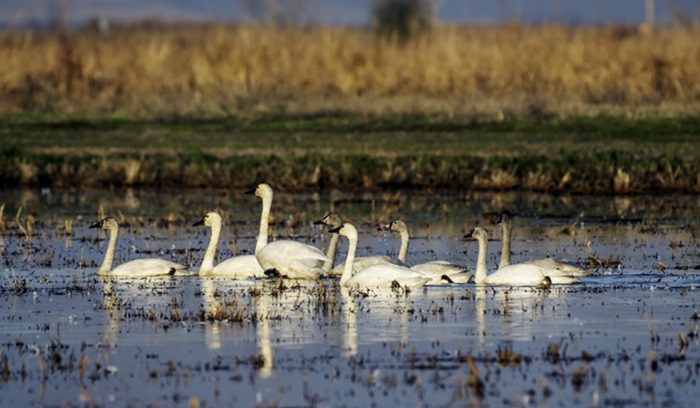
The Yolo Bypass is also a key stop on the Pacific Flyway, the migratory route that carries millions of birds along the West Coast each year. Engineers kept portions of the old levee intact to create small islands of higher ground for waterfowl — a deliberate design choice that reflects how carefully the project tried to balance competing ecological needs.
What comes next
Construction began in June 2022 C.E. The first levee breach happened in 2024 C.E., and eight more breaches are planned before October. Once the project is fully complete, Lookout Slough is expected to open for public recreation — fishing, birdwatching, and wildlife viewing on what was until recently private farmland.
Wade Crowfoot, California’s natural resources secretary, called the Delta “a biodiversity hotspot where we’re making progress on a large scale to restore natural habitat for fish and wildlife.” State officials say the project is one piece of a larger restoration push they plan to build on in coming years.
It is worth keeping the full picture in mind. The Sacramento-San Joaquin Delta faces enormous and competing pressures — from agriculture, urban water supply, sea level rise, and drought — and no single project resolves those tensions. The Delta smelt remains critically endangered, and its recovery will require sustained effort well beyond this milestone. But breaking a levee to let the tide back in is, in the most literal sense, a start.
Projects like Lookout Slough reflect a growing recognition — in California and in wetland restoration work worldwide — that working with natural water systems often does more good than fighting them. The land was wetland before it was farmland. Letting it become wetland again turns out to be good for fish, good for birds, and good for the people who live downstream.
Read more
For more on this story, see: SFGATE
For more from Good News for Humankind, see:
- China tears out 300 dams on a Yangtze tributary to bring back endangered fish
- Australia to set aside at least 30% of its land mass to protect endangered species
- The Good News for Humankind archive on marine conservation
- Fresh water: the wins protecting rivers, aquifers, and access to clean water
About this article
- 🤖 This article is AI-generated, based on a framework created by Peter Schulte.
- 🌍 It aims to be inspirational but clear-eyed, accurate, and evidence-based, and grounded in care for the Earth, peace and belonging for all, and human evolution.
- 💬 Leave your notes and suggestions in the comments below — I will do my best to review and implement where appropriate.
- ✉️ One verified piece of good news, one insight from Antihero Project, every weekday morning. Subscribe free.


