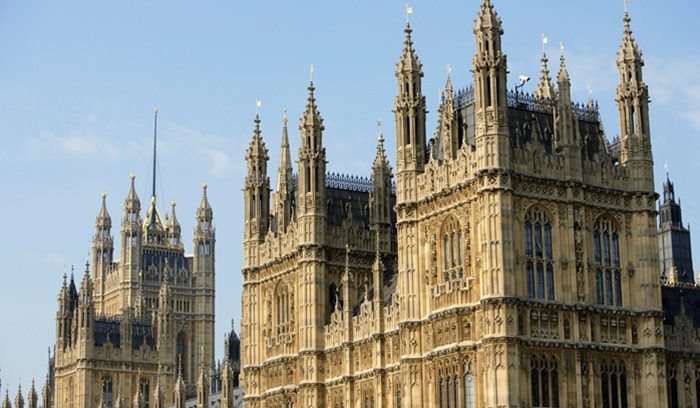
For the first time in seven centuries, no one sits in the British Parliament solely because of the family they were born into. The House of Lords (Hereditary Peers) Act, which received Royal Assent in November 2024 C.E., removed the final 92 hereditary peers from the upper chamber — closing a chapter that began when Edward III first granted nobles the right to pass their seats to their sons in the 14th century C.E.
At a glance
- Hereditary peers reform: The House of Lords (Hereditary Peers) Act 2024 C.E. abolished the remaining 92 seats reserved for hereditary peers, the last remnant of a system dating to the 1300s C.E.
- Prior reform: The House of Lords Act 1999 C.E. under Tony Blair removed most hereditary peers — around 600 — but kept 92 as a temporary compromise that lasted 25 years.
- Elected chamber ahead: The Labour government under Keir Starmer has framed this as the first step in broader Lords reform, with longer-term plans to move toward a more democratically elected or appointed upper house.
A compromise that outlasted its welcome
The 1999 C.E. reform was genuinely historic, but it left an asterisk. To win enough support to pass, the Blair government agreed to keep 92 hereditary peers as a “placeholder” until a fuller reform could follow. That fuller reform never came — until now.
Those 92 seats were not simply held passively. When a hereditary peer died or resigned, the vacancy was filled by a by-election open only to other hereditary peers — a process that critics called constitutionally absurd. In one case, a replacement peer was elected by a pool of just three eligible voters.
The new law ends that system entirely. The Lords now consists of life peers appointed on merit, expertise, or political service — still imperfect, and still unelected, but no longer granting legislative power by birthright.
What the reform actually changes
The practical effect on day-to-day lawmaking may be modest. Hereditary peers made up a small fraction of an 800-member chamber. But the symbolic weight is enormous.
The House of Lords (Hereditary Peers) Act 2024 C.E. marks the formal severance of a direct, unbroken link between aristocratic land tenure and national legislative power — a link that stretched from medieval England through the British Empire and into the modern democratic era.
Women, who were excluded from hereditary peerages almost entirely, were disproportionately affected by the old system’s persistence. The removal of hereditary peers slightly improves the gender balance of the chamber, though women still hold fewer than 30 percent of Lords seats overall.
Part of a longer arc
British democratic reform has rarely moved in a straight line. The Great Reform Act of 1832 C.E., the expansion of the franchise in 1867 C.E. and 1918 C.E., the Parliament Acts of 1911 C.E. and 1949 C.E. limiting Lords veto power — each step took decades of pressure to achieve and left unfinished business behind it.
This reform fits that pattern. The government has signaled intentions to go further — potentially replacing the Lords with an elected or regionally representative body — but no firm timeline exists. Critics across the political spectrum disagree sharply about what the upper chamber should ultimately look like. Some want full election; others argue that an appointed chamber of independent experts serves democracy better than a politicized elected one.
What’s not in dispute is what ended. The House of Lords no longer contains anyone whose right to shape British law descends from a title handed down through centuries of inheritance. That is a meaningful, measurable change — even if the work of building a fully democratic second chamber is far from done.
Why it matters beyond Britain
Hereditary legislative privilege is rarer than it once was, but it hasn’t vanished from the world. Several countries maintain upper chambers or advisory bodies with seats tied to traditional lineage or royal appointment. Britain’s reform adds weight to the global argument that democratic legitimacy requires something more than bloodline.
It also matters as a reminder that long-standing institutional arrangements — ones that seem permanent simply because they are old — can change. The 92 remaining hereditary peers had held their seats for 25 years after the 1999 C.E. reform. The fact that an anomaly persists for a generation does not mean it persists forever.
For more on the democratic reform landscape, see the Good News for Humankind archive on democracy.
Read more
For more on this story, see: Good News for Humankind
For more from Good News for Humankind, see:
- Ghana establishes a landmark marine protected area at Cape Three Points
- Alzheimer’s risk cut in half by drug in landmark prevention trial
- The Good News for Humankind archive on democracy
About this article
- 🤖 This article is AI-generated, based on a framework created by Peter Schulte.
- 🌍 It aims to be inspirational but clear-eyed, accurate, and evidence-based, and grounded in care for the Earth, peace and belonging for all, and human evolution.
- 💬 Leave your notes and suggestions in the comments below — I will do my best to review and implement where appropriate.
- ✉️ One verified piece of good news, one insight from Antihero Project, every weekday morning. Subscribe free.