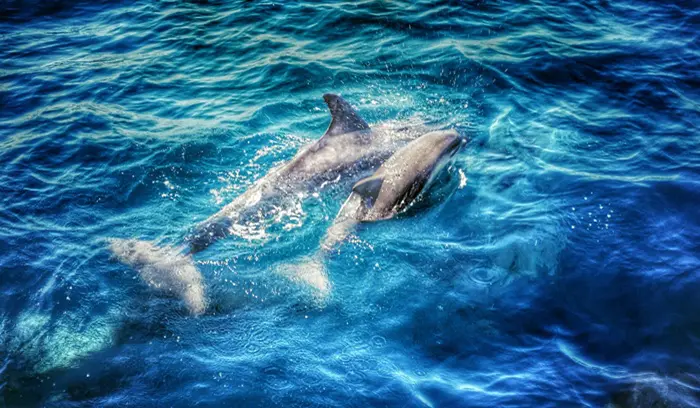
Brazil’s federal government has established a major new coastal reserve in the state of Rio Grande do Sul, officially protecting 110,000 hectares — roughly 271,000 acres — of marine and coastal ecosystems along the South Atlantic. The presidential decree creates a federally recognized “Sustainable Use” reserve that shields one of the most biologically rich stretches of shoreline in the Southern Hemisphere from industrial development, illegal fishing, and urban sprawl. For the roughly 600 remaining Lahille’s bottlenose dolphins that call this coastline home, the decision could mean the difference between survival and extinction.
- The new reserve covers 110,000 hectares in Rio Grande do Sul, Brazil’s southernmost state, protecting both coastal and marine ecosystems.
- The Lahille’s bottlenose dolphin — one of the rarest small cetaceans on Earth — has a global population of only 600 individuals, many of which depend on this coastline.
- The protected dunes and beaches also contain Pleistocene-era fossils of giant ground sloths and glyptodonts, some dating back 10,000 years.
Brazil coastal protection brings hope for one of the world’s rarest dolphins
The Lahille’s bottlenose dolphin lives in small, isolated groups that rarely stray far from shore, which makes them unusually vulnerable to human activity. Federal biologists from the Chico Mendes Institute for Biodiversity Conservation (ICMBio) have tracked these dolphin pods for more than 15 years. Their data consistently showed that without swift legal protection, the local population could vanish within a single generation.
The “Sustainable Use” designation is a carefully designed compromise. It bans the large industrial fishing nets that frequently trap and drown dolphins while allowing small-scale artisanal fishing to continue. This approach protects the species without cutting off the livelihoods of families who have fished these waters for generations.
The reserve also creates a safe travel corridor between the dolphins’ feeding and breeding grounds. Because these animals stay close to the coast, even a narrow, well-managed protected strip of ocean can have an outsized effect on their long-term survival.
Ancient fossils and living ecosystems now under federal protection
The Taim region, which sits at the heart of the new reserve, holds one of the most significant Pleistocene fossil records in the Southern Hemisphere. Storms regularly expose the remains of giant ground sloths — animals that once stood 10 feet tall — and glyptodonts, armored creatures roughly the size of small cars. Before this decree, private collectors frequently raided these sites to sell rare bones on the black market.
The new regulations establish strict protocols for scientific access to fossil sites. Professional paleontologists can now conduct organized excavations, helping researchers understand how the climate of South America shifted over thousands of years. These findings also give local communities a public educational resource that had previously been vulnerable to theft and exploitation.
Above the sand, the living ecosystem is equally rich. Healthy seagrass beds and coastal dunes act as nurseries for dozens of fish species that local families depend on for food. Migratory birds from across the hemisphere converge on the reserve’s lagoons each season, supporting a growing nature-based tourism economy that creates sustainable jobs for guides, small business owners, and researchers.
Enforcement and the path to lasting impact
Conservationists are celebrating the decree while remaining clear-eyed about the work ahead. A federal law only delivers results if it is backed by adequate funding, personnel, and monitoring. ICMBio will need sufficient resources to patrol more than 425 square miles of territory, and illegal fishing remains a persistent threat during peak seasons for high-value species.
To strengthen enforcement, the Brazilian government is coordinating with the global 30×30 initiative — the international commitment to protect 30 percent of the planet’s land and ocean by 2030 — to secure funding for drones and satellite monitoring technology. This data-driven approach is designed to ensure that the protection written into the decree translates into real outcomes on the water.
Agricultural runoff from neighboring areas also poses a risk to water quality within the reserve. Federal agencies are working with regional stakeholders to address chemical contamination before it undermines the gains made by the new boundaries. The goal is a reserve that functions as a genuinely healthy ecosystem, not just a line on a map.
A blueprint other nations can follow
The creation of this reserve took roughly two decades of sustained advocacy from environmental scientists, local communities, and conservation organizations. That persistence paid off in a policy that balances ecological protection with human economic need — a model that other South American coastal nations are now watching closely.
Brazil is home to some of the most biologically diverse regions on Earth, and its policy choices carry weight far beyond its own borders. By proving that a “Sustainable Use” zone can function alongside existing industries, the country is demonstrating that coastal protection and economic activity are not mutually exclusive. As the world works toward its 2030 ocean protection goals, this reserve adds meaningful momentum to that effort.
The original reporting from Mongabay notes that the reserve represents one of the most significant marine conservation actions in southern Brazil in years. For the Lahille’s bottlenose dolphin, a species that has been quietly disappearing from the world’s waters, it is an overdue and potentially lifesaving intervention.
More victories for the ocean, from South America to West Africa
Brazil’s new coastal reserve is part of a larger wave of ocean protection gaining momentum around the world. Ghana recently established a new marine protected area at Cape Three Points, showing that coastal nations across the Global South are stepping up to defend their waters. Closer to Brazil, Indigenous communities are pushing for recognition of 160 million hectares of land ahead of COP30 — a reminder that durable conservation is most powerful when it centers the people who have lived alongside these ecosystems for generations. For more stories like these, explore the full Good News for Humankind archive, sign up for the daily newsletter, or learn how creative storytelling drives change through the Antihero Project.
Sourcing
This story was generated by AI based on a template created by Peter Schulte. It was originally reported by Mongabay.
More Good News
-
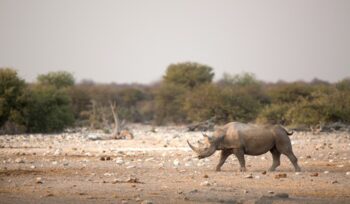
Rhinos return to Uganda’s wild after 43 years in landmark conservation milestone
For the first time in 43 years, wild rhinos are roaming Uganda again. After poaching wiped out the population in the early 1980s, conservation authorities have successfully reintroduced rhinos into Kidepo Valley National Park — the result of decades of breeding, community engagement, and anti-poaching work. The milestone is one of Africa’s most significant wildlife recovery achievements in recent memory and offers a model for rewilding efforts across the continent.
-
UK cancer death rates fall to lowest level ever recorded in historic milestone
Cancer death rates in the United Kingdom have fallen to their lowest level ever recorded, Cancer Research UK announced in March 2026. Decades of investment in screening programs, early detection, and new treatments are behind the milestone. Despite the progress, researchers warn that geographic and socioeconomic inequalities in cancer outcomes remain significant, and that sustained funding and equitable access to care will be essential to drive further gains.
-
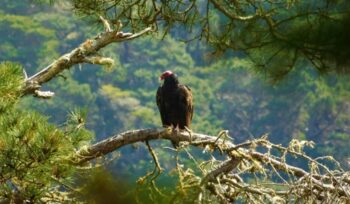
California condors nest on Yurok land in Pacific Northwest for first time in over a century
California condors are nesting in the Pacific Northwest for the first time in more than a century, confirmed on Yurok Tribe territory in Northern California. The Yurok, who regard condors as sacred relatives, launched their restoration program in 2003 and released the first birds in 2022. The nesting confirmation marks a milestone for both species recovery and Indigenous-led conservation, showing that when Native peoples lead ecological restoration on their own lands, the results can be extraordinary.