
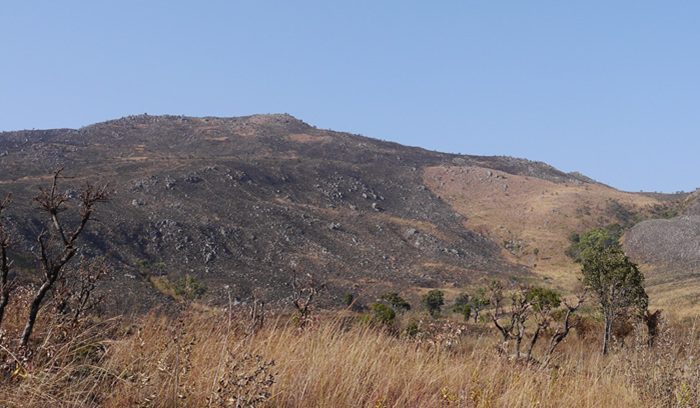
Angola has formally declared its highest mountain and the threatened forests surrounding it a protected conservation area, offering a lifeline to rare bird species found nowhere else on Earth. The Serra do Moco Conservation Area, gazetted in April 2026 C.E., covers around 22,000 hectares (54,000 acres) of elevation, slopes, and valleys in Huambo province — encompassing every zone where the mountain’s unique Afromontane forests can potentially grow.
At a glance
- Serra do Moco Conservation Area: Angola’s government published the official protection notice on April 9, 2026 C.E., placing the entire Mount Moco complex under a special regime of environmental protection, biodiversity conservation, and sustainable use.
- Afromontane forest restoration: More than 8,000 native trees from nine species have already been planted across three valleys, and bird species not previously recorded at restoration sites — including Cabanis’s greenbul — are now resident there.
- Swiestra’s francolin: The declaration is a critical win for this partridge-like bird unique to western Angola, whose tiny and declining population depends almost entirely on the forests of Mount Moco.
A mountain long separated from the world
Mount Moco sits in geological and biological isolation. Its Afromontane forests — patches of highland woodland shared across East and southern Africa’s mountain chains — have been cut off from other such regions for millennia. That isolation shaped a wildlife community unlike anything found elsewhere: birds, plants, and insects that evolved in place, adapted to one specific mountain and nowhere else.
The forests paid a steep price over the past half-century. From a historical extent of 200–300 hectares (roughly 500–750 acres), they shrank to just 50–60 hectares (about 120–150 acres) by the time conservation work began in earnest. Timber harvesting and wildfires were the primary drivers — and local communities, who depended on the mountain for fuel and building materials, were caught between need and loss.
Ornithologist Michael Mills has worked at the foot of Mount Moco since 2011 C.E., partnering with residents of Kanjonde village to change that dynamic. What he found was not resistance but willingness — a community that understood what the forest meant and wanted tools to protect it.
What the community built before the government arrived
The restoration work at Moco preceded the formal conservation declaration by more than a decade. The Kissama Foundation, an Angolan NGO whose work is funded by the U.K.-based World Land Trust, supplied most Kanjonde households with gas cylinders and stoves to reduce dependence on wood fuel. Weekly training sessions on sustainable harvesting practices followed.
Each year, villagers help defend the surviving and replanted forest patches from fire. The result is measurable: species returning to places they had not been recorded before, and a forest beginning, slowly, to expand again.
“The news that the government of Angola has now moved to give the mountain formal protected area status is a moment for real celebration and congratulations,” said Nigel Collar, a conservation biologist with BirdLife International, which had been documenting the plight of Moco’s plants and animals since the 1980s C.E.
What the protection covers — and what it leaves open
The government notice establishes a strict framework. Hunting, fishing, and most forms of resource extraction are prohibited within the conservation area, except for scientific purposes or strategic state activities. At the same time, local communities retain the right to “controlled and limited use of natural resources to meet their needs” — a carve-out that acknowledges the mountain’s human geography.
Vladimir Russo, executive director of the Kissama Foundation, sees the formal designation as an opening rather than a conclusion. “We can now engage formally with the local communities and government authorities about the core designated environmental conservation area and how we’re going to compensate [villagers] for giving up certain activities,” he told Mongabay.
That question of compensation remains unresolved. Communities near protected areas frequently bear real economic costs — restricted access to land they have relied on for generations — while the conservation benefits accrue more broadly. The Serra do Moco framework acknowledges this tension but does not yet fully resolve it.
A win measured in birds
For conservation biologists, one species gives the declaration particular weight. Swiestra’s francolin (Pternistis swierstrai) is a ground-dwelling bird endemic to the highlands of western Angola. Its global population is small, its habitat narrow, and its numbers falling. The Serra do Moco Conservation Area now covers the core of what remains.
Collar noted that the francolin’s protection is not the only gain. The mountain shelters a full suite of Afromontane species — plants, insects, and birds — whose survival is now tied to how well the conservation area is managed and enforced in the years ahead.
Angola is a country where conservation infrastructure is still rebuilding after decades of civil conflict that ended in 2002 C.E. The Kissama Foundation and partners like the World Land Trust have been part of that rebuilding — and the Serra do Moco declaration is evidence that the effort is producing durable results. A mountain protected. A community at the table. And birds, slowly, coming back.
Read more
For more on this story, see: Mongabay
For more from Good News for Humankind, see:
- Indigenous communities take ownership of what is now Ethiopia’s largest community conservation area
- The TREES program has planted tens of millions of trees across Africa since 2015
- The Good News for Humankind archive on Angola
About this article
- 🤖 This article is AI-generated, based on a framework created by Peter Schulte.
- 🌍 It aims to be inspirational but clear-eyed, accurate, and evidence-based, and grounded in care for the Earth, peace and belonging for all, and human evolution.
- 💬 Leave your notes and suggestions in the comments below — I will do my best to review and implement where appropriate.
- ✉️ One verified piece of good news, one insight from Antihero Project, every weekday morning. Subscribe free.


