Angola

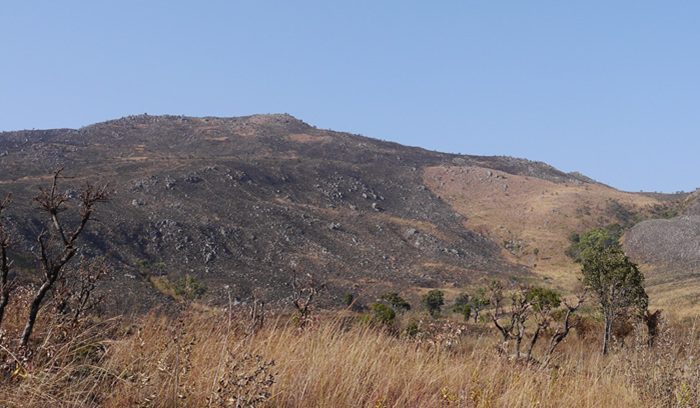
Mount Moco, for article on Serra do Moco Conservation Area

Angola creates 54,000-acre reserve for its highest peak, Mount Moco

Angola’s highest mountain just became a protected conservation area, safeguarding roughly 22,000 hectares of slopes and valleys where rare Afromontane forests still cling to life. The forests around Mount Moco had shrunk from 200–300 hectares to just 50–60 hectares before villagers in Kanjonde teamed up with ornithologists and the Kissama Foundation to turn things around. Together they’ve planted more than 8,000 native trees, swapped wood stoves for gas, and watched bird species like Cabanis’s greenbul return to places they hadn’t been recorded before. The win is especially meaningful for Swierstra’s francolin, a ground bird found almost nowhere else. It’s also proof that in a country still rebuilding after war, community-led conservation can take root and last.

A child sleeping under a mosquito net in a rural African home for an article about malaria eradication

Humanity eradicates malaria for the first time in recorded history

Malaria eradication could be certified worldwide by 2054, with the WHO confirming zero indigenous transmission across the 80 countries that once carried the disease. The projection builds on real momentum: mRNA vaccine breakthroughs, hundreds of thousands of community health workers, and a 2024 burden concentrated in sub-Saharan Africa. If it holds, a millennia-old killer becomes something only grandparents remember.

image for article on angola independence

Angola achieves independence from Portugal after centuries of colonial rule

Angola’s independence came on November 11, 1975, ending more than four centuries of Portuguese presence and a liberation war that began in 1961. The path opened unexpectedly when Portugal’s own dictatorship fell in the 1974 Carnation Revolution. The country’s name itself honors the ngolas — rulers of the pre-colonial Ndongo kingdom, a reminder that Angola’s story stretches far deeper than colonization.

BushmenSan, for article on San people southern Africa

San people emerge as one of Earth’s oldest surviving cultures in southern Africa

San peoples had spread across southern Africa by around 10,000 B.C.E., reaching Cape Agulhas at the continent’s southern tip long before herder or farming cultures arrived. Their descendants still live across Botswana, Namibia, and neighboring countries today, carrying click-based languages and rock art traditions that trace one of the deepest-rooted branches of the human family tree.