Fewer than three decades ago, one of the world’s rarest big cats was sliding toward oblivion. The Amur leopard — native to the temperate forests straddling the Russian-Chinese border — had collapsed to roughly 25 individuals by the late 1990s, pushed there by poaching and the steady erasure of its habitat. Today, an estimated 130 Amur leopards live in Russia alone, a recovery that conservationists once considered almost impossible.
At a glance
- Amur leopard population: Wild numbers have grown from approximately 25 individuals in the late 1990s to around 130 in Russia today — a more than fivefold increase driven by coordinated protection.
- Camera trap monitoring: Advanced camera trap networks confirm that leopards regularly cross from Russia into northeastern China, signaling that the population is actively expanding its range.
- Land of the Leopard National Park: Established in 2012, the park covers nearly 650,000 acres encompassing all remaining Amur leopard breeding grounds, and supports dedicated anti-poaching and fire management teams year-round.
A park built around a species
The single most consequential decision in the Amur leopard’s recovery was the creation of Land of the Leopard National Park in Russia’s Primorsky Krai region in 2012. The protected area was drawn deliberately to enclose every known breeding territory the leopards still used.
That design mattered. By securing core habitat rather than a peripheral buffer zone, the park allowed prey populations — particularly sika deer — to rebound alongside the leopards. Stable prey means stable predators. Anti-poaching patrols and active fire suppression, both serious threats in this part of the Russian Far East, became permanent fixtures rather than emergency responses.
The result was a protected landscape capable of sustaining not just survival but slow, measurable growth.
Science and diplomacy working together
Leopards don’t recognize international borders, and neither does this conservation effort. Camera trap data consistently shows Amur leopards moving between Russia and China’s Jilin and Heilongjiang provinces — movement that researchers treat as one of the most encouraging signs of genuine population health.
Both governments have responded. Russia and China have coordinated habitat protections on their respective sides, supported by international organizations including the World Wildlife Fund and the Amur Leopard and Tiger Alliance. The longer-term ambition is a seamless transboundary protected area that would allow leopards to move freely across an ecologically connected landscape — an approach conservation scientists increasingly favor for wide-ranging species.
It’s a model worth watching. As Ghana’s marine protected area at Cape Three Points has shown, protected zones designed with ecological connectivity in mind tend to outperform isolated reserves over time.
The genetic challenge that remains
The Amur leopard’s recovery is real — and it is incomplete. The population’s long bottleneck at such small numbers created a genetic crisis that numbers alone cannot fix. Inbreeding reduces immune function and reproductive success, making even a growing population fragile in ways that aren’t immediately visible.
Conservation teams are working toward a targeted solution: relocating carefully selected leopards from accredited zoo populations into the wild to introduce new genetic material. This kind of managed gene flow has precedent in other felid recovery programs, though it requires meticulous planning to avoid disrupting established social structures in the wild population.
The challenge is a reminder that population counts are a starting point, not a finish line.
What this recovery tells us
The Amur leopard’s trajectory matters beyond its own species. It demonstrates that the combination of protected habitat, reduced poaching pressure, cross-border political cooperation, and scientific monitoring can reverse even severe decline in a large, range-dependent predator — arguably the hardest category of animal to save.
It also reflects a broader pattern of evidence-based environmental progress. From renewables now making up nearly half of global power capacity to recovering predator populations, the data increasingly shows that human decisions can bend trajectories in better directions.
The IUCN Red List still classifies the Amur leopard as Critically Endangered, and rightly so — 130 animals is a fragile foothold, not a recovery complete. But it is a foothold that didn’t exist a generation ago, built by scientists, park rangers, governments, and conservation organizations choosing, persistently, to act.
The WWF’s ongoing Amur leopard program continues to track the population and support habitat protection across the region.
Read more
For more on this story, see: Good News for Humankind — Amur leopard recovery
For more from Good News for Humankind, see:
- Renewables now make up nearly half of global power capacity
- Ghana creates a new marine protected area at Cape Three Points
- The Good News for Humankind archive on wildlife
About this article
- 🤖 This article is AI-generated, based on a framework created by Peter Schulte.
- 🌍 It aims to be inspirational but clear-eyed, accurate, and evidence-based, and grounded in care for the Earth, peace and belonging for all, and human evolution.
- 💬 Leave your notes and suggestions in the comments below — I will do my best to review and implement where appropriate.
- ✉️ One verified piece of good news, one insight from Antihero Project, every weekday morning. Subscribe free.
More Good News
-

Washington state enacts millionaires’ tax to fund schools and families
Washington state enacted a new tax on individual income exceeding million on March 30, 2026, ending nearly a century without a personal income tax. The law funds free school meals for every K-12 student, expands the Working Families Tax Credit to 460,000 additional households, and cuts costs on childcare and essential goods. Less than half of 1% of residents owe the tax, but the benefits reach millions across the state.
-

Detroit RxKids distributes .4 million to mothers in its first month
Detroit’s RxKids program distributed .4 million in direct, unconditional cash to mothers in its first full month of operation, city officials announced in March 2026. The program gives low-income pregnant women and new mothers 00 per month during pregnancy and 00 per month for their baby’s first year of life — up to 2,000 per family. Supporters say it directly counters child poverty during one of the highest-impact windows for intervention.
-
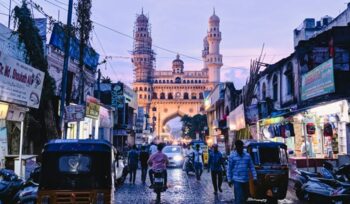
Telangana orders 915 electric buses in major clean transit push
The Indian state of Telangana has ordered 915 electric buses, one of the largest clean transit procurements in India’s history. The move is part of a national push to electrify public transportation, reduce urban air pollution, and cut greenhouse gas emissions. Backed by India’s FAME subsidy scheme and a growing domestic manufacturing sector, the order signals that India’s electric bus transition has moved well beyond pilot programs into large-scale deployment across major cities.