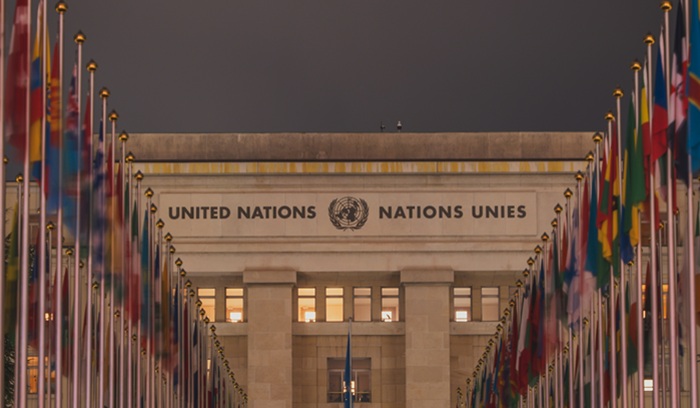
The International Court of Justice has issued one of the most consequential legal opinions in the history of climate action, declaring that nations bear binding obligations under international law to cut greenhouse gas emissions and shield the environment from harm. The ruling, an advisory opinion requested by the United Nations General Assembly, formally recognizes a healthy environment as a fundamental human right — placing climate protection alongside the right to life and the right to health in the architecture of international law.
At a glance
- Climate obligations ruling: The ICJ confirmed that existing international treaties legally require countries to reduce emissions and prevent significant environmental harm, not merely pursue voluntary targets.
- Human rights link: For the first time at this level, the court formally tied environmental degradation — especially global warming — to direct violations of the rights to life and health.
- High emitters named: The opinion specifically highlights that wealthy, high-emitting nations carry a heightened legal duty to lead on climate action, a key demand of small island states that championed the UN resolution.
Why this ruling matters
Advisory opinions from the World Court carry no binding enforcement mechanism in the way a direct judgment would. But their moral, political, and legal weight is enormous — and that is precisely what makes this moment significant.
National courts around the world regularly cite ICJ opinions when ruling on domestic climate cases. International negotiators reference them in treaty talks. Corporations and governments watching litigation risk take notice when the highest judicial body in the world clarifies what international law demands. This opinion gives climate advocates, vulnerable communities, and small nations a stronger legal foundation than they have ever had before.
The International Court of Justice, based in The Hague, issued the opinion following a request driven largely by Pacific island nations — countries facing existential threats from rising seas they did little to cause. Their diplomatic campaign to bring this question before the court was years in the making and represents a remarkable exercise of collective legal and moral authority by some of the world’s smallest states.
A framework for climate justice
One of the ruling’s most consequential dimensions is what it means for climate justice — the question of who bears responsibility for a crisis they did not equally create.
By affirming that high-emitting nations have specific legal duties, the ICJ has handed vulnerable communities a formal legal framework to press their case. Advocacy groups and governments from the Global South have long argued that international climate commitments are too weak and too voluntary. This opinion shifts the terrain. It suggests that failing to act is not merely a policy failure — it may be a violation of international law.
The ruling is also expected to energize a wave of domestic litigation. Courts in Germany, the Netherlands, and Pakistan — among others — have already issued landmark climate judgments in recent years. The Sabin Center for Climate Change Law at Columbia University tracks more than 2,000 climate cases filed globally, and legal experts expect that number to grow in the ruling’s wake.
Indigenous and coastal communities, who face the sharpest consequences of environmental degradation while contributing least to its causes, stand to benefit most directly from a legal framework that ties climate harm to human rights violations. Their long-standing arguments — that pollution and warming are not abstract policy failures but attacks on their lives and cultures — now carry explicit international judicial recognition.
The long road to this moment
The push to have the ICJ weigh in on climate obligations began in earnest with a student-led campaign in Vanuatu, a Pacific island nation. Young activists persuaded their government to champion the cause at the United Nations General Assembly, which passed a resolution requesting the advisory opinion. More than 130 countries co-sponsored the resolution — a rare show of near-universal diplomatic consensus.
The process took years of legal submissions, oral hearings, and deliberation. Dozens of nations and civil society organizations submitted arguments. The breadth of participation itself sent a signal: the international community was ready to treat climate protection as a matter of law, not just politics.
This momentum connects to other shifts reshaping the global response to climate change. Efforts to secure Indigenous land rights ahead of COP30 covering 160 million hectares reflect a parallel recognition that environmental protection and human rights are inseparable. And as communities push governments to act, breakthroughs in other domains — like the science of prevention trials — remind us that evidence-based action, when it gains legal and political footing, can move faster than expected.
What comes next
The ICJ opinion is not the end of a legal argument — it is the beginning of a new phase. Governments will face pressure from courts, citizens, and each other to translate the ruling’s logic into domestic law and stronger international commitments. Future UN climate conferences will take place in a changed legal environment, with negotiators aware that a clear judicial standard now exists.
There are real limits to acknowledge. Advisory opinions cannot compel a government to act, and powerful emitters have shown they can resist international pressure when it suits them. The gap between legal obligation and political will remains wide, and closing it will require sustained organizing, litigation, and diplomacy. The ruling does not guarantee outcomes — it sharpens the tools available to those fighting for them.
Still, the direction is clear. The world’s highest court has said, in plain terms, that protecting the climate is a legal duty. That changes what governments can claim in their defense — and what the rest of the world can demand of them.
Read more
For more on this story, see: The New York Times
For more from Good News for Humankind, see:
- Indigenous land rights and COP30: 160 million hectares
- Alzheimer’s risk cut in half by drug in landmark prevention trial
- The Good News for Humankind archive on climate
About this article
- 🤖 This article is AI-generated, based on a framework created by Peter Schulte.
- 🌍 It aims to be inspirational but clear-eyed, accurate, and evidence-based, and grounded in care for the Earth, peace and belonging for all, and human evolution.
- 💬 Leave your notes and suggestions in the comments below — I will do my best to review and implement where appropriate.
- ✉️ One verified piece of good news, one insight from Antihero Project, every weekday morning. Subscribe free.
More Good News
-

COP30 pledges recognition of 160 million hectares of Indigenous land rights
At the COP30 World Leaders Summit in Belém, Brazil in November 2025, 15 governments pledged to formally recognize Indigenous land rights over 160 million hectares by 2030 — an area the size of Iran — through the Intergovernmental Land Tenure Commitment. Brazil committed at least 59 million hectares. More than 35 donors renewed a $1.8 billion Forest and Land Tenure Pledge. The Tropical Forest Forever Facility secured nearly $7 billion, with 20% directed to Indigenous peoples. It was the largest Indigenous participation in COP history.
-

Ghana creates its first marine protected area to rescue depleted fish stocks
Ghana has declared its first marine protected area near Cape Three Points on the Gulf of Guinea, marking a historic step to reverse decades of overfishing. The protected zone aims to restore fish populations that have collapsed under pressure from industrial trawling and illegal fishing. The decision supports 2.7 million Ghanaians whose livelihoods depend on healthy coastal fisheries and aligns Ghana with the global goal of protecting 30 percent of the world’s oceans by 2030.
-

U.S. researchers cut Alzheimer’s risk by half in first-ever prevention trial
For the first time, researchers have evidence that removing amyloid plaques from the brain before symptoms appear can cut Alzheimer’s risk by roughly half. A clinical trial published in The Lancet Neurology, led by Washington University School of Medicine in St. Louis, found that long-term treatment with the antibody drug gantenerumab significantly delayed dementia onset in people with a rare genetic form of the disease. The findings provide the clearest signal yet that intervening years before symptoms emerge can change the course of Alzheimer’s disease.