
Curated by Peter Schulte · Published 2026-06-16 · Last updated 2026-06-16
Across every continent and ocean, species recovery is accelerating at a scale that would have seemed impossible a generation ago. Iberian lynx have climbed from 94 individuals to more than 2,000.
Eastern Australian humpback whales now exceed pre-whaling numbers for the first time in recorded history. Klamath River salmon returned to Oregon waters within weeks of the last dam coming down.
Monarch butterfly colonies surged 176% in a single season. These are not isolated flukes — they are the compounding results of six decades of legal protection, habitat restoration, captive breeding, dam removal, Indigenous land stewardship, and international treaty-making.
From Kazakhstan’s snow leopards to Cambodia’s Siamese crocodiles, from Illinois bison to Antarctic humpbacks, the evidence is now overwhelming: when humans deliberately intervene on behalf of wildlife, recovery is possible — often faster than scientists expected. This guide documents 47 verified wins and the shared forces driving them.
Key takeaways
- Iberian lynx rebounded from 94 to 2,000+ individuals and were officially downlisted from Endangered to Vulnerable on the IUCN Red List.
- Eastern Australian humpback whales surpassed pre-whaling population levels in 2024 — a milestone once considered biologically impossible.
- Klamath River salmon returned to Oregon for the first time since 1912 within weeks of the largest dam-removal project in U.S. history.
- 132 nations extended UN protection to 40 new migratory species at CMS COP15 in Brazil, expanding the legal safety net for wildlife worldwide.
- 26 Australian species — including the greater bilby and sooty albatross — no longer meet threatened-species criteria, demonstrating that downlisting is achievable at scale.
Recovery at a glance
| Subject | Recovery | Where |
|---|---|---|
| Iberian lynx | 94 → 2,021 individuals; downlisted Endangered → Vulnerable | Spain & Portugal |
| Eastern Australian humpback whale | Surpassed pre-whaling numbers; 50,000+ individuals | Eastern Australia |
| Monarch butterfly (eastern) | Overwintering area up 176% in one season | Mexico wintering grounds |
| Klamath River Chinook salmon | First confirmed return since 1912 after dam removal | Oregon/California, USA |
| Milu (Père David's) deer | 0 wild → 8,200 animals across Chinese reserves | China |
| Scimitar horned oryx | First species ever downlisted Extinct in the Wild → Endangered | North Africa (Chad) |
| Mexico jaguar | Population surged ~30% to 5,326 individuals | Mexico (15 states) |
| Southern white rhino | 2,000+ (15% of wild population) to be rewilded | Africa-wide |
| Snow leopard (Kazakhstan) | 152–189 individuals; near-historic 1980s levels | Kazakhstan |
| Coho salmon (Mendocino Coast) | 30,000+ adults returned — ~10× the count of a decade ago | California, USA |
| Gray crowned crane | National population tripled since 2017 | Rwanda |
| Chinese pangolin | 1,778 individuals counted where populations had crashed to zero | Guangdong, China |
| Siberian crane | Nearly 50% population increase over last decade to ~7,000 birds | Eastern flyway (Russia/China) |
| Uganda elephants (Mount Elgon) | 60+ elephants return after 40-year absence | Uganda |
| Green sea turtle | Removed from IUCN Endangered list; nesting populations significantly grown since 1970s | Global |
| Giant tortoise | Reintroduced to Pinta Island after 180-year absence | Galápagos, Ecuador |
On this page
- Why this matters
- What’s driving the comeback
- Reintroductions: Animals Returning to Lost Landscapes
- Population Rebounds: Species Growing Back Toward Abundance
- Rivers, Fisheries, and the Power of Dam Removal
- Official Milestones: Downlistings, Treaties, and Protected Areas
- The outlook
- Frequently asked questions
Why this matters
The scale of the current species recovery wave is historically unprecedented. In a single decade, populations once measured in double digits — lynx, milu deer, scimitar horned oryx — have grown into the thousands. Fisheries written off as functionally dead are filling rivers again.
What makes this moment different from earlier conservation eras is the convergence of tools: satellite tracking, camera-trap networks, genetic analysis, and cross-border legal frameworks are working simultaneously. The result is that recoveries which once took a century can now happen within a generation.
The stakes are not merely aesthetic. Apex predators regulate prey populations, keystone grazers shape fire-prone landscapes, and migratory fish feed entire river ecosystems. Each species that recovers restores functions that no human engineering can replicate.
By the numbers
- 50,000+ eastern Australian humpback whales — exceeding pre-whaling numbers for the first time
- 2,021 Iberian lynx today, up from just 94 in 2002
- 8,200 milu deer in China, descended from 39 animals preserved in captivity
- 176% surge in monarch butterfly overwintering colony area in a single season
- 5,326 jaguars confirmed across Mexico in 2025 — the largest mammal census ever conducted in the country
- 2,000+ white rhinos (≈15% of wild southern white rhino population) set to be rewilded by African Parks
- 132 nations voted to extend UN protection to 40 new migratory species at CMS COP15
What’s driving the comeback
The single most consistent driver across these recoveries is legal protection that is actually enforced. CITES, now covering 40,900 species across 185 parties, removed the commercial incentive to hunt many species to zero. Rwanda’s gray crowned crane tripling since 2017 tracks directly to anti-poaching law enforcement and wetland restoration — the law created the conditions; the habitat did the rest.
Habitat restoration and dam removal are the second great lever. Klamath River salmon returned within weeks of the last dam coming down — years ahead of scientific projections. Coho on California’s Mendocino Coast multiplied tenfold over a decade as stream habitat improved. Guatemala’s closure of oil fields inside the Maya Biosphere Reserve and Kazakhstan’s 37,000-tree planting for tiger reintroduction show that active restoration, not just protection, is now part of the toolkit.
Indigenous stewardship and community co-management appear repeatedly as force multipliers. The Columbia River salmon deal was brokered with four tribal nations. Ecuador’s Siekopai people won back 42,360 hectares of ancestral rainforest. New York’s Onondaga Nation received nearly 1,000 acres tied to Onondaga Creek’s cleanup. In every case, returning land tenure to original stewards also returned ecological management capacity that had been absent for decades.
Captive breeding and strategic reintroduction close the gap when wild populations have already collapsed to near-zero. China’s milu deer descended from 39 captive animals. Przewalski’s horses flew from Berlin and Prague zoos to the Kazakh steppe. The scimitar horned oryx rebuilt a self-sustaining Saharan herd from zoo stock. These programs are slow and expensive — but they are the reason some species exist at all.
Reintroductions: Animals Returning to Lost Landscapes
The most dramatic category of species recovery involves animals physically absent from a landscape for decades — sometimes millennia — being deliberately returned. What unites these stories is not just biological restoration but a recognition that the original cause of absence (hunting, habitat destruction, colonial disruption) was human, and that reversal requires equal intentionality.

60 Elephants Reclaim Uganda’s Mount Elgon After 40 Years
At least 60 elephants have crossed the Suam River from Kenya back into Uganda’s Mount Elgon National Park, returning to forests their ancestors abandoned during the poaching and conflict of the late 1970s. Drone footage and collar tracking confirm the herd has settled in — a self-directed return enabled by decades of improved protection on both sides of the border.

Ostriches Return to Saudi Desert After a Century of Absence
North African ostriches have been reintroduced to Saudi Arabia’s protected desert landscapes in a coordinated program led by the Royal Commission for AlUla and the Saudi Wildlife Authority, ending nearly a century of regional extinction. The effort marks one of the most ambitious rewilding projects in the Arabian Peninsula’s history.

Przewalski’s Horses Fly Home to the Kazakh Steppe
Seven Przewalski’s horses — the only truly wild horse species remaining on Earth — arrived in Kazakhstan from zoos in Berlin and Prague in June 2024, ending a two-century absence from the steppe. Their 30-hour flight aboard a Czech air force transport returned them to the very landscape their ancestors once roamed.

Giant Tortoises Return to Galápagos Pinta Island After 180 Years
Captive-bred giant tortoises with close genetic ties to the original Pinta population have been reintroduced to Pinta Island, roughly 180 years after the species disappeared there. The milestone comes decades after conservationists first recognized the island’s tortoises were functionally gone.

Wild Horses Return to Spain’s Iberian Highlands After 10,000 Years
Primitive Iberian horse breeds have been returned to Spain’s central highlands in a Rewilding Europe project, restoring a keystone grazer absent since the last Ice Age. The horses’ grazing is expected to reduce wildfire risk by managing vegetation across the highland landscape.

Portugal Welcomes Its First Wild Bison in 10,000 Years
European wood bison — sourced from Poland, where more than 4,000 wisent now roam — have settled into Portugal’s Greater Côa Valley for the first time since the Ice Age. The arrival is part of a plan to rewild a quarter-million acres of the Iberian interior.

Guatemala Closes Oil Fields in the Maya Forest to Launch Historic Rewilding
Guatemala has shut down oil extraction inside the 2.1-million-hectare Maya Biosphere Reserve — the heart of the Selva Maya, the second-largest continuous tropical forest in the Americas — and begun ecological restoration of affected land. The decision transforms one of the region’s most biodiverse landscapes from an extraction zone into a rewilding site.

Kazakhstan Plants 37,000 Trees to Prepare for Wild Tigers
Kazakhstan has planted 37,000 trees in the Ili River delta to restore tugai forest habitat, paving the way for Amur tigers to eventually fill the ecological role of the extinct Caspian tiger in Central Asia. The reforestation is a deliberate precondition for one of the most ambitious tiger reintroduction programs ever attempted.

Bison Return to Illinois Prairie After Nearly 200 Years
Wild bison are roaming Nachusa Grasslands in northern Illinois — a restored tallgrass prairie managed by The Nature Conservancy — for the first time in nearly 200 years. The reintroduction marks a landmark moment in Midwestern conservation, restoring a keystone grazer to a landscape reshaped by their absence.

Rhinos Return to Uganda’s Wild After 43 Years
Rhinos bred at Ziwa Rhino Sanctuary have been released into Kidepo Valley National Park, ending a 43-year absence from Uganda’s wild caused entirely by poaching and political instability. The reintroduction gives Uganda its first free-ranging wild rhinoceroses since the early 1980s.

Lynx, Wild Horses, and Vultures Rewild Eastern Spain
Rewilding Europe’s first Spanish project is restoring an 850,000-acre mountain landscape, with wild horses already breeding, black vultures being released at up to 15 per year, and Iberian lynx expected within two years. The multi-species approach treats the whole ecosystem as the unit of restoration, not individual animals.

Siamese Crocodiles Stage Comeback in Cambodia’s Cardamoms
Sixty baby Siamese crocodiles hatched in Cambodia’s Cardamom Mountains — the largest single hatching of this critically endangered species recorded anywhere this century. With only around 400 surviving in the wild worldwide, the clutch represents a meaningful fraction of the species’ future.

Asiatic Wild Asses Roam Saudi Arabia Again After a Century
Seven onagers relocated from Jordan are roaming Saudi Arabia for the first time in roughly 100 years, and one has already given birth to a foal. The Persian onager was selected as the closest living relative to the extinct Syrian wild ass, making the reintroduction a partial ecological substitute for a subspecies humanity hunted to zero.

Hundreds of Khulan Return to Eastern Mongolia After 65 Years
Asiatic wild asses known as khulan are crossing the Trans-Mongolian Railway into eastern Mongolian habitat they abandoned more than 60 years ago, with hundreds now recorded in areas they had vanished from. The turnaround began when conservationists and the government worked together on a straightforward but decisive intervention.
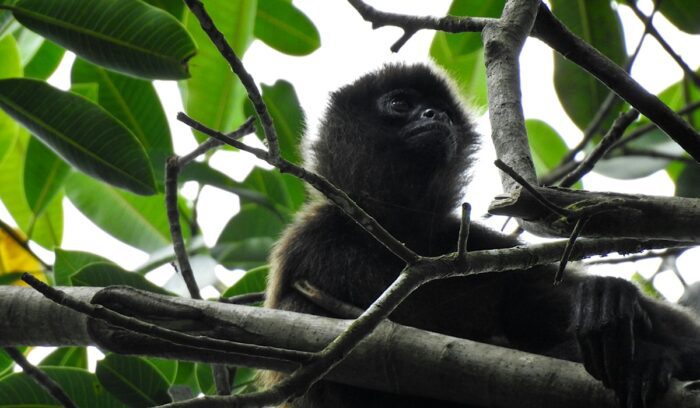
Brazil Launches First National Program to Rewild Howler Monkeys
Brazil has created its first national population management program for the brown howler monkey, one of the 25 most threatened primates on Earth after yellow fever outbreaks killed thousands. The program, coordinated across eight states, pairs a newly adapted recovery protocol with a network of wildlife managers to stabilize remaining populations.
Population Rebounds: Species Growing Back Toward Abundance
Not every recovery requires physical reintroduction — sometimes the animals are still there, barely, and the task is removing the pressures that were driving them toward zero. The stories in this section share a common structure: a population in free fall, a deliberate intervention, and a count that now tells a different story. What is striking is how quickly numbers can turn when the cause of decline is addressed at its root.

Eastern Australian Humpbacks Exceed Pre-Whaling Numbers
The eastern Australian humpback whale population surpassed 50,000 individuals in 2024, exceeding pre-whaling numbers for the first time — a milestone once considered impossible. Sixty years ago, industrial hunting had reduced this group to roughly 200 animals; the recovery is now complete enough to serve as a global benchmark.

China’s Milu Deer Rebound to 8,200 from Zero in the Wild
China’s milu deer population has reached 8,200 animals across protected reserves — a species that had completely vanished from the wild before 1895, with the entire modern population descending from just 39 captive animals. The recovery is one of the most extreme examples of a species brought back from the absolute edge of extinction.

Siberian Crane Numbers Jump Nearly 50% in a Decade
Siberian crane numbers in the eastern flyway have climbed to an estimated 7,000 birds — nearly 50% more than a decade ago — for a species whose other migratory populations have already vanished entirely. The turnaround represents a rare win for one of the world’s most endangered large birds.

Mexico’s Jaguar Population Surges 30% to 5,326 Animals
A 2025 census deploying nearly 1,000 camera traps across 15 Mexican states confirmed 5,326 individual jaguars — a roughly 30% surge — in the largest mammal census ever conducted in the country. Researchers identified each cat by its unique rosette pattern, giving the count an unusually high level of precision.

Rwanda’s Gray Crowned Cranes Have Tripled Since 2017
Rwanda’s gray crowned crane population has tripled since 2017, driven by anti-poaching enforcement, wetland restoration, and rehabilitation programs that return captive birds to the wild. The recovery of this vulnerable species in a country that has also rebuilt its mountain gorilla population illustrates how focused national conservation policy can compound results.

Kazakhstan’s Snow Leopards Reach Near-Historic Levels
Snow leopard numbers in Kazakhstan have rebounded to between 152 and 189 individuals — levels not seen since the 1980s and a 26% jump since 2019. Expanded protected areas including Ile-Alatau and Altyn-Emel are credited with providing the secure habitat that enabled the increase.

Monarch Butterfly Colonies Surge 176% at Mexican Wintering Grounds
Monarch butterfly overwintering colony area at Mexican highland sites jumped 176% in a single season, from 0.22 hectares to 4.01 hectares. The rebound follows decades of steep decline that led the IUCN to list migratory monarch butterflies as endangered.

Eastern Monarch Population Nearly Doubles in 2025
The eastern monarch butterfly population covered 4.42 acres of Mexican highland forest this past winter — nearly double the area recorded a year earlier. Scientists attribute the rebound to milder drought conditions along migration routes and community-level conservation action in breeding and wintering habitat.

African Parks Buys World’s Largest Captive Rhino Herd to Rewild 2,000
Conservation NGO African Parks purchased the entire Platinum Rhino herd — more than 2,000 white rhinos, roughly 15% of the wild southern white rhino population — with plans to release the animals across protected sites across the continent. The purchase is the largest single wildlife rewilding commitment in African conservation history.

Black Rhinos Thrive in Zimbabwe for First Time in Decades
Zimbabwe now protects 614 critically endangered black rhinos and 415 white rhinos — a combined count that hasn’t reached this level in over 30 years. The recovery represents one of the most meaningful wildlife comebacks in Africa in a generation.

Persian Leopards Make a Quiet Comeback in Turkmenistan
Camera traps in Turkmenistan’s Kopet Dag mountains are confirming Persian leopard sightings — including females with cubs — in areas where the endangered cats had disappeared for years. With fewer than 1,000 Persian leopards surviving globally, every confirmed breeding record carries significant conservation weight.

Antarctic Whale Populations Are Officially Rebounding
Near the South Orkney Islands in early 2026, researchers watched groups of more than 100 humpback whales feeding together — with blows stretching from horizon to horizon — scenes not witnessed in over a century. The recovery of Antarctic whale populations is being documented as a measurable, large-scale ecological rebound.

African Elephant Populations Stabilize Across Southern Range
Surveys of more than 290,000 savannah elephants across southern Africa — the most comprehensive study of its kind, drawing on 713 surveys — show a small but steady annual growth rate from 1995 to 2020. It is the first time in a century that elephant populations across this range have stabilized rather than declined.

Chinese Pangolins Return to Guangdong Province
Wildlife monitors now count 1,778 Chinese tree pangolins in Guangdong Province — places where local populations had crashed to zero just years ago. The rebound follows six years of China’s highest legal protection for the species, demonstrating that even one of the world’s most heavily trafficked animals can recover when trade is seriously curtailed.
Rivers, Fisheries, and the Power of Dam Removal
Rivers are among the ecosystems where the link between human action and species recovery is most direct and most measurable. These stories share a structural pattern: remove the barrier, restore the flow, and the biology follows — often faster than models predicted. They also reveal how Indigenous nations and tribal co-managers have been essential partners in the most consequential river recoveries on the continent.

Salmon Return to the Klamath River for the First Time Since 1912
An autumn-run Chinook salmon was confirmed in an Oregon tributary upstream from where the J.C. Boyle Dam once stood, arriving within weeks of the final dam’s removal — years ahead of what biologists had projected. The return marked the first salmon presence in that stretch of the Klamath River since 1912.

Wild Chinook Confirmed 230 Miles Inland on the Klamath
Biologists confirmed wild Chinook salmon approximately 230 miles inland from the Pacific on the upper Klamath River — just months after the last of four dams came down in the largest dam-removal project in U.S. history. The speed of the fish’s return surprised the scientific community.

Coho Salmon Surge Tenfold on California’s Mendocino Coast
More than 30,000 endangered coho salmon adults returned to spawn on California’s Mendocino Coast this past season — roughly ten times the count from a decade ago. Biologists who once walked miles of empty stream are now finding fish throughout the system, a reversal that few alive expected to witness.

West Coast Groundfish Fishery Completes Historic 25-Year Comeback
The U.S. West Coast groundfish fishery has been fully rebuilt after more than two decades of strict catch limits and rigorous scientific monitoring — completing a recovery roughly 60 years in the making. The result is being called one of the greatest fishery management success stories in history.

Marine Protected Area Drives Significant Tuna Rebound in the Pacific
Papahānaumokuākea Marine National Monument, spanning over 580,000 square miles of Hawaiian waters, has produced a significant rebound in tuna stocks — demonstrating that marine protected areas benefit not only biodiversity inside their borders but commercial fisheries outside them. The reserve was originally created to protect biodiversity and culturally sacred Indigenous sites, not to boost fish stocks.

Biden Administration Brokers $1 Billion Columbia River Salmon Deal
The Biden administration, Oregon, Washington, and four tribal nations signed a billion-dollar agreement to restore salmon to the Columbia River Basin — once the greatest salmon-producing river system on Earth. The deal directly involves the tribal nations whose treaty fishing rights have been tied to Columbia salmon for generations.

Atlantic Sturgeon Reintroduced in Sweden After Functional Extinction
One hundred juvenile Atlantic sturgeon — each carrying an acoustic transmitter — were released into Sweden’s Göta River near Bohus Fortress, marking the species’ return to Swedish waters after more than a century of functional extinction. Researchers will track each fish as it migrates toward the sea, hoping they eventually return to reproduce.
Official Milestones: Downlistings, Treaties, and Protected Areas
Some of the most consequential moments in species recovery are bureaucratic: a Red List reclassification, a treaty ratification, a protected-area boundary drawn. These formal designations matter because they translate biological recovery into legal protection — and they create the architecture inside which future recoveries become possible. The stories here represent the policy layer that makes the biological layer sustainable.

Iberian Lynx Downlisted from Endangered to Vulnerable
The Iberian lynx — the world’s most threatened wild cat just two decades ago — has been officially reclassified from Endangered to Vulnerable on the IUCN Red List, with the population growing from 94 individuals in 2002 to 2,021 today. The recovery across Spain and Portugal is now the most cited example of what a fully resourced, multi-decade conservation program can achieve.

Scimitar Horned Oryx Makes History as First Species Downlisted from Extinct in the Wild
The scimitar horned oryx has become the first species in history to be downlisted by the IUCN from Extinct in the Wild to Endangered, after a self-sustaining herd was established in Chad following reintroduction from zoo populations. The pale, curve-horned antelope had been hunted to zero in the Sahara before the millennium.

Green Sea Turtles Removed from IUCN Endangered List
The IUCN confirmed in 2025 that green sea turtle nesting populations have grown significantly since the 1970s, removing the species from its Endangered list for the first time in decades. The recovery is attributed to legal protections, beach patrols, and international conservation cooperation across the turtle’s global range.

26 Australian Species No Longer Need Threatened Listing
A study in Biological Conservation found that 26 threatened Australian animals — including the greater bilby, humpback whale, and sooty albatross — have recovered enough to fall outside the country’s threatened-species criteria. Drawing on more than five decades of conservation data, the finding demonstrates that downlisting at scale is achievable, not exceptional.

132 Nations Extend UN Protection to 40 Migratory Species
At CMS COP15 in Campo Grande, Brazil, 132 nations voted to extend international legal safeguards to 40 new species — including the snowy owl, giant otter, striped hyena, and great hammerhead shark. The decision represents the largest single expansion of migratory species protection in the treaty’s history.

Australia Pledges A$224.5 Million to Protect 30% of Its Landmass
Australia’s federal government committed A$224.5 million to grow conservation areas by 50 million hectares over the next decade, targeting 110 priority species with the goal of formally protecting at least 30% of the country’s land area. The pledge aligns Australia with the global 30×30 biodiversity target.

Albania Creates Europe’s First Wild River National Park
Albania designated the Vjosa River — 118 miles of one of Europe’s last large free-flowing rivers — as the continent’s first wild river national park, permanently blocking 45 proposed hydropower dams. The protection secures critical habitat for otters, Egyptian vultures, and a range of endemic species that depend on uninterrupted river flow.

Onondaga Nation Receives Nearly 1,000 Acres in Historic Lake Cleanup Deal
Nearly 1,000 acres of forest, wetlands, and the sacred headwaters of Onondaga Creek have been returned to the Onondaga Nation — the first time land has been returned directly to a Native American tribe in New York. The parcel is tied to a larger Onondaga Lake cleanup agreement that restores both ecological and cultural stewardship.

Ecuador Returns 42,360 Hectares of Ancestral Rainforest to Siekopai People
Ecuador’s Siekopai people won legal ownership of 42,360 hectares of ancestral Amazonian rainforest along the Ecuador-Peru border — land their families were forced from in 1941. Their lawyers drew on deep historical evidence of continuous habitation to secure a ruling that reconnects Indigenous stewardship with one of the Amazon’s most biodiverse landscapes.

Seeds of 19 African Tree Species Secured in Svalbard Vault
Seeds from 19 African tree species — 13 native to Africa, including species under direct threat — have been deposited in the Svalbard Global Seed Vault, joining 1.3 million samples already archived in the Norwegian permafrost. The deposit creates an insurance policy for forest restoration across the continent.
The outlook
The trajectory, taken as a whole, is genuinely positive — but it is not guaranteed. Most of the recoveries documented here required decades of sustained political will and funding. The West Coast groundfish fishery took 25 years of strict catch limits before it could be declared rebuilt.
The recoveries that are most secure are those backed by international treaty, land tenure, or structural changes like dam removal — outcomes that are hard to reverse. The ones most at risk are those dependent on a single government’s budget cycle or a single NGO’s continued presence.
Climate change is the unresolved variable threading through nearly every story here. Monarch butterfly rebound is partly credited to milder drought along migration routes — conditions that could shift again. Antarctic whale recoveries are happening against a backdrop of rapidly changing sea-ice. What these 47 wins prove is that recovery is biologically possible at speed. What determines whether the momentum continues is whether the policy and funding infrastructure that created these wins can be sustained and scaled.
Frequently asked questions
Why is the comeback of Persian leopards significant?
Persian leopards are making a documented comeback in Turkmenistan’s Kopet Dag mountains, with camera traps confirming breeding females in areas where the cats had disappeared. Fewer than 1,000 Persian leopards survive in the wild globally, making every confirmed breeding record — and every expanding range area — meaningful to the species’ long-term survival.
What species have been officially downlisted or removed from the endangered list recently?
Several notable downlistings have occurred: the Iberian lynx moved from Endangered to Vulnerable (2,021 individuals today, up from 94 in 2002); green sea turtles were removed from the IUCN Endangered list in 2025; the scimitar horned oryx became the first species ever downlisted from Extinct in the Wild to Endangered; and 26 Australian species — including the greater bilby and sooty albatross — no longer meet threatened-species criteria.
How did the removal of dams on the Klamath River help salmon recovery?
Wild Chinook salmon returned to the upper Klamath River within months of the last of four dams being removed in 2024 — the largest dam-removal project in U.S. history — with fish confirmed approximately 230 miles inland from the Pacific. Biologists had not expected the return for years. On California’s Mendocino Coast, coho salmon similarly surged tenfold over a decade as stream habitat improved, with more than 30,000 endangered adults returning to spawn in a single season.
What is driving the global species recovery trend — what actually works?
The recoveries documented worldwide share several common drivers: strict and enforced legal protection (CITES, national endangered-species laws); habitat restoration and dam removal that reopens ecosystems to natural processes; captive-breeding programs that preserve genetic material until wild habitat is ready; Indigenous and community co-management that brings local stewardship back to landscapes; and international treaties that coordinate protection across borders. No single intervention dominates — the fastest recoveries typically combine several simultaneously.
What is the largest marine protected area driving species recovery, and does it work?
Papahānaumokuākea Marine National Monument, spanning over 580,000 square miles of Hawaiian waters, is producing documented benefits beyond its borders: tuna stocks have rebounded significantly in surrounding fisheries. The reserve was created to protect biodiversity and Indigenous cultural sites, not commercial fish, making the fishery rebound a demonstration that large marine protected areas generate spillover benefits for the broader ocean ecosystem.
Which species recovered from the absolute lowest population numbers?
Several species recovered from near-total collapse. China’s milu deer descended entirely from 39 captive animals — the wild population had gone to zero before 1895 — and now number 8,200. The Iberian lynx was down to 94 individuals in two small Spanish populations in 2002. The scimitar horned oryx was fully extinct in the wild before reintroduction rebuilt a self-sustaining Saharan herd. Eastern Australian humpback whales were reduced to roughly 200 animals by industrial hunting before recovering to more than 50,000.
About this article
🤖 This article is AI-generated, based on a framework created by Peter Schulte.
🌍 It aims to be inspirational but clear-eyed, accurate, and evidence-based, and grounded in care for the Earth, peace and belonging for all, and human evolution.
💬 Leave your notes and suggestions in the comments below — I will do my best to review and implement where appropriate.
✉️ One verified piece of good news, one insight from Antihero Project, every weekday morning. Subscribe free.
