Civilization (3000 B.C.E. - 500 C.E.)

This archive covers the ancient world’s most consequential leaps forward — from the first writing systems and legal codes to advances in mathematics, medicine, engineering, and governance. Spanning roughly 3,500 years, it collects milestones from Mesopotamia, Egypt, Greece, Rome, China, India, and beyond that shaped how humans organize society, record knowledge, and build lasting institutions.

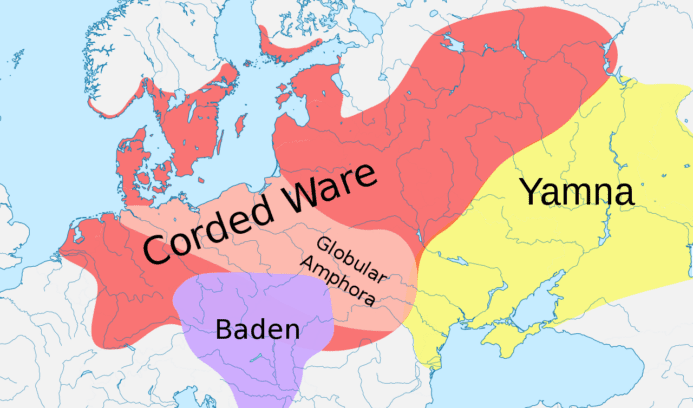
Corded Ware culture map, for article on corded ware culture

Corded Ware culture spreads across Europe, carrying Indo-European languages

Corded Ware culture swept across northern Europe around 2750 B.C.E., linking communities from the Rhine to the Volga through shared pottery, boat-shaped stone axes, and single burials under earthen mounds. Ancient DNA ties these people to pastoralists from the Pontic-Caspian steppe, and many scholars see them as a key vector for the spread of Indo-European languages.


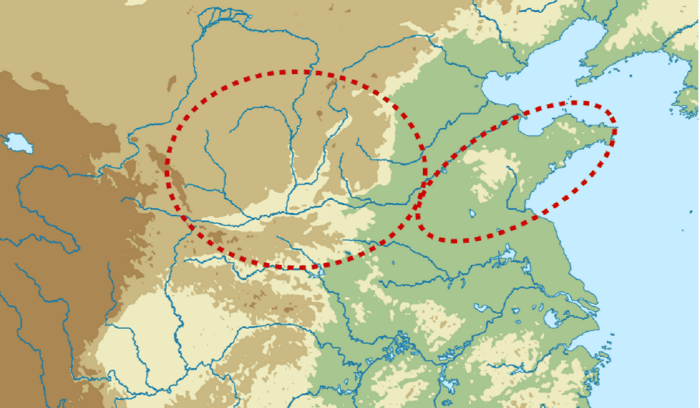
image for article on longshan culture

Longshan culture rises along China’s Yellow River valley

Longshan culture emerged around 3000 B.C.E. along China’s Yellow River, where farming villages grew into walled towns with distinct districts, elite residences, and even clay plumbing. Its potters shaped wheel-thrown black vessels sometimes thinner than a millimeter, traded across vast distances. From this constellation of communities, the foundations of early Chinese civilization quietly took shape.

Cotton growing, for article on cotton cultivation

Cotton cultivation takes root independently across multiple ancient civilizations

Cotton cultivation began independently around the world, with farmers in ancient Peru, the Indus Valley, and the Nile region each taming wild shrubs into fiber thousands of years ago. The oldest known cotton fabric, from Huaca Prieta in Peru, dates to roughly 6000 B.C.E. It’s a quiet reminder that good ideas often arise in more than one place at once.