States & provinces

This archive collects milestones and progress stories involving U.S. states, Canadian provinces, and subnational governments around the world. From landmark legislation to public health wins and environmental gains, these stories highlight the real-world impact of regional policy and governance.

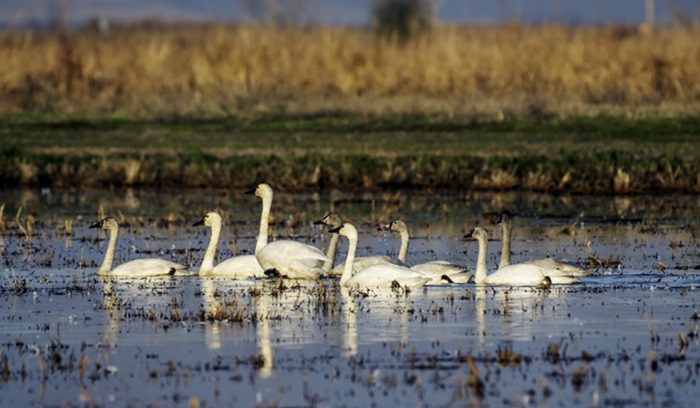
Nervous Swans in the Rice Fields, for article on tidal habitat restoration

California tears down levee in ‘largest tidal habitat restoration in state history’

Tidal waters rushed across 3,400 acres of California’s Sacramento-San Joaquin Delta this month after crews cut a 600-foot gap through a century-old levee at Lookout Slough — the first of nine planned breaches in what’s being called the largest tidal habitat restoration in state history. The reborn marsh will offer shallow, sediment-rich water for the endangered Delta smelt, a tiny fish whose health signals the wellbeing of the entire food web, while also giving salmon better passage and migrating birds new resting ground. It will also hold more than 40,000 acre-feet of floodwater, easing pressure on Sacramento-area communities during heavy storms. Lookout Slough is a quiet reminder that working with natural water systems, rather than against them, can protect wildlife and people at once.

Produce aisle at grocery store, for article on California plastic bag ban

California bans all plastic shopping bags at grocery stores

California’s plastic bag ban gets real on January 1, 2026, when even the thicker “reusable” plastic bags that quietly replaced the originals will disappear from grocery stores, pharmacies, and convenience stores statewide. Senator Catherine Blakespear, who authored the bill, put it plainly: those bags were single-use in everything but name. Shoppers will reach for paper or bring their own, and families using CalFresh and similar food assistance won’t pay the paper bag fee. California’s market is huge enough that what happens at its checkout counters tends to ripple outward, nudging manufacturers and other states to rethink their own rules. It’s a small, tangible reminder that closing loopholes — not just passing laws — is where real progress lives.

Good news for LGBTQ rights, for article on Thailand marriage equality, for article on conversion therapy ban, for article on same-sex partnership rights, for article on forced outing of queer students, for article on Greece same-sex marriage

Governor bans use of ‘conversion therapy’ on LGBTQ+ minors in Kentucky

Kentucky’s conversion therapy ban, signed by Gov. Andy Beshear this week, takes effect immediately and protects every minor seeing a licensed mental health professional in the state. The order also blocks state and federal dollars from funding the practice and lets licensing boards discipline anyone who violates it. One survivor at the signing, filmmaker Zach Meiners, spoke about four years of sessions as a teenager that he’s “still unraveling” — a reminder of why major medical groups have long called the practice harmful. Kentucky now joins nearly half of U.S. states with similar protections, a quietly growing patchwork that’s reshaping what safety looks like for LGBTQ+ young people even as other fights continue.

Anchorage, for article on Alaska abortion access

Nurse practitioners can provide abortions in Alaska, judge rules

Reproductive healthcare in Alaska took a meaningful step forward when a Superior Court ruling allowed nurse practitioners and physician assistants to provide medication abortion, and the change has reshaped daily life at clinics. Planned Parenthood’s Anchorage and Fairbanks locations went from offering abortion services one day a week to every day of the week, a shift that matters enormously in a state where reaching a provider can mean flying hundreds of miles. The Alaska Supreme Court is now weighing whether to reinstate the older physician-only rule, with justices openly questioning how geography shapes what counts as a burden. However the court rules, the case is a powerful reminder that healthcare access depends on who’s allowed to help — and where they live.

Kim Coco Iwamoto, for article on Hawaii transgender lawmaker

Kim Coco Iwamoto to become Hawaii’s first trans lawmaker

Hawaii just elected its first transgender state lawmaker, and she did it by unseating the sitting House Speaker. Kim Coco Iwamoto won her Honolulu Democratic primary with 49.3% of the vote, edging out Scott Saiki by about five percentage points without the backing of the party establishment. A longtime civil rights attorney and former Board of Education member, Iwamoto ran on a platform that includes the Green New Deal, affordable housing, and stronger protections for LGBTQ+ youth in foster care. At a moment when transgender Americans are facing a wave of legislative attacks, a win like this — built on years of organizing and persistence — offers a hopeful reminder of what representation can still look like.

Good news for LGBTQ rights, for article on Thailand marriage equality, for article on conversion therapy ban, for article on same-sex partnership rights, for article on forced outing of queer students, for article on Greece same-sex marriage

California passes first-in-the-nation law banning forced outings of queer students in state public schools

California just became the first state in the country to ban schools from forcibly outing queer students, after Governor Newsom signed the SAFETY Act into law and it took effect immediately. The bill, which passed the State Assembly 60-15, also shields teachers from retaliation if they refuse to disclose a student’s gender identity to parents without consent. It arrived after years of organizing by educators like Karen Poznanski, a Murrieta teacher and parent of a nonbinary child, whose complaint helped trigger a state investigation. Eight other states currently require this kind of outing, so California’s move offers a real counter-model. For queer kids deciding when and how to come out, this puts one of life’s most tender conversations back in their own hands.

Silhouette of cannabis leaf, for article on Maryland marijuana pardons

Maryland Gov. Wes Moore set to issue 175,000 pardons for marijuana convictions

Maryland’s marijuana pardons just cleared more than 175,000 convictions in a single executive order — the largest state-level pardon any governor has ever signed. Governor Wes Moore framed it as unfinished business from legalization itself, noting that people arrested for cannabis decades ago still carry those records into job interviews, housing applications, and college admissions today. The order falls hardest in favor of Black Marylanders, who were arrested for cannabis at three times the rate of white residents before the state legalized recreational use in 2023. Moore was honest about the limits: a pardon can’t return lost years. But paired with the federal push to reschedule marijuana, it signals a country slowly reckoning with who paid the price of the war on drugs.

Packages of diapers, for article on Medicaid diaper coverage

Tennessee to become the first U.S. state to provide some children’s diapers

Free diapers through Medicaid are coming to Tennessee this August, with families receiving 100 a month for every child under two. It’s the first program of its kind in the country, and advocates expect it to deliver close to 100 million diapers a year to families who need them. The need is real: the National Diaper Bank Network found that 92% of Tennessee families receiving diaper assistance are working parents who still can’t afford enough. Local diaper banks helped lay the groundwork, and they’ll keep serving families the program doesn’t reach. Tennessee’s approach offers a tested path other states can follow, turning a quiet daily struggle into something a community can actually solve together.

Molly Cook, for article on LGBTQ+ Texas Senate

Molly Cook just became the first out LGBTQ+ person elected to the Texas Senate

Molly Cook just became the first openly LGBTQ+ person ever elected to the Texas Senate, winning her Houston-area special election with 57% of the vote. An emergency room nurse and sixth-generation Texan, she built her campaign around a simple idea: the laws passed in Austin show up in her ER, whether it’s a miscarriage complication under the state’s abortion ban or a neighbor freezing after the power grid fails. Her win places an out senator in a chamber that has produced some of the country’s harshest anti-LGBTQ+ legislation. Representation in rooms like this one doesn’t change everything overnight, but it changes who has to be seen, and that’s how long-standing ceilings start to crack.

Aerial view of river and mangroves, for article on Amazon mangrove protection

Brazil boosts protection of Amazon mangroves with new reserves in Pará state

Brazil has protected nearly all of Pará state’s Amazon coastline after President Lula signed a decree creating two new extractive reserves — the Filhos do Mangue and the Viriandeua — adding 74,700 hectares of mangrove ecosystems to federal protection. The move completes what experts call the world’s largest and most conserved mangrove belt, securing the livelihoods of roughly 7,100 families and locking away massive stores of carbon. It took 16 years of community organizing to make it happen. 83 words.