
Curated by Peter Schulte · Published 2026-07-20 · Last updated 2026-07-20
Global electric vehicle adoption has crossed a tipping point. In 2025, EV sales surpassed 20 million units worldwide — a 27% year-over-year jump — and for the first time, consumer economics rather than government subsidies is driving the shift.
The transformation spans every mode of transport. Norway now has more electric cars than gas cars on the road. The EU saw EVs outsell petrol vehicles in December 2025. Indonesia opened the Southern Hemisphere’s first high-speed rail line. Germany retired diesel trains entirely on one regional network. Kenya is building its first electric buses locally.
This isn’t a future scenario — it’s the present. The clean transport revolution is moving faster than most forecasts predicted, and it’s happening simultaneously across road, rail, sea, and sky.
Key takeaways
- Global EV sales topped 20 million units in 2025, up 27% year-over-year, driven by consumer economics as much as policy.
- Norway became the first country where battery-electric cars outnumber petrol vehicles on the road.
- China’s EV boom has already prevented an estimated 250,000+ air-pollution deaths, according to a peer-reviewed Nature Health study.
- Clean transport breakthroughs now span every mode: hydrogen trains, SAF-powered transatlantic flights, ammonia container ships, and wireless charging roads are all operational or in testing.
- Developing nations are leapfrogging fossil-fuel infrastructure — Ethiopia banned combustion-engine imports entirely, and Senegal launched Sub-Saharan Africa’s first all-electric public bus network.
Recovery at a glance
| Subject | Recovery | Where |
|---|---|---|
| Global EV market | 20 million units sold in 2025, up 27% YoY | Worldwide |
| China EV market | 25% of new cars fully electric in 2023; 37% plug-in share | China |
| Norway | Battery-electric cars now outnumber petrol cars on the road | Norway |
| EU electric car sales | EVs outsold petrol vehicles for first time (22.6% vs 22.5%) | European Union |
| China air quality | EV adoption prevented 250,000+ pollution deaths by 2023 | China |
| Ethiopia | First country to ban import of gasoline and diesel cars | Ethiopia |
| Senegal / Dakar | First all-electric public bus network in Sub-Saharan Africa | Senegal |
| Indonesia Jakarta–Bandung rail | Southern Hemisphere's first high-speed train, 3 hrs to 46 min | Indonesia |
| Germany hydrogen trains | 14 hydrogen trains retired entire regional diesel network | Germany, Lower Saxony |
| Kenya electric buses | 1,000 electric buses to be assembled locally over 3 years | Kenya |
| Malaysia electric buses | 1,100+ electric buses committed by 2030 | Malaysia |
| Telangana, India | 915 electric buses ordered — one of India's largest clean transit procurements | India |
| Detroit wireless charging road | First U.S. public wireless-charging roadway, quarter-mile stretch | Detroit, USA |
| Gulfstream G600 | First transatlantic flight on 100% sustainable aviation fuel | Savannah, GA to Farnborough, UK |
| Yara Eyde | World's first clean ammonia-powered container ship | Norway |
| GM EV investment | $7 billion — largest single investment in GM's 116-year history | Michigan, USA |
On this page
- Why this matters
- What’s driving the comeback
- Electric vehicle adoption milestones: market share and sales records
- Policy and regulation driving the EV transition
- Electric buses and public transit: clean mobility at scale
- Manufacturing, infrastructure, and technology breakthroughs
- Rail, aviation, and shipping: decarbonizing the hardest modes
- The outlook
- Frequently asked questions
Why this matters
Clean transportation has moved from niche experiment to mainstream economic force faster than almost any forecast predicted. The 20-million-unit EV sales milestone in 2025, combined with the EU’s first month of EVs outselling petrol cars, signals a structural shift — not a trend.
The health dividend alone reframes the debate. China’s EV rollout has already prevented an estimated quarter-million premature deaths from air pollution. That’s not a projection; it’s a documented, peer-reviewed outcome — and it makes the case for speed as a moral imperative, not just an environmental one.
Perhaps most striking is the geographic breadth. Ethiopia banned combustion-engine imports. Senegal built Sub-Saharan Africa’s first fully electric bus network. Kenya is manufacturing electric buses domestically. The clean transport revolution is no longer a story about wealthy nations alone.
By the numbers
- 20 million EVs sold globally in 2025 — a 27% year-over-year increase
- 25% of all new cars sold in China in 2023 were fully battery-electric, up from 6.3% plug-in share just three years earlier
- Norway: battery-electric cars now outnumber the roughly 1.6 million gas cars that dominated the road in 2004
- EU: EVs hit 22.6% of new car registrations in December 2025, edging out petrol at 22.5% for the first time
- China’s EV adoption cut fine particulate matter by nearly 24% across 150 cities, preventing an estimated 250,000+ deaths
- U.S. EPA tailpipe rules projected to prevent more than 7 billion metric tons of emissions over their lifetime
- Indonesia’s Jakarta–Bandung high-speed line cut a 3-hour journey to 46 minutes at ~350 km/h
What’s driving the comeback
Protected policy frameworks and long-term commitments are the foundation. New Zealand’s 15-year emissions plan with near cross-party backing, the Biden administration’s tailpipe rules, and Malaysia’s National Energy Transition Roadmap all share one feature: they’re designed to outlast any single government.
But policy alone doesn’t explain the pace. Consumer economics have taken over — the 2025 global sales surge was driven by buyers in price-sensitive markets choosing EVs because they’re cheaper to run, not because of mandates. That crossover moment changes everything about the trajectory.
Leapfrogging is another powerful driver. Ethiopia and Senegal didn’t upgrade fossil-fuel infrastructure — they skipped it. Kenya is assembling electric buses domestically, building local industry rather than importing dependence. This pattern, common in mobile payments and renewables, is now reshaping transport across the Global South.
Technology diversification is also accelerating the shift. Hydrogen trains have retired diesel networks in Germany. SAF crossed the Atlantic without a drop of fossil fuel. Ammonia-powered shipping is entering commercial service. Wireless charging is embedded in public roads. No single technology is doing this alone.
Electric vehicle adoption milestones: market share and sales records
The core story of electric vehicle adoption is one of compounding momentum — each year’s record becoming the next year’s baseline. What’s shifted most recently is the driver: government incentives have given way to consumer economics, suggesting the market has developed its own gravity that policy changes alone cannot easily reverse.

Global EV sales cross 20 million, driven by consumer demand
Global electric vehicle sales surpassed 20 million units in 2025, a 27% year-over-year increase that marks a fundamental turning point. For the first time, the story is consumer economics rather than government policy, with buyers in price-sensitive markets choosing EVs on their own terms.

One in four new cars sold in China is now fully electric
China’s EV transition crossed a landmark threshold in 2023, with 25% of new cars sold being fully battery-electric and plug-in vehicles of all types capturing 37% of the market. That’s a stunning leap from just three years earlier, when plug-ins held only 6.3% of sales.

EVs hit 10% of global car sales in 2022 for the first time
Electric vehicles crossed a historic threshold in 2022, making up one in every ten new cars sold worldwide — roughly 7.8 million fully electric vehicles. This was the first time that benchmark had ever been reached, even as overall car sales slipped.

EVs on track for 14 million global sales in 2023, forecasts revised upward
Electric vehicles were on track to hit 14 million global sales in 2023, up from 10 million the prior year, prompting the IEA to revise forecasts upward again. The agency now projects EVs will make up 35% of new car sales worldwide by 2030.

Norway becomes first country where electric cars outnumber gas cars
Electric vehicles in Norway have officially overtaken gasoline cars on the road, a first for any country in the world. Out of roughly 2.87 million passenger vehicles nationwide, battery-electric cars now lead — a stunning reversal from 2004, when just 1,000 EVs existed alongside 1.6 million gas cars.

EU: EVs outsell petrol cars for the first time ever
Electric car sales reached a historic milestone in December 2025, surpassing petrol vehicles for the first time across the European Union. Battery-electric vehicles claimed 22.6% of new car registrations, narrowly edging out petrol at 22.5%.

Australia crosses 10% EV market share for first time
Australia’s EV market hit a milestone in September 2023, with plug-in vehicles making up 10.6% of new car sales — the country’s first month in double digits. Nearly 10,000 plug-in cars found new homes that month, led by the Tesla Model Y.
Policy and regulation driving the EV transition
Government commitments have been most durable when they lock in long timeframes, create cross-party consensus, and include equity provisions. The stories here reveal a spectrum of approaches — from national bans to mayoral coalitions — that together create the regulatory scaffolding for the market shift documented above.

Ethiopia becomes first country to ban combustion-engine vehicle imports
Ethiopia made history in early 2025 by banning the import of gasoline and diesel cars outright — the first country anywhere to do so. The policy is backed by a distinctive foundation: virtually all electricity powering Ethiopian EVs comes from renewable sources, making the transition genuinely clean from the start.

Australia’s Capital Territory bans conventional cars, targets 80% EV by 2030
Australia’s Capital Territory, surrounding Canberra, set a clear end date for fossil-fuel vehicles, targeting at least 80% zero-emission new light vehicle sales by 2030 as a stepping stone to a full 2035 ban. The region is sending an early signal to the rest of the country about the direction of travel.

New Zealand’s 15-year climate plan funds EV access for lower-income families
New Zealand passed sweeping 15-year emissions legislation with near cross-party backing, making it harder for future governments to unravel. Central to the plan is a scrap-and-replace program giving lower- and middle-income families support to switch to EVs.

Biden tailpipe rules projected to prevent 7 billion metric tons of emissions
New U.S. tailpipe pollution rules are projected to prevent more than 7 billion metric tons of planet-warming emissions over their lifetime, cutting passenger car pollution nearly in half by 2032 compared to 2026 levels. Rather than imposing hard EV quotas, the EPA rules give automakers flexibility in how they meet the targets.
350 U.S. mayors pledge to electrify city fleets and grow charging fivefold
Nearly 350 U.S. mayors pledged to electrify at least half of their city vehicle fleets by 2030, covering everything from police cruisers to garbage trucks to buses. They also committed to grow public EV charging fivefold by 2035, with 40% of new chargers directed to underserved neighborhoods.
Electric buses and public transit: clean mobility at scale
Electric buses represent a different kind of transport transformation — one that delivers clean air benefits to the people least likely to own a personal EV. What’s striking across these stories is the global distribution: significant clean transit deployments are happening simultaneously in India, Malaysia, Kenya, and Senegal, not just in wealthy nations.

Malaysia commits to 1,100+ electric buses by 2030
Malaysia’s government committed to deploying more than 1,100 electric buses nationwide by 2030 as part of its National Energy Transition Roadmap. The initiative targets significant reductions in urban transport emissions and sets a regional benchmark for Southeast Asian transit electrification.

Telangana orders 915 electric buses in India’s largest clean transit push
Telangana ordered 915 zero-emission electric buses — one of the largest single clean transit procurements in India’s history. The vehicles will serve routes across Hyderabad and other urban centers, cutting air pollution for millions of daily commuters.

Kenya assembles its first electric buses domestically
Electric buses are now being assembled in Kenya for the first time, marking a genuine shift in how East Africa approaches clean public transit. A Nairobi startup called BasiGo partnered with a veteran Mombasa assembler to build 1,000 electric buses over three years, creating local manufacturing jobs alongside cleaner routes.

Senegal launches Sub-Saharan Africa’s first all-electric public bus network
Dakar’s new electric bus network made history as the first fully electric public transit system in Sub-Saharan Africa, operated by national bus company Dakar Dem Dikk and powered by renewable energy. The rollout replaces decades-old diesel buses that had long degraded urban air quality.
Manufacturing, infrastructure, and technology breakthroughs
The vehicle market shift is inseparable from the industrial and infrastructure investments underneath it. From GM’s record-breaking Michigan bet to Detroit’s wireless charging road, these stories capture the physical transformation of the transport ecosystem — the factories, grid connections, and embedded technology making mass EV adoption possible.

GM’s $7 billion EV bet is the largest investment in the company’s 116-year history
GM committed $7 billion to electric vehicle manufacturing capacity — the single largest investment in the automaker’s 116-year history — concentrated in Michigan. The plan upgrades a plant near Detroit to build battery-powered Chevy Silverado and GMC Sierra pickups while adding new manufacturing facilities.

Detroit installs America’s first wireless EV charging public road
Wireless EV charging made its U.S. public-road debut on a quarter-mile stretch of 14th Street in Detroit’s Corktown neighborhood. Copper coils embedded beneath the pavement send electricity through a magnetic field to compatible vehicles, topping up batteries as they drive without stopping to plug in.

World’s first solar car enters production
Solar-powered cars moved from moonshot concept to manufacturing reality with Lightyear’s debut model, which uses curved solar arrays across its roof and hood. The arrays harvest enough sunlight to cover up to 40 miles daily, offering a potential supplement to grid charging for drivers with regular outdoor exposure.

China’s EV boom prevented 250,000+ air-pollution deaths by 2023
A peer-reviewed study published in Nature Health found that China’s EV adoption cut fine particulate matter by nearly 24% across 150 cities by 2023. Researchers estimated the resulting reduction in air pollution prevented more than 250,000 premature deaths — a documented health dividend already realized, not projected.
Rail, aviation, and shipping: decarbonizing the hardest modes
Road transport gets the headlines, but the harder decarbonization challenges lie in long-distance aviation, heavy shipping, and high-speed rail. The stories here document genuine firsts across all three — not pilot projects in controlled conditions, but operational services and commercial-scale flights that prove the technologies work in the real world.
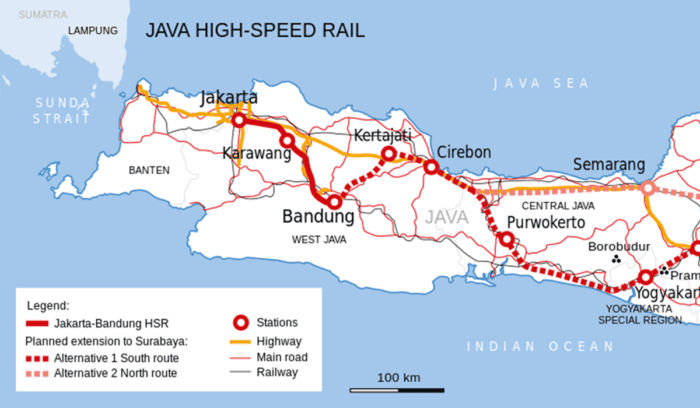
Indonesia opens the Southern Hemisphere’s first high-speed train
Indonesia’s new Jakarta–Bandung line brought high-speed rail to the Southern Hemisphere for the first time, cutting a three-hour journey to just 46 minutes. Trains travel the 142-kilometer route at around 350 km/h, linking two cities with a combined population of nearly 14 million.

Germany retires diesel trains across entire regional network with hydrogen
Fourteen Alstom Coradia iLint hydrogen trains have fully replaced diesel locomotives on the Cuxhaven-to-Buxtehude lines in Lower Saxony, Germany — the world’s first 100% hydrogen-powered regional rail network. Each train pulls oxygen from the air, combines it with hydrogen, and produces only water vapor as exhaust.
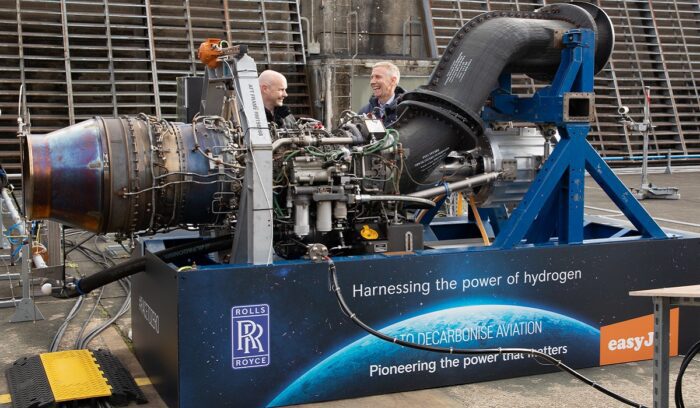
Rolls-Royce and easyJet complete first hydrogen jet engine test
Rolls-Royce and easyJet successfully ran a modern jet engine on green hydrogen produced entirely from wind and tidal energy, proving the concept works at scale on real aviation hardware. Unlike battery-electric approaches, the hydrogen engine burns clean, releasing water vapor rather than CO2.

Airbus helicopter flies both engines on 100% sustainable aviation fuel
An Airbus H225 helicopter flew with both engines simultaneously burning 100% sustainable aviation fuel — a first for any rotorcraft anywhere in the world. Previous tests had only run SAF in a single engine at a time, so the twin-engine test proved the fuel performs reliably under full operational load.

Gulfstream completes first transatlantic flight on 100% SAF
A Gulfstream G600 flew from Savannah, Georgia to Farnborough, England in under seven hours on 100% sustainable aviation fuel — no fossil jet fuel in the tank. The flight became the first transatlantic crossing completed entirely on SAF, demonstrating the fuel’s viability for long-haul aviation.

Yara launches world’s first clean ammonia-powered container ship
Norwegian chemicals company Yara will launch the Yara Eyde in 2026, a container ship designed to run entirely on ammonia — eliminating the need for fossil marine fuel. The vessel is projected to cut around 11,000 tonnes of CO2 emissions each year on its regular commercial route.
The outlook
The trajectory is clear and, for once, ahead of schedule. The IEA projected EVs at 35% of global new car sales by 2030 — a target that looked ambitious when set, but looks conservative now given China’s 37% plug-in share in 2023 and the EU’s December 2025 crossover.
The biggest variable is whether infrastructure keeps pace with vehicles. The U.S. mayors’ commitment to grow public charging fivefold by 2035 — with 40% in underserved neighborhoods — addresses the equity gap that could otherwise slow adoption. Wireless charging roads and battery-swapping models point toward solutions that don’t require drivers to plan around charging stops.
Caveats remain real: grid decarbonization determines whether EV wins are genuine or just displaced emissions. Ethiopia’s model — where every kilowatt powering an EV comes from renewables — is the gold standard. The rest of the world is still catching up to it.
Frequently asked questions
How fast is electric vehicle adoption growing globally?
Very fast, and accelerating. Global EV sales surpassed 20 million units in 2025, a 27% increase over the prior year. In 2022, EVs first crossed 10% of global new car sales; by 2023 that figure was heading toward 14 million units, with the IEA projecting 35% of new car sales will be electric by 2030.
Which country is most advanced in EV adoption?
Norway is the global leader. It became the first country in the world where battery-electric cars outnumber petrol cars on the road — a remarkable reversal from 2004, when just 1,000 EVs existed alongside 1.6 million gas cars. China leads in absolute volume, with 25% of new cars sold in 2023 being fully battery-electric.
Are electric vehicles actually reducing air pollution?
Yes, demonstrably. A peer-reviewed study in Nature Health found that China’s EV adoption cut fine particulate matter by nearly 24% across 150 cities and prevented an estimated 250,000+ premature deaths from air pollution by 2023. These are documented outcomes, not projections.
What are countries doing to accelerate the shift to electric vehicles?
Approaches range from outright bans to incentive programs and fleet mandates. Ethiopia banned combustion-engine vehicle imports entirely. Australia’s Capital Territory set a 2035 deadline. New Zealand passed 15-year climate legislation with a scrap-and-replace EV program for lower-income families. Nearly 350 U.S. mayors pledged to electrify city fleets and grow public charging fivefold by 2035.
Is clean transport only about electric cars, or does it include other modes?
It spans every mode of transport. Germany has retired diesel trains on an entire regional network using hydrogen. Indonesia opened the Southern Hemisphere’s first high-speed rail line. A Gulfstream jet crossed the Atlantic on 100% sustainable aviation fuel. Norway’s Yara Eyde will be the world’s first ammonia-powered container ship. Electric buses are being deployed at scale from India to Senegal.
Which developing countries are leading on clean transport?
Several are leapfrogging fossil-fuel infrastructure entirely. Ethiopia became the first country to ban combustion-engine vehicle imports, running on nearly 100% renewable electricity. Senegal launched Sub-Saharan Africa’s first all-electric public bus network in Dakar. Kenya is manufacturing electric buses domestically through a local partnership. Indonesia opened the Southern Hemisphere’s first high-speed rail line.
About this article
🤖 This article is AI-generated, based on a framework created by Peter Schulte.
🌍 It aims to be inspirational but clear-eyed, accurate, and evidence-based, and grounded in care for the Earth, peace and belonging for all, and human evolution.
💬 Leave your notes and suggestions in the comments below — I will do my best to review and implement where appropriate.
✉️ One verified piece of good news, one insight from Antihero Project, every weekday morning. Subscribe free.
