Transgender rights & well-being

This archive tracks documented progress on transgender rights and well-being — from legal protections and healthcare access to community-led initiatives that improve daily life. Stories here focus on what’s working: policies enacted, barriers removed, and people thriving. It’s a resource for readers who want evidence that meaningful change is happening.

Nairobi skyline, for article on gender marker ruling

Kenya’s High Court rules trans people’s gender-marker applications must be heard

Kenya’s trans community just won a major legal victory: a High Court has given government agencies 60 days to start accepting applications to update gender markers on IDs, passports, birth certificates, and academic records. Justice Bahati Mwamuye ruled that the state’s refusal to make those changes is unconstitutional, writing that “the silence and delay cannot defeat rights.” The decision caps more than a decade of patient legal work led by advocate Audrey Mbugua Ithibu and others, who described being interrogated at airports, banks, and hospitals whenever their documents didn’t match who they are. Beyond Kenya, the ruling adds momentum to a global understanding that accurate identity documents aren’t a bureaucratic detail — they’re the foundation for dignity, safety, and full participation in public life.

Trans pride flag during protest, for article on Romanian trans rights

Romania finally recognizes trans man’s identity in landmark E.U. victory

Romanian trans rights took a real leap forward this week, as courts finally ordered the government to legally recognize Arian Mirzarafie-Ahi as male — a recognition the U.K. granted him back in 2020. For years, he lived with two identities depending on which border he crossed, until his case climbed all the way to the E.U.’s top court and came home with a binding answer. That ruling now obligates every E.U. member state to honor gender recognition documents issued by another. It’s a quiet but powerful shift: transgender people across Europe gain stronger footing not through new laws, but through the freedom-of-movement rights already woven into the bloc’s foundation — harder to unravel, and open to everyone.

The Nepalese parliament building in Kathmandu for an article about Nepal's first transgender member of parliament

Nepal swears in its first openly transgender member of parliament

Transgender representation reached a historic milestone when Ranjita Shrestha became the first openly transgender person sworn into Nepal’s parliament. The achievement builds on decades of grassroots advocacy and a legal foundation dating to a 2007 Supreme Court ruling that established third-gender recognition on official documents, making Nepal one of Asia’s earliest adopters of formal gender identity protections. Nepal’s proportional representation system created the structural opening that made her election possible. While discrimination and uneven implementation of legal protections remain serious challenges, Shrestha’s presence in parliament signals meaningful progress for transgender Nepalis and offers a compelling example for advocates across South and Southeast Asia.

Kenyan Parliament building in Nairobi at dusk for an article about transgender rights Kenya

Kenyan court orders parliament to pass transgender rights law

Transgender rights in Kenya took a landmark step forward as the Eldoret High Court issued what advocates are calling the first ruling of its kind on the African continent, directing parliament to enact explicit legal protections for transgender people. The case began in 2019 when activist Shieys Chepkosgei was unlawfully arrested and subjected to invasive gender-verification procedures the court found unconstitutional. The ruling awards her roughly ,700 in damages and mandates a Transgender Protection Rights Act. Significantly, it establishes judicial precedent that could influence legal challenges across Africa.

The Massachusetts State House dome in Boston for an article about Massachusetts shield law protections

Massachusetts Senate passes Shield Act 2.0 to protect abortion and gender-affirming care

Massachusetts Shield Act 2.0 passed the state Senate 37-3 on June 26, 2025, strengthening protections for patients and providers seeking abortion care and gender-affirming care within the state. The updated law bars state agencies from cooperating with out-of-state or federal investigations targeting legally protected healthcare, restricts sharing of patient data, and mandates emergency care at acute-care hospitals. Critically, it extends new protections to clinicians themselves, allowing prescriptions under practice names and removing certain medications from drug monitoring programs to reduce provider exposure. The bill now moves to the Massachusetts House, representing the state’s third expansion of these protections in three years.

A Cuban national identity document on a desk, for an article about Cuba's gender marker reform for transgender people

Cuba lets trans people change ID gender markers without surgery

Cuba’s transgender gender marker reform marks a significant step forward for trans rights in Latin America. In 2025, Cuba’s National Assembly passed legislation allowing transgender Cubans to update gender markers on official identity documents through simple administrative declaration, requiring no surgery or judicial approval. The reform matters because mismatched IDs create cascading barriers to employment, housing, and healthcare for trans people. Notably, the change decouples legal recognition from medical access at a time when U.S. embargo-related shortages limit hormone availability, joining Argentina, Uruguay, and others in embracing self-determination over medicalized gatekeeping.

Karla Sofia Gascón at 2024 Cannes Film Festival, for article on trans actor Oscar nomination

Karla Sofía Gascón just became the first out trans actor to score an Oscar nomination

Karla Sofía Gascón just became the first openly transgender person ever nominated for an acting Oscar, earning a best actress nod for her leading role in Emilia Pérez. The French-Spanish musical swept up 13 nominations in total, falling just one shy of the all-time record. Gascón, who transitioned in 2018, plays a cartel boss building a new life after her own transition — a role she fought for and says she could only have brought this depth to later in life. Her nomination won’t fix Hollywood’s long gap in trans representation overnight, but it cracks open a door that was firmly shut, signaling to studios and audiences alike that trans stories told with authenticity belong at the center of the screen.

Sarah McBride, for article on trans member of Congress

Sarah McBride makes history as first trans member of U.S. Congress

Sarah McBride won Delaware’s only U.S. House seat by nearly 15 points in November 2024, becoming the first openly transgender person elected to Congress in its 235-year history. At 34, she arrives with a record of firsts already behind her, including a Delaware state senate seat she won in 2020 and successfully defended two years later. She campaigned on healthcare costs, reproductive freedom, and workers’ rights — the issues her constituents named first — and has a track record of bipartisan wins back home. Roughly 1.6 million trans adults in the U.S. have never had a representative in Congress until now. That precedent, once set, cannot be undone — and it makes the path a little shorter for whoever comes next.

Chase Strangio to be the first openly trans lawyer to present to the Supreme Court

Chase Strangio made history on December 4, 2024, becoming the first openly transgender lawyer to argue before the U.S. Supreme Court. The case, U.S. v. Skrmetti, challenges Tennessee’s ban on gender-affirming care for trans minors — and Strangio came prepared, having argued the core issues before federal appeals courts four times, more than any attorney in the country. His path here runs through Obergefell, Bostock, and a winning challenge to Arkansas’s youth healthcare ban, alongside grassroots work supporting LGBTQ+ immigrants. Whatever the Court decides, the moment itself matters: trans communities, so often the subject of legal disputes rather than participants in them, finally had one of their own at the lectern — a shift in who gets to shape the law that shapes their lives.

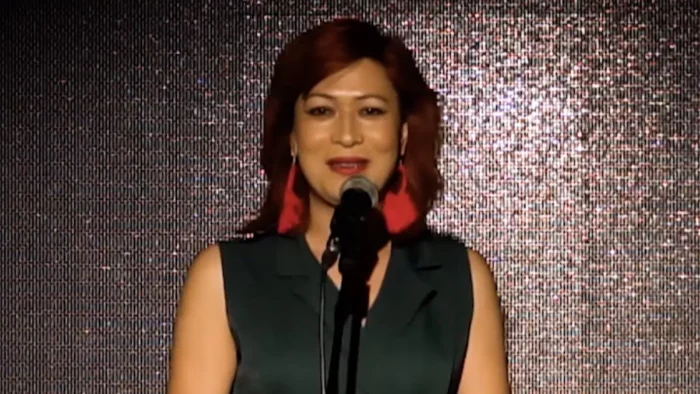
Kim Coco Iwamoto, for article on Hawaii transgender lawmaker

Kim Coco Iwamoto to become Hawaii’s first trans lawmaker

Hawaii just elected its first transgender state lawmaker, and she did it by unseating the sitting House Speaker. Kim Coco Iwamoto won her Honolulu Democratic primary with 49.3% of the vote, edging out Scott Saiki by about five percentage points without the backing of the party establishment. A longtime civil rights attorney and former Board of Education member, Iwamoto ran on a platform that includes the Green New Deal, affordable housing, and stronger protections for LGBTQ+ youth in foster care. At a moment when transgender Americans are facing a wave of legislative attacks, a win like this — built on years of organizing and persistence — offers a hopeful reminder of what representation can still look like.