
Israel is ending its ban on blood donation from queer men
Nitzan Horowitz, the out Minister of Health in Israel, proclaimed, “There’s no difference between one blood and the other. Discrimination against gays in donating blood is over.”
From disease eradication efforts to advances in vaccination and maternal health, this archive tracks real progress in public health. Stories here focus on what’s working — policies, interventions, and research that are improving and extending lives around the world.

Nitzan Horowitz, the out Minister of Health in Israel, proclaimed, “There’s no difference between one blood and the other. Discrimination against gays in donating blood is over.”

Studies from Columbia University, University of California Berkeley, and other renowned institutions show that chlorpyrifos can damage the developing brains of children, causing reduced IQ, loss of working memory, and attention deficit disorders.

The clinical trials will start on August 19 and end sometime around spring 2023, according to the National Institutes of Health’s trial registry. They will involve 56 HIV-negative participants aged 18 to 56.

Targeting a pair of rare genetic blood diseases, the experimental therapy has so far been 100 percent effective in all 22 patients treated.
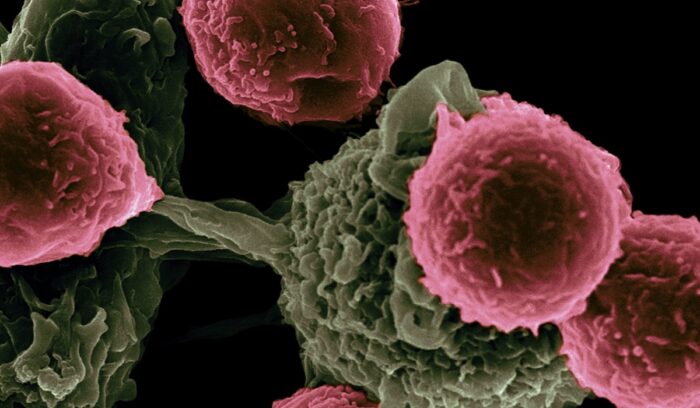
The new study, led by Dr. Sagar Sengupta from the National Institute of Immunology has however found a novel way to identify the disease as early as stage 1 through his lab’s work on microRNAs

Maine has enacted a groundbreaking law that will ban the use of toxic PFAS compounds in all products by 2030, except in instances deemed “currently unavoidable”.

The move will allow pharmacists to automatically substitute the cheaper version, just as they do with generic pills for other kinds of drugs. It could save diabetics and health plans millions of dollars annually.

In 2015, the World Health Organization declared that glyphosate is “probably carcinogenic to humans.” Bayer now faces tens of thousands of legal claims from U.S. customers.

The report, appearing in The Journal of the National Cancer Institute, reflects good news for 11 of the 19 most common cancers among men, and for 14 of the 20 most common cancers among women.

More than one percent of Iceland’s working population participated in the pilot scheme, which cut the usual 40-hour working week to 35-36 hours with no reduction in overall pay, reports The Independent.