
Climate crisis

The climate crisis demands action — and action is happening. This archive tracks real progress: policy wins, clean-energy milestones, community resilience, and scientific advances that show meaningful change is possible. Stories here come from every corner of the world.

Solar panels, for article on utility-scale solar farm, for article on Pacific renewable energy, for article on dome-shaped solar cells

China builds its first major solar farm

China’s first 10kW civil photovoltaic power station, which is also the oldest existing photovoltaic power station in China, was built in Xiaocha Village, Yuanzi Township, Yuzhong County, Gansu Province, providing domestic electricity for 130 local households. After 40 years, the plant is still generating electricity at around 7 kW.

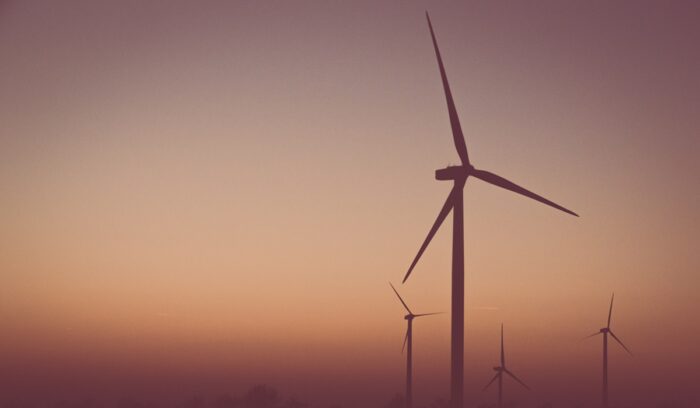
Wind turbine from below, for article on world's first wind farm

U.S. Windpower installs the world’s first wind farm in New Hampshire

The world’s first wind farm spun to life in late 1980 on a New Hampshire hillside, where 20 small turbines fed electricity directly into the grid. Blades broke, towers stood just 60 feet tall, and the project was quietly dismantled within a couple of years. But the proof held, and a direct line runs from those struggling machines to today’s global wind industry.

Tree frog, for article on yasuní national park

Ecuador formally establishes Yasuní National Park, protecting Earth’s most biodiverse patch of Amazon

Yasuní National Park was established in 1979, when Ecuador drew a boundary around roughly 10,000 square kilometers of Amazonian rainforest where the equator, Andes, and Amazon converge. A single hectare there holds more insect species than all of North America. The park remains home to the Huaorani and two uncontacted peoples who have lived there for generations.

Aerosol 1, for article on CFC aerosol ban

Sweden becomes the first country to ban CFC aerosol sprays

Sweden’s CFC aerosol ban, announced on January 23, 1978, made it the first country to prohibit the ozone-destroying propellants — acting seven years before scientists discovered the Antarctic ozone hole. The decision rested on theory alone, and it helped set the template for the Montreal Protocol and one of humanity’s rare universal environmental agreements.