
Myanmar LGBT festival goes public for first time
The widening acceptance boosted numbers with some 6,000 people coming along on the first day alone, compared with 2-3,000 over the whole festival in previous years.
Southeast Asia spans more than 600 million people across diverse nations, cultures, and ecosystems. This archive gathers milestones and solutions stories from the region — covering health, environment, governance, and more. Follow the progress happening across countries like Vietnam, Indonesia, the Philippines, Thailand, and beyond.

The widening acceptance boosted numbers with some 6,000 people coming along on the first day alone, compared with 2-3,000 over the whole festival in previous years.

On January 7, 1979, Vietnamese forces rolled into Phnom Penh and ended the Khmer Rouge regime, closing nearly four years of rule that had killed an estimated 1.5 to 2 million Cambodians — roughly a quarter of the population. The road to justice was long, but the day itself broke the nightmare.
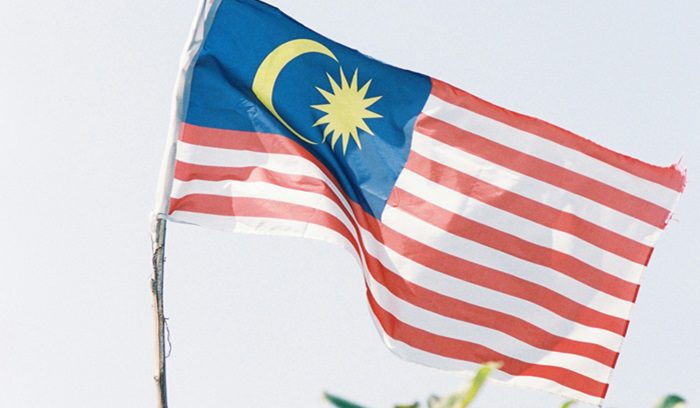
The Malaysia Agreement, signed in London on September 16, 1963, united four territories — Malaya, Singapore, Sarawak, and North Borneo — into a single federation. Before the signing, a commission led by Lord Cobbold traveled through Borneo to gauge whether its peoples supported the merger. It remains one of Southeast Asia’s defining acts of negotiated decolonization.

Cambodia regained its sovereignty on November 9, 1953, ending nearly 90 years of French colonial rule. King Norodom Sihanouk — once dismissed by French officials as pliable — led a “Royal Crusade for Independence” across three continents, pressing his case in Paris, Washington, and beyond. Cambodia became the first Indochinese nation to win independence through negotiation rather than war.

Indonesia became a unitary republic on August 17, 1950, exactly five years after Sukarno and Hatta’s handwritten proclamation of independence in Jakarta. The path there ran through four years of guerrilla war, UN diplomacy, and a decisive U.S. threat to cut Marshall Plan aid to the Netherlands. It was among the twentieth century’s defining acts of decolonization.

Burma’s independence arrived at 4:20 a.m. on 4 January 1948, at a moment an astrologer had deemed auspicious for the new republic’s birth. Months earlier, General Aung San had gathered Shan, Kachin, and Chin leaders at Panglong to promise a federation of peoples. He was assassinated at 32, leaving that vision as the country’s enduring, unfinished work.

Philippine independence became official on July 4, 1946, when the United States and the new Republic of the Philippines signed the Treaty of Manila, formally ending nearly five decades of American colonial rule. The signing in Manila was the legal culmination of a struggle Filipinos had carried since declaring independence back in 1898.

Vietnam’s independence was declared on September 2, 1945, when Ho Chi Minh stood in Hanoi’s Ba Dinh Square before a crowd of hundreds of thousands. He opened with words borrowed from the American Declaration of Independence — a pointed move from a leader who knew his audience. The moment launched a decades-long struggle that reshaped Southeast Asia.

Indonesian independence was declared on the morning of August 17, 1945, when Sukarno stepped outside his Jakarta home and read just 62 words aloud. Mohammad Hatta stood beside him; Sukarno’s wife had hand-sewn the flag. After roughly 350 years of Dutch control, a nation of thousands of islands claimed itself.

Around 1363 C.E., a Bornean prince named Awang Alak Betatar embraced Islam, took the name Muhammad Shah, and became the first sultan of Brunei. His small coastal kingdom survived early setbacks, including a devastating 1369 sack by the Sulu kingdom, to eventually become one of the world’s longest-surviving monarchies.