
San Francisco Giants make MLB history wearing Pride-themed uniforms
The San Francisco Giants became the first team in Major League Baseball to wear Pride colors onto the field on June 5 for their Pride Day game against the Chicago Cubs.
This archive covers progress stories from North and Central America, spanning the U.S., Canada, Mexico, and the nations of Central America. Readers will find reporting on health, environment, community resilience, and policy advances across the region.

The San Francisco Giants became the first team in Major League Baseball to wear Pride colors onto the field on June 5 for their Pride Day game against the Chicago Cubs.

The funds will be made to eligible Native American, Alaska Native, and Native Hawaiian entities for broadband deployment, to support digital inclusion, workforce development, telehealth, and distance learning.

The suspension includes 10-year leases that the Bureau of Land Management (BLM) issued on Jan. 6, 2021, which span more than 430,000 acres of the refuge.

The Drivers Cooperative’s founders see their new project as a way for drivers to escape what they describe as exploitation on the part of Uber and Lyft.

Late last month, the governor signed another bill that expands expungement eligibility for certain convictions, including misdemeanor marijuana possession.

Each year, nearly a million children develop TB and 205,000 die of TB-related causes. More than 80% of childhood TB deaths occur in those under the age of 5.

Following successful alternative policing programs in Denver and Newark, Oakland, California is the latest city to adopt such a program with an initiative to redirect nonviolent, noncriminal calls to mobile teams of civilians.

The development, made by a team at Harvard University’s School of Engineering and Applied Science, increases the lifetime of electric vehicles while simultaneously increasing their range and reducing their charge time.

The new study conducted by researchers at Johns Hopkins University analyzed historical blood samples of more than 4,800 middle-aged and elderly subjects collected around a decade ago.
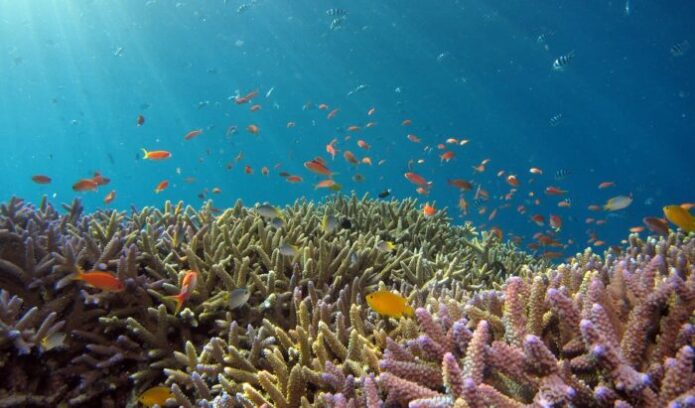
So far, 85,000 corals have been planted in the area and the coral cover of the seafloor in the park increased from 6% to 50% between 2010 to 2017.