
U.S. Congress passes bill named after Emmett Till to make lynching a hate crime
The bill would make it possible to prosecute a crime as a lynching when a conspiracy to commit a hate crime results in death or serious bodily injury.
This archive covers progress stories from North and Central America, spanning the U.S., Canada, Mexico, and the nations of Central America. Readers will find reporting on health, environment, community resilience, and policy advances across the region.

The bill would make it possible to prosecute a crime as a lynching when a conspiracy to commit a hate crime results in death or serious bodily injury.

Green hydrogen is getting a serious proving ground in South Texas, where Green Hydrogen International just broke ground on Hydrogen City — a facility designed to produce more than 2.5 billion kilograms of clean hydrogen each year at full build-out. The trick is storage: massive salt caverns beneath the Piedras Pintas salt dome will hold the energy, smoothing out the natural ebbs of solar and wind. From there, pipelines will carry hydrogen to Gulf Coast ports to make greener fertilizer and sustainable aviation fuel. Phase one comes online in 2026, an early real-world test of whether green hydrogen can finally scale up to decarbonize the industries batteries can’t reach.

The law is retroactive, freeing individuals who have been bound by arbitration language to pursue legal action against their harassers.

A new kind of milk will soon hit US shelves, but it isn’t some plant-based product designed to resemble dairy milk. Instead, it is made from whey proteins produced by microflora engineered.
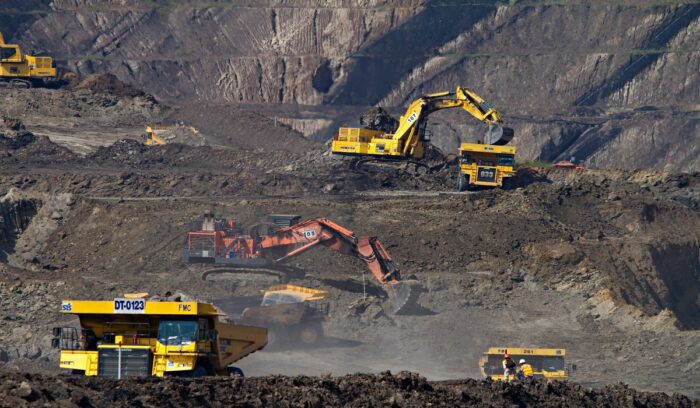
The government is no longer granting environmental permits for open-pit mining projects, the Ministry of Energy, Natural Resources, Environment and Mines. It also plans to shut down open-pit mines already in operation.

The retail giant currently pays a $15 per hour starting wage but said Monday that it would begin paying workers wages ranging from $15 to $24.

MIT spin-off Quaise says it’s going to use hijacked fusion technology to drill the deepest holes in history, unlocking clean, supercritical geothermal energy that can re-power fossil-fueled power plants all over the world.

Duke Energy will shut down all 11 of its remaining coal-fired power plants by 2035, spanning the Carolinas, Indiana, and Florida. The second-largest U.S. electric utility also plans to more than double its solar and wind capacity to 24,000 megawatts by 2030, backed by a $130 billion clean energy investment over the next decade. Duke serves roughly 8 million customers across six states, so its choices ripple outward into grid infrastructure, household bills, and the air people breathe near aging plants. When a utility this large commits to exiting coal entirely, it signals that clean energy economics have tipped — and offers a template other slow-moving utilities around the world may soon follow.

The rules “aim to support public confidence in the impartiality and integrity of the Committee’s work by guarding against even the appearance of any conflict of interest,” according to the Fed.

A ruling by Mexico’s Supreme Court this month canceled two controversial mining concessions in Indigenous communities, which have been fighting to stop the projects for nearly two decades.