North & Central America

This archive covers progress stories from North and Central America, spanning the U.S., Canada, Mexico, and the nations of Central America. Readers will find reporting on health, environment, community resilience, and policy advances across the region.

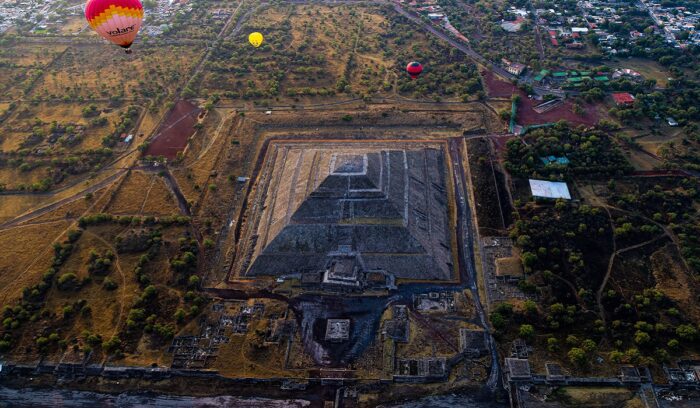
Teotihucan pyramid from a hot air ballon, for article on Teotihuacan settlement

Early Mesoamericans begin building the city of Teotihuacan

Teotihuacan began taking shape around 200 B.C.E., when farming villages near a cluster of reliable springs in a high valley northeast of modern Mexico City started merging into something bigger. At its peak, the city sprawled across eight square miles and held an estimated 100,000 people — quietly becoming one of the ancient world’s largest urban experiments.
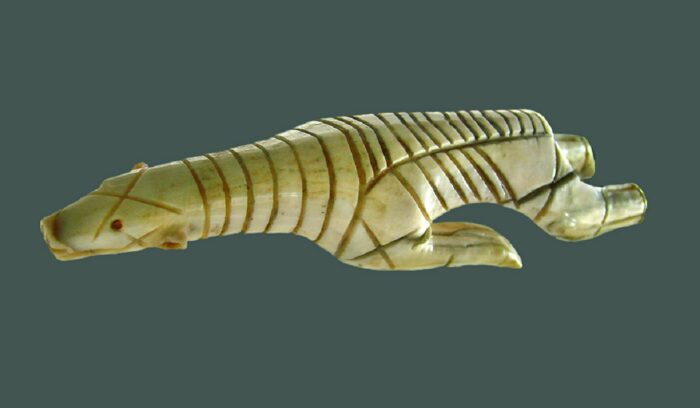
Dorset carving of a polar bear found on Igloolik Island, for article on Dorset culture

Dorset culture emerges across the Canadian Arctic

Dorset culture took shape around 500 B.C.E. across the Canadian Arctic, enduring nearly 2,000 years without bows, dogs, or many tools their neighbors relied on. They hunted seals and walrus through holes in the ice, lit the long darkness with soapstone lamps, and carved miniature masks still counted among the Arctic’s finest ancient art.

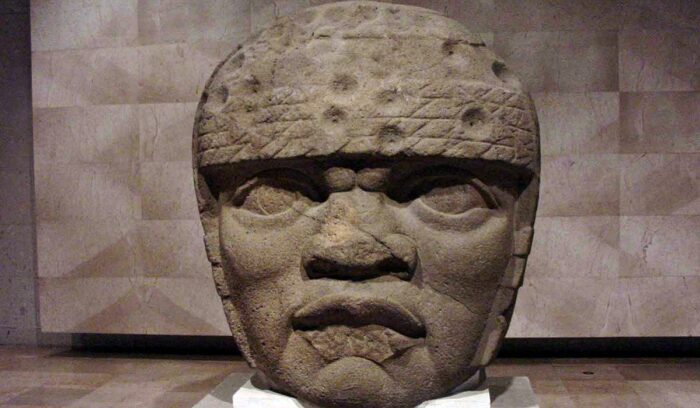
Olmec Head No. 3 from San Lorenzo-Tenochtitlán, for article on olmec civilization

The Olmec civilization rises as Mesoamerica’s first great culture

Olmec civilization took shape along Mexico’s Gulf Coast around 1200 B.C.E., raising cities, planned plazas, and colossal basalt heads in the humid lowlands of Veracruz and Tabasco. At San Lorenzo, builders hauled portrait stones weighing up to 8 tons across dozens of kilometers. Much of what later defined Mesoamerica — pyramids, ball games, even ceremonial chocolate — begins here.

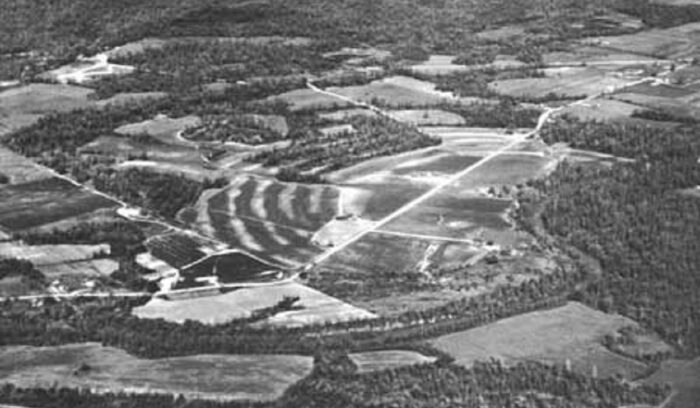
Aerial view of the Poverty Point earthworks, for article on poverty point culture

Poverty Point culture builds one of North America’s earliest complex societies

Poverty Point culture, flourishing along the lower Mississippi around 1500 B.C.E., built six concentric earthen ridges, a 50-foot pyramid, and a bird effigy mound near present-day Epps, Louisiana. Its people traded for copper and stone from sources up to 620 miles away, quietly proving that complex society took root in North America far earlier than once assumed.

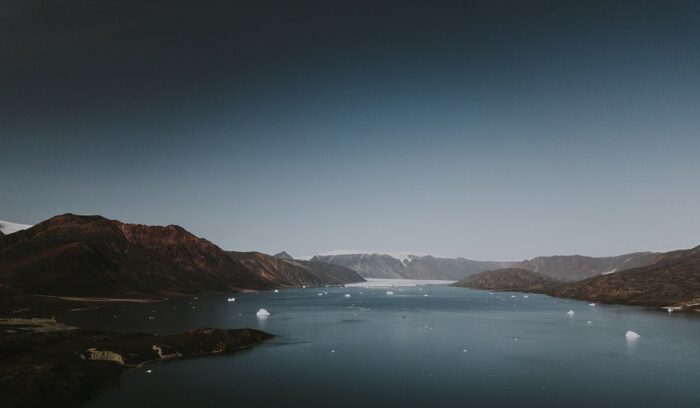
Greenland landscape, for article on first peoples of Greenland

First peoples of Greenland arrive across the Arctic from North America

Greenland’s first settlers arrived around 4,500 years ago, when small bands of Paleo-Eskimo peoples crossed from Arctic Canada onto an island of ice and extreme cold. The Saqqaq settled the southwest while the Independence I culture pushed into the far north, apparently unaware of each other. Their arrival marks one of humanity’s farthest reaches into the inhabitable world.

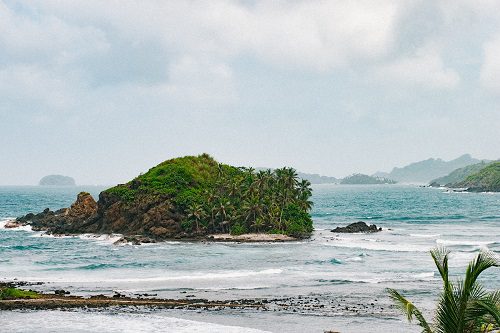
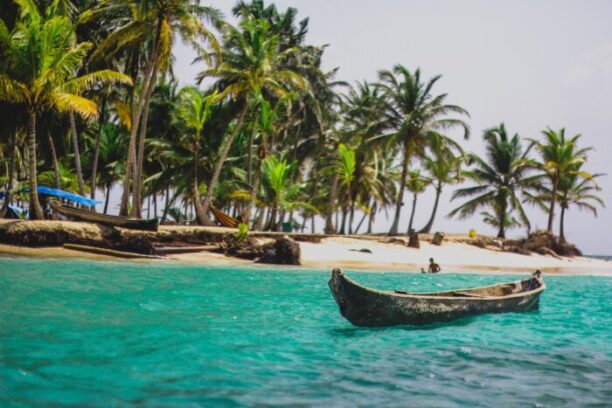
angel silva V uYocR k k unsplash, for article on Monagrillo ceramics

Panama’s oldest pottery appears at the Monagrillo site

Monagrillo, a small coastal community on Panama’s Parita Bay, produced the oldest known pottery in Central America around 2500 B.C.E. Its people fished the tidal flats, hunted deer in the foothills, and ground maize on simple stones — traces only recently confirmed. Their modest bowls mark an independent chapter in humanity’s long story of learning to shape clay.

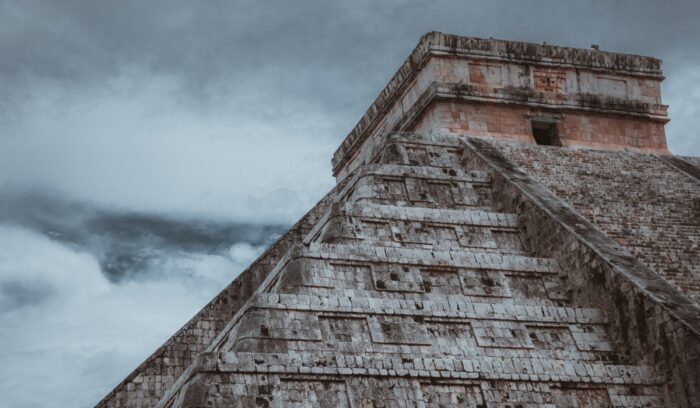
Chichen Itza pyramid, for article on early Maya civilization

Early Maya civilization takes root in Mesoamerica

Maya civilization took root around 2000 B.C.E., when small farming villages first appeared along Guatemala’s Pacific coast and in the Petén lowlands—long before the famous stone cities rose. These early communities grew maize, beans, and squash, and traded obsidian and jade across surprising distances. Their descendants, roughly seven million Maya today, still carry that thread forward.

Cotton growing, for article on cotton cultivation

Cotton cultivation takes root independently across multiple ancient civilizations

Cotton cultivation began independently around the world, with farmers in ancient Peru, the Indus Valley, and the Nile region each taming wild shrubs into fiber thousands of years ago. The oldest known cotton fabric, from Huaca Prieta in Peru, dates to roughly 6000 B.C.E. It’s a quiet reminder that good ideas often arise in more than one place at once.

angel silva V uYocR k k unsplash, for article on Cueva people Indigenous Panama

Spanish colonists name diverse Indigenous groups of eastern Panama “Cueva”

The Cueva of eastern Panama weren’t actually one people. When Spanish colonists arrived in the early 1500s, they flattened a mosaic of distinct Indigenous communities under a single name, likely linked by a shared trade language rather than a shared identity. Recognizing that label as a colonial invention is helping scholars ask better questions about who these peoples really were.