Europe

This archive covers progress stories and milestones from across Europe, spanning health, climate policy, social equity, and scientific research. From small-nation experiments to E.U.-wide initiatives, these reports highlight what is working and why.

A loggerhead sea turtle crawling on a sandy beach for an article about loggerhead sea turtle nests in Greece, for article on loggerhead sea turtle nests

Greece records more than 10,000 loggerhead sea turtle nests in a single year

Loggerhead sea turtle nests in Greece have surpassed 10,000 in a single year for the first time in recorded history, nearly doubling the previous annual average of 5,000 to 7,000. The milestone reflects decades of sustained conservation work by organizations like Archelon and Medasset, whose efforts to protect nesting beaches, regulate tourism, and deploy monitoring technology are now yielding measurable results. Greece hosts roughly 60% of all Mediterranean loggerhead nests, making this recovery regionally significant. Conservationists warn, however, that mounting tourism pressure and climate change mean the gains remain fragile and enforcement of protective measures must continue.

A busy highway filled with electric vehicles charging at roadside stations for an article about global EV fleet milestone, for article on electric vehicles Norway

Norway becomes world’s first country to have more fully electric cars than gas cars

Electric vehicles in Norway have officially overtaken gasoline cars on the road, a first for any country. Out of roughly 2.87 million passenger vehicles nationwide, battery electric cars now lead — a stunning flip from 2004, when just 1,000 EVs shared the road with 1.6 million gas cars. The shift came not through bans but through years of steady incentives: tax breaks, cheaper tolls, and accessible charging that made going electric the obvious choice. Diesel could be the next domino to fall, possibly as soon as 2026. Norway’s quiet, two-decade transformation offers the rest of the world a hopeful blueprint — proof that a car-loving country really can rewire its roads within a single generation.

The Hague waterfront and buildings, for article on fossil fuel ad ban

The Hague becomes world’s first city to pass law banning fossil fuel-related ads

The Hague has just become the first city in the world to legally ban fossil fuel advertising, prohibiting promotions for petrol, diesel, aviation, and cruise ships across billboards, bus shelters, and other outdoor spaces starting in 2025. The ordinance took two years to pass and arrived only after voluntary agreements collapsed, with ad operators simply refusing to comply. Researchers compare it to tobacco advertising bans: the point isn’t just to stop one billboard, but to chip away at the sense that high-carbon choices are the normal default. Cities like Toronto, Graz, and Amsterdam have been waiting for someone to go first, and now they have a working legal template. It’s a small but meaningful reminder that cities don’t have to wait for national governments to start reshaping the climate conversation.

Helsinki, for article on air-to-water heat pump

World’s largest air-to-water heat pump to warm 30,000 homes in Finland

Helsinki’s new heat pump can warm 30,000 homes on renewable electricity alone, even when winter temperatures drop to -4°F. Built by MAN Energy Solutions for Finnish utility Helen Oy, it’s the largest air-to-water heat pump in the world, and it uses carbon dioxide as its refrigerant instead of the harmful gases most pumps rely on. Once it switches on for the 2026–2027 heating season, it’s expected to cut around 26,000 tonnes of CO2 each year compared to fossil-fueled heating. Cold cities everywhere have been waiting for proof that district heating can go fully renewable without sacrificing reliability through deep winters. If Helsinki’s machine delivers, it offers a blueprint Scandinavia, Central Europe, and beyond can actually follow.

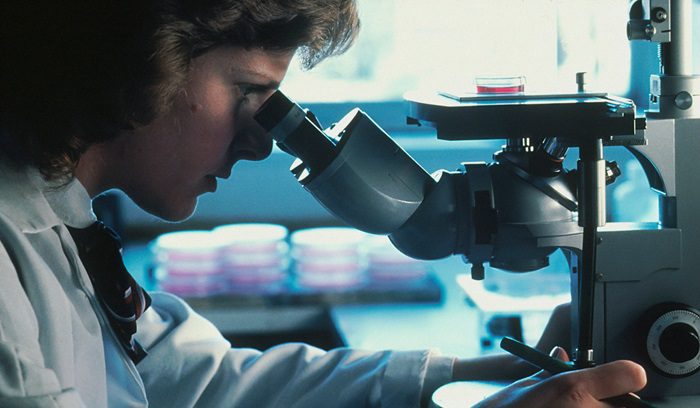
Medical researcher in a lab examining vials related to asthma and COPD treatment and mRNA vaccine development, for article on benralizumab injection, for article on mRNA lung cancer vaccine

World’s first mRNA lung cancer vaccine enters human trials in seven countries

A landmark mRNA lung cancer vaccine is now being tested in human patients for the first time, marking a historic milestone in cancer treatment. BNT116, developed by BioNTech, uses the same messenger RNA technology behind COVID-19 vaccines to train the immune system to recognize and destroy non-small cell lung cancer cells. The phase 1 trial spans 34 sites across seven countries, with roughly 130 patients enrolled. Unlike chemotherapy, this approach targets only tumor cells, potentially offering a more precise and lasting defense against the world’s deadliest cancer, which kills 1.8 million people annually.

Big Ben with bridge over Thames and flag of England against blue sky in London, for article on women in Parliament

British voters elect record number of women to Parliament

Britain’s 2024 general election sent at least 242 women to the House of Commons, the most in the chamber’s history and a jump from the previous record of 220 set in 2019. That brings female representation past 37% of the 650-seat lower house, climbing steadily from 30% just a decade ago. Behind the number is decades of deliberate work by parties to recruit women candidates, alongside shifting expectations about who belongs in power. Research suggests that once women hold more than a token share of seats, legislatures tend to take up health, education, and family policy with fresh seriousness. It’s a reminder that representation, once it reaches a critical mass, starts reshaping what democracies pay attention to.

Rows of offshore wind turbines at sea for an article about EU wind power, for article on EU renewable electricity

E.U. surpasses 50% renewable power share for first time ever in first half of 2024

Renewable energy just hit a milestone Europe has never seen before: in the first half of 2024, clean sources generated exactly half of the EU’s public electricity, the first time the bloc has crossed that line. Add nuclear into the mix and three-quarters of Europe’s power came from low-carbon sources, up from 68 percent the year before. Germany pushed even further, with wind alone supplying 34 percent of its public grid. What makes this hopeful isn’t just the number — it’s the pace. Europe blew past its 2030 renewable targets years ahead of schedule, suggesting the clean energy transition can move faster than policymakers, or skeptics, dared to imagine.

Iberian lynx, for article on Iberian lynx recovery

Iberian lynx no longer endangered after numbers improve in Spain and Portugal

The Iberian lynx has climbed from just 94 individuals in 2002 to 2,021 today, earning a reclassification from “endangered” to “vulnerable” on the IUCN Red List. Two decades ago, the world’s most threatened wild cat was confined to two small populations in southern Spain and widely expected to vanish. What turned things around was patient, unglamorous work: breeding programs, reintroductions across Spain and Portugal, rabbit recovery efforts, and local communities choosing to share their land with an animal once treated as vermin. Threats remain — road deaths, rabbit disease, and climate change — but the lynx now stands as living proof that coordinated, cross-border conservation can pull a species back from the edge, offering a template for recoveries elsewhere.

Alive sturgeon in aquarium, for article on Atlantic sturgeon reintroduction

Atlantic sturgeon reintroduced in Sweden for the first time after “functional extinction”

Atlantic sturgeon are back in Sweden’s Göta River for the first time in over a century, with 100 juvenile fish — each around 60 centimeters long — released near Bohus Fortress. Each one carries an acoustic transmitter so researchers can follow their journey toward the sea and, hopefully, back again to spawn. The fish were bred in Germany and brought over with support from Rewilding Europe, part of a growing network of sturgeon recovery projects stretching across the continent’s rivers. Sturgeon stir up riverbeds, host mussels, and signal a healthy ecosystem just by showing up. Their return is a quiet, patient kind of hope — proof that even species lost for generations can find their way home when the water is ready to receive them.

X-ray image of the intestine, for article on dostarlimab bowel cancer trial

New bowel cancer drug is found to be 100% effective

Immunotherapy just delivered something almost unheard of in cancer research: every single one of 42 patients in a rectal cancer trial showed no detectable tumour after treatment with the drug dostarlimab. Even more encouraging, the first 24 patients have now been tracked for an average of 26 months, and their cancers haven’t come back. For people with this specific subtype, it could mean skipping the chemotherapy, radiation, and surgery that often leave lasting damage. Larger studies are now underway to confirm the findings, but the signal is remarkable. It’s a glimpse of where cancer care may be heading worldwide — treatments that work with the body’s own immune system, and let patients keep their lives intact.