Europe

This archive covers progress stories and milestones from across Europe, spanning health, climate policy, social equity, and scientific research. From small-nation experiments to E.U.-wide initiatives, these reports highlight what is working and why.

Cargo ship from above, for article on Baltic Sea wastewater ban

Finland becomes world’s first country to ban cargo ships from dumping wastewater

Finland just became the first country in the world to ban cargo ships from dumping wastewater in its coastal waters, extending a rule that previously only applied to passenger ferries. The Baltic Sea desperately needs the help: it’s shallow, slow to refresh, and roughly 2,000 ships cross it every day, each carrying enough crew to rival a small town’s worth of sewage. Years of patient work by the Baltic Sea Action Group helped move shipping companies from voluntary pledges to binding law, and port wastewater collection has already tripled over the past five years. Finland’s jurisdiction ends at its territorial waters, but the law offers a tested blueprint other Baltic nations can follow — and a reminder that national legislation can outpace slow-moving global rules when ecosystems can’t wait.

Good news for British climate action, for article on acts of union 1707, for article on U.K. renewable energy

Renewable power set to overtake fossil fuels in the U.K. this year for the first time

U.K. renewables made history in 2024, generating 37 percent of the country’s electricity and edging out fossil fuels for the first full calendar year on record. The shift has been remarkably fast — as recently as 2021, fossil fuels still produced nearly half of Britain’s power. Wind led the charge, with onshore generation jumping 23 percent in the first nine months of the year after England lifted its longstanding planning ban. The same year, Britain shut down its very last coal plant, closing a chapter that began in 1882. For a grid that powers homes, transport, and industry, this turning point lays the foundation every other climate goal depends on.

Medical researcher in a lab examining vials related to asthma and COPD treatment and mRNA vaccine development, for article on benralizumab injection, for article on mRNA lung cancer vaccine

Injection beats steroids for asthma and COPD attacks in first major advance in 50 years

Asthma and COPD treatment may be on the verge of its biggest advance in 50 years, after a clinical trial found that a single injection of benralizumab outperformed standard steroid tablets for treating acute attacks. The study, published in Lancet Respiratory Medicine, showed four times fewer treatment failures at three months and 30% fewer follow-up interventions among patients receiving the injection. The trial targeted eosinophilic flare-ups, the biological subtype behind roughly half of all asthma attacks and nearly a third of COPD episodes. Together, the two conditions kill an estimated 3.8 million people annually, yet the standard of care has remained largely unchanged since the 1970s.

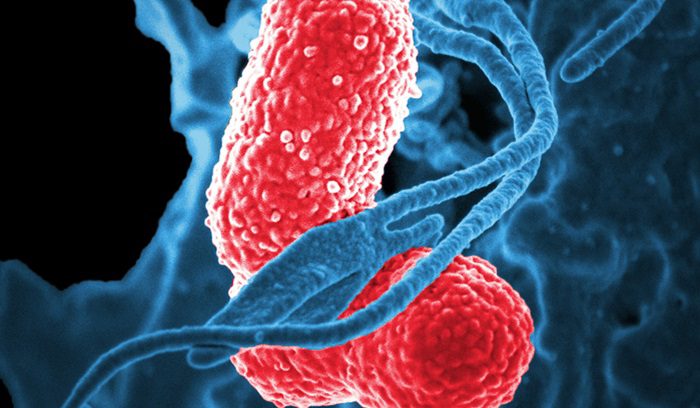
digitally colorized scanning electron microscopic (SEM) image, depicts a blue-colored, human white blood cell, (WBC) known specifically as a neutrophil, interacting with two pink-colored, rod shaped, multidrug-resistant (MDR), Klebsiella pneumoniae bacteria, for article on pneumococcal vaccine, for article on pneumococcal vaccines

Global child deaths from pneumonia have been cut in half since 2009

Childhood pneumonia deaths have been cut roughly in half since 2009, when a new kind of vaccine funding model launched and 438 million children across 64 countries received pneumococcal vaccines. The breakthrough wasn’t just the science — it was a $1.5 billion fund that guaranteed manufacturers a buyer, bringing prices down so lower-income countries could finally afford to protect their kids. In Kenya, invasive pneumococcal disease in young children dropped 92% within eight years of rollout. Now the vaccine is reaching fragile places like Chad, Somalia, and South Sudan, where a single dose can mean the difference between life and death. It’s a quiet reminder that when global health gets the funding right, millions of children grow up who otherwise wouldn’t.

Coal pollution, for article on Germany coal use

German coal use plunges nearly 40% in 2024

Germany’s coal cleanup took a striking leap forward: hard coal use in power plants dropped 39 percent in the first nine months of 2024 compared to the same stretch in 2023, avoiding roughly 20 million tonnes of CO2. The shift is being driven by a surge in renewables, which now supply more than half of Germany’s electricity, alongside cleaner imports from European neighbors. Lignite, the dirtier sibling, fell 14.5 percent over the same months. Analysts now expect Germany’s coal exit to arrive well before its 2038 legal deadline. When the continent’s largest economy can pull this off, it reshapes what’s possible for every country still wrestling with how to leave coal behind.

Island off the shore of the Azores, for article on pre-Portuguese Azores settlement, for article on Azores marine protected area

The Azores creates largest marine protected area network in the North Atlantic

Marine protected area status now covers 287,000 square kilometers around Portugal’s Azores islands, creating the largest such network in Europe. Half of that expanse bans fishing and other harmful activities outright, giving deep-sea corals, whales, manta rays, and sharks real room to thrive. Scientists mapped the zones using underwater cameras and deep-sea surveys, working alongside local fishers and officials so the boundaries reflect both ecological richness and community life. The Azores sits at a crossroads of Atlantic currents, with hydrothermal vents and seamounts that support some of the region’s most diverse marine communities. With less than 3 percent of the global ocean currently fully protected, this decision offers the worldwide 30×30 movement something it badly needs — a credible, science-led example others can follow.

Blood cells under microscope, for article on smart insulin, for article on lab-grown blood cells

Danish scientists design new form of insulin that automatically switches itself on and off

Smart insulin that reads blood sugar in real time and adjusts its own activity has cleared a major hurdle in animal trials, according to Danish researchers publishing in Nature. The molecule switches on when glucose climbs and powers down as levels normalize, mimicking the feedback loop of a healthy pancreas. That matters because conventional insulin can overshoot and trigger dangerously low blood sugar, a side effect that endangers people living with diabetes every day. Scientists have chased this idea for more than 40 years, and earlier candidates kept stumbling in living bodies. For the more than 500 million people worldwide managing diabetes, an insulin that doses itself would be a quiet revolution — bringing daily care closer to how the body was meant to work.

Insulin pens, for article on duodenal mucosal resurfacing

New treatment eliminates insulin for 86% of patients in early trials

A one-hour outpatient procedure helped 12 of 14 Type 2 diabetes patients stop using insulin entirely and stay off it for a full year. Researchers at Amsterdam University Medical Center used a catheter to deliver gentle electrical pulses to the lining of the small intestine, prompting the tissue to regenerate and apparently restoring the body’s natural insulin response. By comparison, the widely used medication semaglutide alone helps only about one in five patients discontinue insulin. The team calls the approach “disease-modifying” because it targets the root cause rather than the symptoms, and a larger randomized trial is now in the works. If the results hold, it could reshape how a condition affecting hundreds of millions worldwide is treated.

Ovarian and Cervical Cancer Awareness. a Teal Ribbon, for article on cervical cancer treatment

New cervical cancer treatment regime ‘cuts risk of dying from disease by 40%’

Cervical cancer treatment just took its biggest leap in 25 years, and the breakthrough comes from a surprisingly simple idea: changing the timing. In a trial spanning the U.K., Mexico, India, Italy, and Brazil, women who received a short course of chemotherapy before standard chemoradiation were 40% less likely to die from the disease. Even better, the drugs involved are already approved, affordable, and widely available — meaning hospitals could adopt this approach without waiting on a new wonder drug. For the hundreds of thousands of women diagnosed each year, especially in lower-income countries where cervical cancer hits hardest, it’s a rare kind of medical good news: a major gain that’s actually within reach.

image for article on ovarian cancer prevention vaccine

Scientists in the U.K. developing world’s first vaccine to prevent ovarian cancer

OvarianVax, in development at the University of Oxford, has just received up to £600,000 from Cancer Research U.K. to pursue the world’s first vaccine designed to prevent ovarian cancer before it begins. The idea is to train the immune system to recognize over 100 proteins found on early-stage ovarian cancer cells, then destroy those cells before they can spread. For women carrying BRCA gene mutations, who currently face the wrenching choice of preventive surgery that ends fertility and triggers early menopause, a vaccine could transform what’s possible. It’s still early days, with lab work and clinical trials ahead, but the project signals a real shift in cancer research: moving from treatment toward prevention, and giving high-risk women better options worldwide.