East Asia

East Asia spans countries including China, Japan, South Korea, and Taiwan. This archive gathers reported milestones from the region — covering public health, environmental efforts, technology, and social progress. Each entry highlights specific, verifiable developments worth knowing about.

image for article on giant panda recovery

Giant pandas are removed from the endangered species list

Giant pandas stepped back from the brink in 2016, when the IUCN downlisted them from Endangered to Vulnerable. China’s wild panda population had climbed to roughly 1,864, up from fewer than 1,100 in the 1980s, thanks to decades of reserves and reforestation. A rare, measurable recovery — and a reminder that decline isn’t destiny.

A top view of solar farm, for article on renewable energy capacity

Renewables top all other new power sources for the first time

Renewable energy quietly crossed a threshold in 2015, when solar, wind, and other renewables made up roughly two-thirds of all new power capacity added worldwide, according to an IEA report released the following year. China led the wave, installing more solar and wind than any other country. It was the moment the energy transition stopped feeling hypothetical.

South Korea flag, for article on June Democracy Movement

South Korea’s June Democracy Movement forces direct presidential elections

In June 1987, millions of South Koreans filled the streets for 19 days, demanding an end to military rule and the right to elect their own president. A broad coalition of students, workers, and church groups — galvanized by the deaths of two young activists — forced the regime to concede. The reforms shaped the democracy South Korea still lives under today.
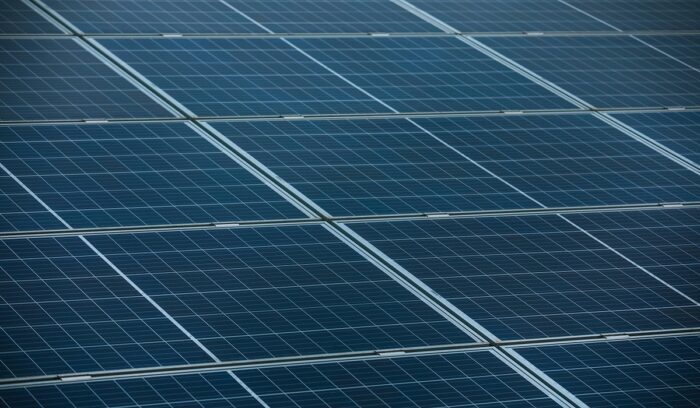
Solar panels installed on a rooftop representing solar power prices and renewable energy options, for article on domestic solar cell production, for article on silicon solar cell

China launches domestic solar cell production in Ningbo and Kaifeng

Solar manufacturing in China began quietly in 1975, when two factories — one in Ningbo, one in Kaifeng — started producing photovoltaic cells for civilian use, drawing on technology first developed for the country’s satellite program. Total installed capacity that year reached just half a kilowatt, a modest seed for what would grow into the world’s largest solar industry.

Old Chinese medical chart on acupuncture meridians, for article on traditional Chinese medicine

China formalizes traditional Chinese medicine into a national health system

Traditional Chinese medicine, as we know it today, was largely shaped in 1949 when Mao Zedong’s new government unified centuries of competing herbal traditions, folk practices, and cosmological theory into a single standardized system. One legacy: artemisinin, drawn from an herb long used in Chinese medicine, became a modern malaria treatment and earned Tu Youyou the 2015 Nobel Prize.

Preamble of Japanese Constitution, for article on Japan's postwar constitution

Japan’s postwar constitution takes effect, renouncing war forever

Japan’s postwar constitution took effect on 3 May 1947, just two years after the country’s surrender, and boldly renounced war as a sovereign right. Drafted through an unlikely collaboration between American occupiers and Japanese legal scholars, it redefined the emperor as a symbol and placed real power with the people. Nearly eight decades on, not a single word has been amended.

Poster for China's New Culture Movement, for article on New Culture Movement

China’s New Culture Movement challenges Confucianism, champions democracy

New Culture Movement thinkers in 1915 Shanghai launched a magazine that would reshape modern China. Chen Duxiu’s New Youth called for “Mr. Science” and “Mr. Democracy” to replace Confucian tradition, while Hu Shih urged writers to abandon classical Chinese for the language people actually spoke. Four years later, those ideas spilled into the streets.