Marine conservation

This archive tracks verified progress in marine conservation — from protected area expansions and coral reef restoration to fishing reforms and plastic reduction efforts. Across 146 articles, you’ll find evidence-based reporting on the people, policies, and science making headway for ocean ecosystems worldwide. The ocean covers more than 70% of Earth’s surface, and the work being done to protect it deserves more than alarm — it deserves attention.

Tuna

Maldives drops plan to reopen longline tuna fishing following protests

Longline fishing for tuna will remain closed in the Maldives, the island country’s president announced on Aug. 29. The decision came after local fishers, conservation NGOs and scientists protested against plans by the administration of President Mohamed Muizzu to reopen longline fisheries for yellowfin tuna and bigeye tuna. Longline fishing has been banned in the Maldives since 2019.

Aerial view of a turquoise French Polynesian atoll for an article about French Polynesia marine protected area

$35 million debt-for-nature deal aims to protect Indonesia’s coral reefs

A $35 million debt-for-nature swap between Indonesia and the U.S. aims to conserve coral reefs in eastern Indonesia over the next nine years, with the funding offset by canceled sovereign debt payable to the U.S. Indonesian conservation groups and their international partners will implement ground programs to protect reefs in key areas, strengthen marine protected areas and support community livelihoods under the deal.

Seastar

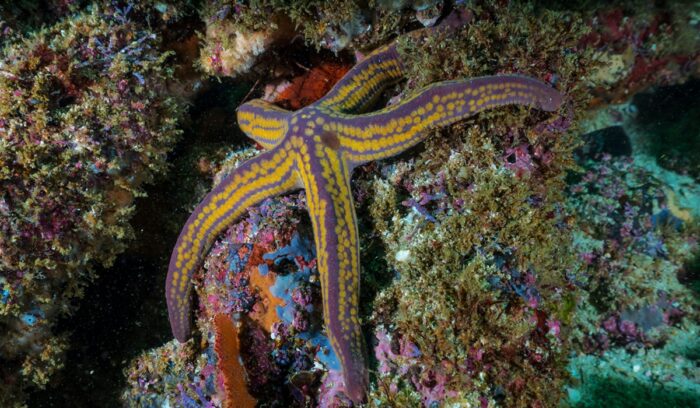
Lab-grown starfish released into wild for the first time ever, saving species from extinction

Due to sea star wasting disease, lower oxygen levels in seawater, and rising temperatures, starfish populations are at risk around the globe. Across the last decade, the sunflower star population plummeted by over 90%. Fortunately, in 2019, marine biologist Jason Hodin stepped up to save the sea stars from extinction. At the University of Washington’s Friday Harbor Labs, Hodin has carefully grown and raised several generations of sunflower starfish in a controlled environment, breeding them from a select sample of starfish he rescued from the harbor five years prior.

Ocean water, for article on law of the sea treaty, for article on ITLOS climate ruling

Island states win historic climate case in world oceans court

Nine small island nations just won a landmark climate ruling from the world’s top ocean court, with judges declaring for the first time that greenhouse gases absorbed by the sea legally count as marine pollution. The coalition — including Tuvalu, Antigua and Barbuda, Vanuatu, and Palau — argued that countries have binding obligations under the Law of the Sea to limit warming to 1.5°C, and the tribunal agreed. Though the opinion is advisory, it’s already shaping two pending climate cases at the Inter-American Court of Human Rights and the International Court of Justice. For nations whose very existence is threatened by rising seas, it’s a reminder that patient diplomacy and international law can still give the smallest voices real weight in the global climate fight.

School of herring

Sweden to ban bottom fishing in territorial waters

Bottom trawling, a practice criticized by NGOs for impacting ecosystems, involves dragging heavy nets over the seabed, damaging ecosystems, and releasing carbon into the oceans. Sweden is set to become the second EU country to ban bottom fishing in marine protected areas, going a step further than Greece’s April decision by banning it in all territorial waters.

School of fish

Peru approves the creation of long-awaited marine protected area

After 10 years of negotiations, Peru’s Council of Ministers has approved the creation of the Grau Tropical Sea National Reserve. To Peruvians, it is a much-awaited marine protected area, as it’s one of the most biodiverse stretches along the country’s coastline. The reserve covers over 285,000 acres of sea off the departments of Piura and Tumbes in northern Peru. The IUCN ranked the area among the 70 most important places in the world for marine biodiversity conservation.

Whale tail

Sei whales reappear in Argentine waters after nearly 100 years

News from Argentina shows that the benefits of the 1946 International Convention for the Regulation of Whaling are still compounding, with sei whales returning to the South American nation’s coastal waters for the first time in nearly a decade. Overhunting during the 1920s and 1930s led these massive blue-grey giants to abandon their ancestral waters in Argentina.

Salmon in stream

The number of fish on U.S. overfishing list reaches an all-time low

The U.S. National Oceanic and Atmospheric Administration released an updated analysis of American fisheries late last week via its annual “Status of the Stocks” report, which provides an assessment of the populations of the seafood species fishermen catch and customers buy. The report states that 94% of fish stocks are not subject to overfishing. NOAA said it was able to remove Atlantic coast bluefish and a Washington coast stock of coho salmon from the overfished list.