Marine conservation

This archive tracks verified progress in marine conservation — from protected area expansions and coral reef restoration to fishing reforms and plastic reduction efforts. Across 146 articles, you’ll find evidence-based reporting on the people, policies, and science making headway for ocean ecosystems worldwide. The ocean covers more than 70% of Earth’s surface, and the work being done to protect it deserves more than alarm — it deserves attention.

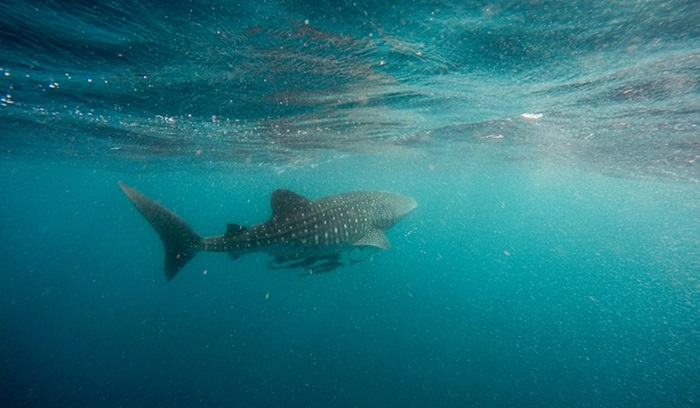
Basking shark

South Australia bans fishing of many sharks and rays in its waters

The state of South Australia has banned fishing of several endangered or critically endangered sharks and rays in its waters.
The state government said the new rules prohibit both recreational and commercial fishing of critically endangered species such as the whitefin swellshark, oceanic whitetip shark, gray nurse shark, and green sawfish; as well as endangered ones like the greeneye spurdog, southern dogfish, and basking shark. Additionally, fishing of all stingarees in the genus Urolophus and skates in the genera Dipturus and Dentiraja are banned.

Offshore oil rig at sunset, for article on offshore drilling ban

Biden permanently bans offshore drilling in 625 million acres of ocean

Offshore drilling is now off the table across 625 million acres of U.S. coastal waters, thanks to a sweeping executive action from President Biden. The protections cover the entire East Coast, the eastern Gulf of Mexico, the Pacific shores of Washington, Oregon, and California, and parts of Alaska’s Northern Bering Sea. What makes this move different is its staying power: Biden invoked a 1953 law that legal experts say can’t easily be undone without Congress. Alongside the ocean announcement, two new national monuments in California — both championed by Native tribes — bring his total conserved lands to 10. It’s a quiet but powerful reminder that some places are simply too precious to drill, and that lasting protection is possible when law, science, and community all pull in the same direction.

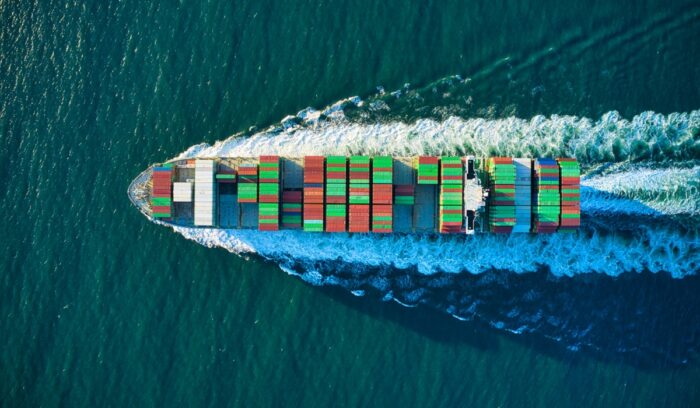
Cargo ship from above

Finland becomes world’s first country to ban cargo ships from dumping wastewater

Ship sewage discharged into the Baltic Sea contains large amounts of fecal bacteria and solid waste. Moreover, it is nutrient-rich, exacerbating eutrophication and causing toxic algal blooms in the summer months. Passenger ships in Finnish waters have long been prohibited from dumping this sewage into the sea, instead sending it to on-shore wastewater facilities. But now cargo vessels will be held to the same standard. The new law, set to take effect in July, will make Finland the world’s first country to implement such comprehensive wastewater regulations.

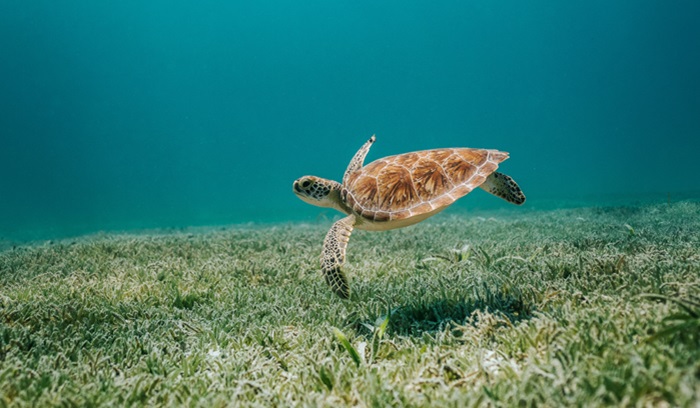
Sea turtle swimming

Local groups drive creation of new Puerto Rico marine protected area

The marine protected area (MPA), named Jardines Submarinos de Vega Baja y Manatí or the Vega Baja and Manatí Underwater Gardens, spans 77 square miles and is the culmination of a 16-year effort by ­­a coalition of local communities and NGOs. It’s comprised of several critically important ecosystems, including coral reefs, mangrove forests, and seagrass beds, and is home to more than a dozen threatened species, including the greater Caribbean manatee and several species of sea turtles.

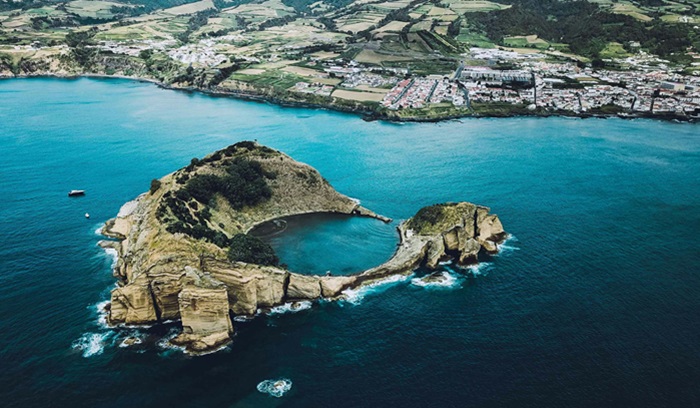
Island off the shore of the Azores, for article on pre-Portuguese Azores settlement

The Azores creates largest marine protected area network in the North Atlantic

The Azores, an autonomous Portuguese archipelago, has approved legislation to create the largest marine protected area (MPA) network in the North Atlantic Ocean. Spread across about 110,800 square miles, the new MPA network covers 30% of the ocean surrounding the archipelago. Half of the network is “fully protected,” and half is “highly protected.” In the “fully protected” parts, extractive or destructive activities like fishing are not allowed, while activities such as diving, swimming, and marine tourism are regulated.

Birds flying at the beach on a sunny day

California gets final approval for nation’s third-largest marine sanctuary

A new 4,543-square-mile area off a gorgeous and ecologically rich stretch of the California coast has achieved federal protection. The Chumash Heritage National Marine Sanctuary was officially designated Friday along 116 miles of the coast in the San Luis Obispo and Santa Barbara counties. Created by the National Oceanic and Atmospheric Administration, it is the country’s third-largest marine sanctuary. It is also first designed with the involvement of Indigenous groups and the first in 30 years in California.

Good news for marine protection, for article on Australia ocean protection

Australia to protect 52% of its oceans, more than any other country

Australia’s ocean protection just leveled up in a big way, with a sub-Antarctic marine reserve quadrupling to add 300,000 square kilometers of safeguarded waters — an area roughly the size of Italy. The expansion around Heard and McDonald Islands shields glaciers, albatross, macaroni penguins, elephant seals, and fish found almost nowhere else, keeping mining and new commercial fisheries out of one of the planet’s least-disturbed places. With this move, Australia now protects 52% of its marine territory, leaping past the global 30-by-2030 target it pledged to just two years ago. As nations everywhere search for tools to reverse ocean biodiversity loss, large, serious marine reserves like this one are quietly becoming a blueprint others can follow.

Landfill. A lot of plastic garbage. Environmental problems., for article on plastic waste ban

Bangladesh implements strong measures to eliminate single-use plastic

Data shows Bangladesh generates around 87,000 tons of single-use plastics annually, of which 96% are directly discarded as garbage. Lack of awareness has led to the collection of plastic waste all over the cities, especially near rivers or lakes, where they mix with water and soil, affecting ecosystems and food chains. The new country’s new government has now decided to implement an existing, but unenforced 2001 law by banning all single-use plastics.

Produce aisle at grocery store

California bans all plastic shopping bags at grocery stores

California had already banned thin plastic shopping bags at supermarkets and other stores, but shoppers could purchase bags made with a thicker plastic that purportedly made them reusable and recyclable. The new measure, approved by state legislators last month, bans all plastic shopping bags starting in 2026. Consumers who don’t bring their own bags will now simply be asked if they want a paper bag.

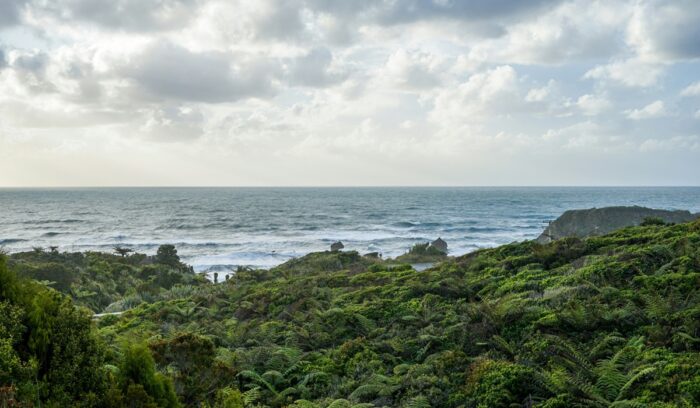
The beach with vegetation in foreground

In a first, the Brazilian city of Linhares grants legal rights to waves

The city of Linhares, Brazil, has granted legal rights to the waves at the mouth of the Doce River, the first instance in which a government has conferred rights upon part of the ocean. The city is aiming to better protect its coastal waters in the wake of the 2015 collapse of the Fundão dam. The dam held back more than 10 billion gallons of waste at an iron mine upstream, and when it failed, a wave of sludge poured into the Doce River.