United Nations

This archive tracks progress tied to the United Nations — from landmark agreements and humanitarian milestones to global health and climate commitments. Stories here show how multilateral cooperation produces real-world results.

United Nations building in NYC, for article on ICJ climate ruling

U.N. General Assembly backs landmark World Court ruling on nations’ climate obligations

Climate accountability took a historic leap forward when the UN General Assembly voted 141 to 8 to endorse a landmark International Court of Justice ruling that treats climate action as a legal obligation rather than a political choice. The resolution, drafted by the Pacific island nation Vanuatu after years of patient advocacy, affirms that states breaching their climate duties may be required to halt the harm and offer reparation. Secretary-General António Guterres called it a victory for the planet, noting that the path to justice runs through a swift, equitable shift to renewables. For frontline communities everywhere, this reframing matters: climate protection is no longer just good policy — it’s a right they can claim.

A snowy owl in flight over a winter landscape for an article about migratory species protection

132 nations extend UN protection to 40 migratory species at historic Brazil summit

Migratory species protection expanded significantly at CMS COP15, where 132 nations meeting in Campo Grande, Brazil voted to extend international legal safeguards to 40 new species, including the snowy owl, giant otter, striped hyena, and great hammerhead shark. The decision pushes the U.N. Convention on the Conservation of Migratory Species total past 1,200 protected species for the first time. The achievement carries urgent weight: a new U.N. report found 49% of species already covered by the treaty are still declining. Conservation priorities set at the summit will shape international wildlife policy through at least the next CMS conference in 2029.

Aerial view of deep blue open ocean waves for an article about the UN high seas treaty

UN high seas treaty enters into force, opening a new era of ocean governance

The UN high seas treaty entered into force in 2024, marking the first time in history that the open ocean has received legal protection. The BBNJ Agreement extends international environmental law to the roughly 64% of ocean lying outside any country’s territorial waters. For the first time, the international community has tools to designate marine protected areas, require environmental impact assessments, and share profits from deep-sea genetic resources with developing nations. The treaty is considered essential to achieving the global 30×30 goal of protecting 30% of the ocean by 2030.

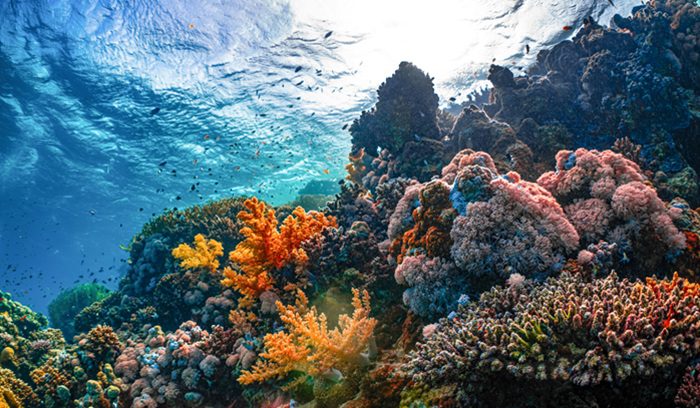
Sunlight filtering through open ocean water for an article about the High Seas Treaty entering into force

The high seas treaty enters into force, giving two-thirds of the ocean its first legal protection

The High Seas Treaty entered into force on January 17, 2026, giving the roughly two-thirds of the ocean beyond national borders binding legal protection for the first time in history. After nearly 20 years of negotiations, 60 nations ratified the agreement by September 2025, triggering its historic implementation. The treaty empowers the international community to establish marine protected areas in international waters, require environmental impact assessments for deep-sea activities, and share the benefits of marine genetic resources equitably among all nations. What once had no legal guardian now does.

Rows of solar panels in a sunny field for an article about renewable energy costs beating fossil fuels

91% of new renewable energy projects now beat fossil fuels on cost, IRENA reports

Renewable energy costs have fallen so sharply that 91 percent of new renewable power projects built in 2024 were cheaper than any new fossil fuel alternative, according to a July 2025 International Renewable Energy Agency report. Onshore wind now delivers electricity at just limitedshell.034 per kilowatt-hour, more than half the price of the lowest-cost fossil fuel option. A record 582 gigawatts of new renewable capacity came online globally, avoiding roughly 7 billion in fossil fuel costs. The shift is especially significant for developing nations, which can now build modern electricity systems at lower cost without decades of carbon lock-in.

Cargo ship, for article on shipping emissions framework

Countries reach historic deal to cut shipping emissions

Shipping emissions just got their first global climate framework — covering the large ocean-going vessels responsible for 85 percent of the industry’s CO₂. Negotiated at the International Maritime Organization in April 2025, the agreement pairs a progressively tightening fuel standard with a carbon price: ships exceeding emissions limits pay in, while near-zero vessels earn rewards. The revenue flows into a dedicated Net-Zero Fund supporting clean energy innovation and easing the transition for small island states and least developed countries already on the front lines of climate change. For an industry long considered one of the hardest to decarbonize — and one that operates beyond any single nation’s reach — this is a quietly historic turn toward cleaner seas and a fairer global transition.

Ocean water, for article on law of the sea treaty, for article on ITLOS climate ruling

Island states win historic climate case in world oceans court

Nine small island nations just won a landmark climate ruling from the world’s top ocean court, with judges declaring for the first time that greenhouse gases absorbed by the sea legally count as marine pollution. The coalition — including Tuvalu, Antigua and Barbuda, Vanuatu, and Palau — argued that countries have binding obligations under the Law of the Sea to limit warming to 1.5°C, and the tribunal agreed. Though the opinion is advisory, it’s already shaping two pending climate cases at the Inter-American Court of Human Rights and the International Court of Justice. For nations whose very existence is threatened by rising seas, it’s a reminder that patient diplomacy and international law can still give the smallest voices real weight in the global climate fight.

Intersex Pride flag, for article on intersex rights resolution

U.N. makes history with first-ever resolution supporting intersex rights

Intersex rights just got their first-ever resolution from the U.N. Human Rights Council — a milestone for the roughly 1.7 percent of people born with variations in sex characteristics, about as common as having red hair. Brought forward by Australia, Chile, Finland, and South Africa, the measure pushes back on decades of “normalizing” surgeries performed on intersex children too young to consent. It also calls for a global report documenting where these violations are happening, giving advocates a shared map for reform. After generations of quiet, persistent work by intersex activists, this vote signals that bodily autonomy for every child — however they were born — is becoming a standard the world is willing to name out loud.

African girl sleeping on mother's shoulder, for article on global child mortality

‘Historic milestone’ as global child mortality hits record low of 4.9 million in 2022

Child deaths worldwide have fallen to 4.9 million in 2022 — the lowest number ever recorded, and roughly half the toll of the year 2000. Behind that drop is decades of unglamorous, working-everyday care: vaccines, bed nets, oral rehydration, skilled midwives, and community health workers showing up in their own neighborhoods. Rwanda offers a remarkable glimpse of what’s possible, having cut its under-five mortality rate by more than 80% since the aftermath of the 1994 genocide through community-based insurance and a serious investment in primary care. The number is still far too high, and newborns and children in conflict zones remain especially vulnerable. But the trend is one of humanity’s quiet, steady triumphs — proof that coordinated care, sustained over decades, saves millions of lives.