At a glance
- Legacy forests: Washington’s Department of Natural Resources identified 106,000 acres of high-value older forest on state timber lands through a new scientific inventory; 77,000 of those acres — effectively all remaining older forest on state lands — are now permanently off-limits to logging.
- Timber revenue: About 29,000 acres within the broader inventory will remain available for sustainable harvest, and the DNR projects that timber revenue for public services will hold steady over the next decade.
- Carbon credits: Commissioner Upthegrove has directed the agency to explore ecosystem-service funding, including the sale of carbon credits from protected stands, as a new revenue stream for state trust lands.
What makes these forests worth protecting
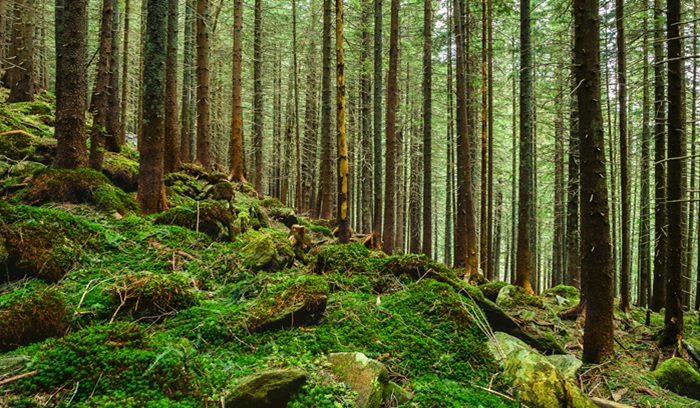
Legacy forests are not technically old-growth. They have not reached the centuries-long age of Washington’s most ancient stands. But they occupy a critical middle ground. A team of scientists and forest ecologists assembled a new inventory of these trees, cataloging their biodiversity, carbon density, and structural complexity. The Washington DNR’s Forest Forward initiative has framed these forests as irreplaceable in the context of climate change — stands that absorb and store carbon at a scale that younger, intensively managed forests cannot match. They also provide habitat corridors for species that struggle to survive in fragmented landscapes. The 77,000 acres selected represent the most ecologically significant portion of the 106,000-acre inventory. That selection effectively means no older forest on state timber land remains unprotected.Balancing the books
Washington’s state timber lands exist, legally, to generate revenue for public schools and other trust beneficiaries. That financial obligation has long created tension with conservation goals. This order tries to resolve it. The 29,000 acres still available for harvest are expected to keep revenue projections stable. Meanwhile, the state is actively developing new income streams tied to the forests’ ecological value rather than their board-feet. Carbon credit markets are the most immediate target. If those markets deliver, the protected acres could generate revenue precisely because they are left standing. Some environmental advocates say the plan does not go far enough. The Legacy Forest Defense Coalition, which organized tree-sits and public protests that helped push the issue into the political spotlight, has called for stronger protections across a wider footprint. That tension is real, and the long-term funding model for ecosystem services remains unproven at this scale. Still, the order represents a concrete shift in how a major timber state values its public forests.A model built from public pressure
The conservation order did not emerge from quiet bureaucratic deliberation alone. Sustained activism — including high-profile tree-sit protests in contested stands — generated public attention and political pressure over several years. The DNR’s response reflects how sustained civic engagement can move institutional policy. Oregon Capital Chronicle reporting on the economics of Pacific Northwest forest management has noted that states are increasingly looking at non-timber revenue as fiscal pressures and climate commitments intersect. Washington’s move fits that broader regional pattern. The approach also aligns with growing scientific consensus. Research published in ecology journals has consistently found that older, structurally complex forests store disproportionately more carbon than younger managed stands — making their protection one of the higher-leverage climate actions available to state governments. That evidence base gave the DNR political cover to act even as some timber interests pushed back.What comes next
The protected acres are being described as potential old-growth refuges of the future. If left undisturbed, some stands could reach old-growth characteristics within decades — not centuries. The DNR will need to develop the carbon credit and ecosystem-service frameworks quickly if the revenue argument is going to hold. Federal programs supporting nature-based climate solutions, including those tracked by the U.S. Forest Service, may offer additional funding pathways. Washington’s action arrives as other states and countries watch closely for replicable models. Conservation decisions of this scale — anchored in scientific inventory, balanced against real fiscal obligations, and responsive to public demand — are rare. That combination is what makes this one worth watching. Stories like this one connect to a wider pattern of states and nations rethinking what their natural systems are actually worth. Washington’s renewable energy transition and its forest conservation decisions both reflect the same underlying shift: public assets valued for their long-term ecological function, not just their short-term extraction yield. For a parallel story in energy, see how renewables now make up at least 49% of global power capacity — another marker of that transition gathering speed. And for readers interested in what other positive milestones look like across different domains, the recent finding that U.K. cancer death rates have fallen to their lowest level on record offers a reminder that progress across health, environment, and energy often moves in parallel.Read more
For more from Good News for Humankind, see:
- Renewables now make up at least 49% of global power capacity
- U.K. cancer death rates down to their lowest level on record
- The Good News for Humankind archive on conservation
About this article
- 🤖 This article is AI-generated, based on a framework created by Peter Schulte.
- 🌍 It aims to be inspirational but clear-eyed, accurate, and evidence-based, and grounded in care for the Earth, peace and belonging for all, and human evolution.
- 💬 Leave your notes and suggestions in the comments — I will do my best to review and implement where appropriate and possible.
- 📬 One verified piece of good news, one insight from Antihero Project, every weekday morning. Subscribe free.
More Good News
-

COP30 pledges recognition of 160 million hectares of Indigenous land rights
At the COP30 World Leaders Summit in Belém, Brazil in November 2025, 15 governments pledged to formally recognize Indigenous land rights over 160 million hectares by 2030 — an area the size of Iran — through the Intergovernmental Land Tenure Commitment. Brazil committed at least 59 million hectares. More than 35 donors renewed a $1.8 billion Forest and Land Tenure Pledge. The Tropical Forest Forever Facility secured nearly $7 billion, with 20% directed to Indigenous peoples. It was the largest Indigenous participation in COP history.
-

Ghana creates its first marine protected area to rescue depleted fish stocks
Ghana has declared its first marine protected area near Cape Three Points on the Gulf of Guinea, marking a historic step to reverse decades of overfishing. The protected zone aims to restore fish populations that have collapsed under pressure from industrial trawling and illegal fishing. The decision supports 2.7 million Ghanaians whose livelihoods depend on healthy coastal fisheries and aligns Ghana with the global goal of protecting 30 percent of the world’s oceans by 2030.
-

U.S. researchers cut Alzheimer’s risk by half in first-ever prevention trial
For the first time, researchers have evidence that removing amyloid plaques from the brain before symptoms appear can cut Alzheimer’s risk by roughly half. A clinical trial published in The Lancet Neurology, led by Washington University School of Medicine in St. Louis, found that long-term treatment with the antibody drug gantenerumab significantly delayed dementia onset in people with a rare genetic form of the disease. The findings provide the clearest signal yet that intervening years before symptoms emerge can change the course of Alzheimer’s disease.