
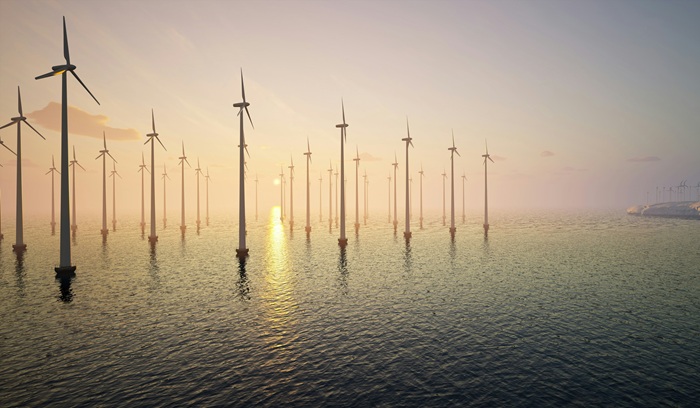
In a move that could reshape how Europe powers itself, ten countries have pledged €11 billion to build a 100-gigawatt North Sea wind hub — enough clean electricity to power roughly 100 million homes. The agreement, formalized through the Esbjerg Declaration and its expansions, represents the largest coordinated offshore wind commitment in European history, binding together nations whose coastlines touch the same cold, wind-rich waters.
At a glance
- North Sea wind hub: Ten nations — including Germany, Denmark, the Netherlands, Belgium, Norway, and the U.K. — have collectively pledged to scale offshore wind capacity in the North Sea to 100GW by 2030 and 300GW by 2050.
- €11 billion investment: The combined public and private financial commitment signals that governments are no longer treating offshore wind as a pilot project but as foundational infrastructure on the scale of highways or rail networks.
- Energy independence: The pledge accelerates a direct response to Europe’s dependence on imported fossil fuels, a vulnerability made sharply visible by energy price shocks following the 2022 C.E. Russian invasion of Ukraine.
Why the North Sea matters
The North Sea is one of the most wind-dense bodies of water on Earth. Its shallow continental shelf makes offshore turbine installation more feasible than deeper ocean environments, and its central location places it within reach of the continent’s largest electricity grids. For decades, individual nations built wind farms in their own waters with their own grids. This pledge changes the logic entirely.
Rather than ten separate national projects, the vision is an integrated offshore grid — sometimes called an “energy island” concept — where electricity generated far out at sea can flow across borders, balancing supply and demand across the whole of northwestern Europe. Denmark has already begun constructing an artificial energy island in the North Sea designed to serve as a hub for this kind of multinational transmission.
That shift from national to multinational infrastructure is arguably more significant than the gigawatt numbers. It requires countries to harmonize regulations, coordinate grid standards, and share the financial risk of building at sea — tasks that have historically proven difficult even among close allies.
What €11 billion actually builds
To understand the scale, consider that a single large offshore wind farm of around 1GW typically costs between €2 billion and €4 billion to build. The €11 billion in pledged public funds is seed capital — meant to de-risk the investments needed to attract the far larger sums from private developers and institutional investors that will actually finance construction at scale.
At 100GW, the North Sea hub would generate more electricity annually than all of Germany’s current power consumption. Reaching 300GW by 2050 C.E. would make it one of the largest single sources of clean energy anywhere on the planet.
The supply chain implications are substantial. The International Energy Agency has documented that offshore wind deployment at this scale requires enormous investment in specialized ships, port infrastructure, steel, rare minerals, and a skilled workforce — most of which does not yet exist in sufficient quantity. Several of the signatory nations have announced parallel investments in manufacturing and port upgrades, with Denmark and Germany leading in turbine production capacity.
Who benefits — and what remains unresolved
The benefits will not flow equally. Coastal communities with existing port infrastructure and technical training programs stand to gain jobs and economic activity. Communities further inland, or in countries outside the agreement, may see electricity price benefits but fewer of the industrial gains. The International Renewable Energy Agency has noted that just transition planning — ensuring workers from fossil fuel industries have real pathways into clean energy jobs — remains inconsistent across the participating nations.
There are also genuine engineering and ecological questions still being worked through. Offshore wind farms affect marine ecosystems, including migratory fish and seabird populations. Research published in Nature Ecology & Evolution has found that while some species adapt to turbine structures — even using them as artificial reefs — others are disrupted by underwater noise during construction. Environmental impact assessments vary in rigor across the ten nations, and coordinating ecological protections at the same level of ambition as the energy targets remains an open challenge.
The 100GW target by 2030 C.E. is also widely regarded as extremely ambitious. As of 2024 C.E., the North Sea nations collectively have roughly 30GW of installed offshore wind capacity. Tripling that in six years requires a pace of permitting, manufacturing, and installation that has never been achieved anywhere. Wind Europe’s annual statistics show installation rates still well below what the 2030 C.E. target demands, and grid connection bottlenecks remain a recognized constraint across the region.
A new model for clean energy cooperation
Whatever the precise timeline, the ten-nation pledge represents something genuinely new: countries treating the energy transition as a shared infrastructure project rather than a competitive national race. That shift in framing — from “my wind farm” to “our grid” — may prove as lasting as any turbine installed in the North Sea.
The European Commission’s Green Deal framework has provided some of the regulatory architecture for this cooperation, including shared targets and cross-border grid investment mechanisms. But the political will behind the Esbjerg Declaration came from heads of government committing publicly and financially — a signal to investors, manufacturers, and neighboring regions that the direction of travel is set.
For a continent that spent much of the 20th century dividing its resources by national borders, a shared offshore energy grid in the North Sea carries a meaning beyond electricity generation. It is an argument — made in turbines and transmission cables — that cooperation at scale is still possible.
Read more
For more on this story, see: North Sea wind hub pledge — background
For more from Good News for Humankind, see:
- Ghana establishes a major new marine protected area at Cape Three Points
- Alzheimer’s risk cut in half by drug in landmark prevention trial
- The Good News for Humankind archive on renewable energy
About this article
- 🤖 This article is AI-generated, based on a framework created by Peter Schulte.
- 🌍 It aims to be inspirational but clear-eyed, accurate, and evidence-based, and grounded in care for the Earth, peace and belonging for all, and human evolution.
- 💬 Leave your notes and suggestions in the comments below — I will do my best to review and implement where appropriate.
- ✉️ One verified piece of good news, one insight from Antihero Project, every weekday morning. Subscribe free.
More Good News
-

Poland to recognize same-sex marriages from E.U. states
Same-sex marriages performed elsewhere in the EU must now be formally recognized in Poland, the country’s Supreme Administrative Court ruled — a turning point for a nation that still offers no domestic legal recognition for same-sex unions. Rights groups estimate that 30,000 to 40,000 Polish citizens have married abroad, and many can now see those unions entered into Poland’s civil registry for the first time. The case began with a couple who wed in Germany in 2018 and were turned away by Warsaw officials; when the ruling was read, activists in the courtroom broke into applause. In a country where…
-
More than 50 nations attend world-first conference on phasing out fossil fuels
Fossil fuel phaseout talks just crossed a real threshold: for the first time, more than 50 nations sat down together specifically to plan a way off coal, oil, and gas. The two-day gathering in Santa Marta, Colombia, brought together an unusually wide mix — major producers like Australia, Norway, and Canada alongside Pacific island nations like Tuvalu and Vanuatu, with Europe and emerging economies in between. No binding deals were expected, but the recommendations will feed into a voluntary roadmap being shaped under Brazil’s COP30 leadership. It’s a small, hopeful shift: producers and consumers finally talking openly about a transition…
-
Singapore stops sourcing and breeding dolphins
Resorts World Sentosa, home to more than 20 Indo-Pacific bottlenose dolphins, is halting both wild sourcing and captive breeding at its Singapore oceanarium. The resort is now assembling an independent expert panel to figure out what’s next for the animals in its care, including a 7-year-old named Kenzo. It’s a meaningful shift from one of Asia’s most prominent entertainment venues, and one animal welfare groups have pushed toward for over a decade. With Mexico, Canada, and France already banning cetacean captivity for entertainment, this quiet decision in Singapore signals that the tide is turning across Asia too, reshaping what travelers…
