Along the banks of what would become British Columbia’s Fraser River, people were already living, hunting, fishing, and building — long before anyone called them the Stó꞉lō. The archaeological record places human habitation in S’ólh Téméxw, their traditional territory, as far back as 9,000 B.C.E., making this one of the longest continuously occupied regions in what is now Canada.
What the evidence shows
- Sto:lo people: The name “Stó꞉lō” comes from the Halqemeylem word for “river” — these are, literally, the river people, whose identity has been shaped by the Fraser and its tributaries for at least 11,000 years.
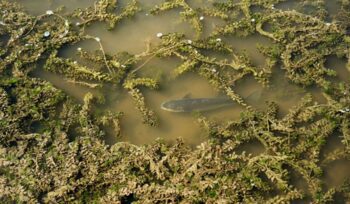
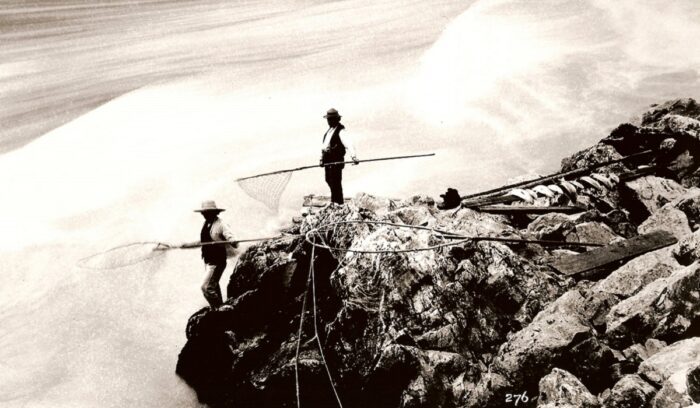
- Fraser Valley archaeology: Two anchor sites — the Milliken site in the lower Fraser Canyon and the Glenrose Cannery site near the river’s mouth — document seasonal camps where early inhabitants hunted deer, elk, and seals, and fished for salmon, eulachon, and sturgeon.
- Xá:ytem site: Among the oldest archaeological digs in Canada, the Xá:ytem site near present-day Mission contains evidence of post-hole and timber-frame construction dating from 5,000 to 9,000 years ago, pointing to sophisticated social and economic life far earlier than many colonial-era accounts acknowledged.
Life on the river before Europe knew it existed
The earliest Stó꞉lō ancestors were highly mobile hunter-gatherers, moving with the seasons and the salmon runs. The Fraser River was not just a water source — it was the spine of an entire economy and cosmology.
By the middle Holocene, roughly 5,500 to 3,000 years ago, something began to shift. Permanent house sites appear in the record. Tools grew more specialized. Decorative and sculpted stone objects — evidence of artistic life and cultural transmission — became characteristic of the period. The now-extinct Coast Salish woolly dog appeared during this era, bred specifically for its wool, which was woven into textiles. This was not a culture frozen in place. It was one actively developing, experimenting, and deepening its relationship with the land.
Between 3,000 years ago and first contact with Europeans, the record shows an increasingly stratified and specialized society. New groundstone technologies — slate knives, nephrite chisels, nephrite adzes — indicate a people refining their craft over generations. Household sizes grew. Social distinctions became more visible in the archaeological layers.
A living oral tradition alongside the physical record
Stó꞉lō elders describe their presence in S’ólh Téméxw not as migration or arrival but as origin. “We have always been here,” they say. Some trace their ancestry to Tel Swayel — sky-born people. Others to Tel Temexw — earth-born people. In both traditions, the world was shaped by Xexá:ls, transformer figures who “made it right,” fixing people, animals, and the landscape into their present forms.
This oral knowledge is not separate from the archaeological record — it is parallel to it, and in many cases older. The archaeology of British Columbia has increasingly recognized that Indigenous oral traditions encode geophysical and ecological knowledge that stretches back thousands of years, including memory of landscape changes caused by flooding and delta evolution — exactly the processes that buried and preserved sites like Xá:ytem.
The Xá:ytem site itself tells a layered story. Excavated after a housing development threatened it in the late 20th century, it was identified partly through the efforts of Stó꞉lō archaeologist Gordon Mohs. The land was eventually transferred to Stó꞉lō governance for heritage purposes — a rare case of archaeological recovery leading directly to Indigenous stewardship.
Lasting impact
The Stó꞉lō are not a historical artifact. Today, the Stó꞉lō Nation and affiliated tribal councils represent multiple First Nations communities across the Fraser Valley, continuing governance, cultural revitalization, and land stewardship rooted in this same territory.
The salmon economy that sustained Stó꞉lō ancestors for millennia shaped the entire ecological and social geography of the Pacific Northwest coast. Knowledge systems developed over thousands of years — about river cycles, fish runs, medicinal plants, and sustainable harvesting — represent an intellectual inheritance of extraordinary depth. The Halqemeylem language, still spoken and being revitalized, carries embedded knowledge about place names, seasonal practices, and relational ethics that no written archive can fully replicate.
When European explorers and fur traders arrived in the early 19th century, they encountered not a simple or static people but one with millennia of accumulated social complexity — trade networks, hereditary leadership structures, ceremonial life, and a sophisticated relationship with one of the most productive river systems on the continent.
Blindspots and limits
The archaeological record for S’ólh Téméxw is extensive but incomplete. Much of the early Holocene landscape has been buried, flooded, or destroyed by delta evolution and, more recently, by development across the Fraser Valley. The 1782 smallpox epidemic — which killed an estimated 61% of the Stó꞉lō population within six weeks — also devastated oral traditions, erasing cultural knowledge that no excavation can recover. What we know about Stó꞉lō origins and early culture is real and remarkable, but it represents only a fraction of what once existed. The Fraser Valley Pyramids at Harrison Bay, a group of burial mounds under joint investigation by the Scowlitz First Nation and archaeologists, remain poorly understood and may not be connected to Stó꞉lō ancestors at all — a reminder that this region’s deep history still holds open questions.
Read more
For more on this story, see: Wikipedia — Stó꞉lō
For more from Good News for Humankind, see:
- Indigenous land rights reach a landmark moment at COP30
- Ghana protects a vital stretch of its coastline
- The Good News for Humankind archive on Canada
About this article
- 🤖 This article is AI-generated, based on a framework created by Peter Schulte.
- 🌍 It aims to be inspirational but clear-eyed, accurate, and evidence-based, and grounded in care for the Earth, peace and belonging for all, and human evolution.
- 💬 Leave your notes and suggestions in the comments below — I will do my best to review and implement where appropriate.
- ✉️ One verified piece of good news, one insight from Antihero Project, every weekday morning. Subscribe free.