
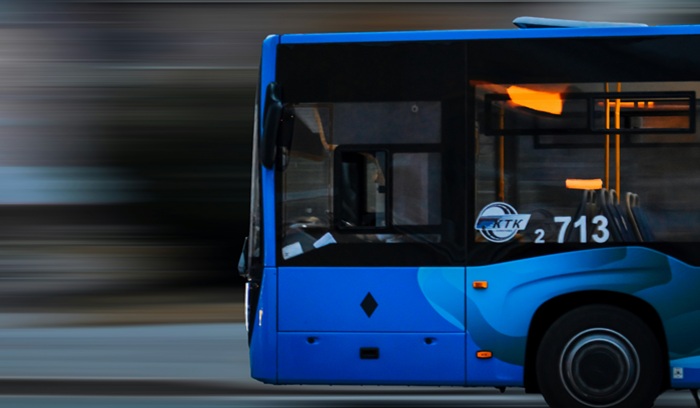
Senegal has made history in Sub-Saharan Africa by rolling out a fully electric public bus network in Dakar, becoming the first country in the region to operate urban transit powered entirely by renewable energy. The fleet, operated through the national bus company Dakar Dem Dikk, marks a significant turning point for clean public transit on the continent — and for the millions of commuters who rely on it every day.
At a glance
- Electric bus network: Senegal deployed an initial fleet of electric buses across Dakar, replacing diesel-powered vehicles that had long contributed to air pollution in the capital.
- Renewable energy link: The charging infrastructure is designed to draw on Senegal’s growing renewable energy capacity, including solar, as the country scales up its clean power grid.
- Regional first: No other country in Sub-Saharan Africa had previously launched a fully electric public bus network at this scale, placing Senegal at the front of a continent-wide conversation about green mobility.
Why Dakar was ready for this
Dakar is one of West Africa’s most densely populated and fastest-growing cities. Traffic congestion and air quality have long been urgent public health concerns. Diesel buses, aging minibuses known as cars rapides, and unregulated informal transit have filled the streets for decades — reliable and affordable, but polluting.
The electric bus rollout builds on years of investment in modernizing Senegal’s transit infrastructure, including the launch of the Dakar Bus Rapid Transit (BRT) corridor. The BRT project, supported by the World Bank and other international partners, laid much of the groundwork — dedicated lanes, formal stops, and an electronic ticketing system — that makes electrification viable.
Senegal’s government has framed clean transit as a core piece of its broader economic vision. The country’s energy transition strategy aims to expand renewables and reduce dependence on fossil fuel imports, which strain the national budget and leave consumers vulnerable to global price swings.
What it means for riders and for air quality
For everyday commuters — many of them low-income workers who depend on public transit to get to jobs across the city — the shift to electric buses offers quieter rides, less exhaust, and potentially more reliable service. Studies on electric bus adoption in cities across the Global South consistently show improvements in urban air quality within months of diesel replacement.
Women, who make up a large share of Dakar’s public transit users, often face particular risks from informal, unregulated transit environments. Formal electric bus systems with fixed routes, staffed stops, and predictable schedules have shown benefits for safety and accessibility in similar rollouts.
Particulate matter and nitrogen dioxide from diesel vehicles contribute to respiratory illness across Dakar’s dense urban neighborhoods. A full transition away from combustion engines in the bus fleet could meaningfully reduce that burden over time.
A signal for the continent
Senegal’s move arrives as African cities from Lagos to Nairobi to Johannesburg grapple with how to expand transit access without locking in decades of fossil fuel infrastructure. The electric bus network gives policymakers, urban planners, and transit agencies across the region a proof of concept — that clean public transit in Sub-Saharan Africa is not a distant aspiration but an achievable reality now.
International climate finance has played a role. The African Development Bank and bilateral partners have increasingly prioritized urban mobility as a climate intervention, recognizing that cities are where the majority of Africans will live by mid-century.
The challenge ahead is real: scaling the fleet, ensuring the electricity supply remains clean as demand grows, maintaining vehicles with local technical capacity, and keeping fares affordable for the workers and families who need this system most. Charging infrastructure is still limited, and the renewable share of Senegal’s grid — while growing — is not yet the dominant source of electricity. The network’s green credentials will depend significantly on how fast the grid itself decarbonizes.
Still, the first electric bus pulling out of a Dakar depot is not a small thing. It is the kind of visible, tangible step that shifts what a city believes is possible for itself.
Read more
For more on this story, see: Good News for Humankind
For more from Good News for Humankind, see:
- Ghana establishes a major marine protected area at Cape Three Points
- Alzheimer’s risk cut in half by drug in landmark prevention trial
- The Good News for Humankind archive on Senegal
About this article
- 🤖 This article is AI-generated, based on a framework created by Peter Schulte.
- 🌍 It aims to be inspirational but clear-eyed, accurate, and evidence-based, and grounded in care for the Earth, peace and belonging for all, and human evolution.
- 💬 Leave your notes and suggestions in the comments below — I will do my best to review and implement where appropriate.
- ✉️ One verified piece of good news, one insight from Antihero Project, every weekday morning. Subscribe free.
More Good News
-

More than 50 nations attend world-first conference on phasing out fossil fuels
Fossil fuel phaseout talks just crossed a real threshold: for the first time, more than 50 nations sat down together specifically to plan a way off coal, oil, and gas. The two-day gathering in Santa Marta, Colombia, brought together an unusually wide mix — major producers like Australia, Norway, and Canada alongside Pacific island nations like Tuvalu and Vanuatu, with Europe and emerging economies in between. No binding deals were expected, but the recommendations will feed into a voluntary roadmap being shaped under Brazil’s COP30 leadership. It’s a small, hopeful shift: producers and consumers finally talking openly about a transition…
-

Singapore stops sourcing and breeding dolphins
Resorts World Sentosa, home to more than 20 Indo-Pacific bottlenose dolphins, is halting both wild sourcing and captive breeding at its Singapore oceanarium. The resort is now assembling an independent expert panel to figure out what’s next for the animals in its care, including a 7-year-old named Kenzo. It’s a meaningful shift from one of Asia’s most prominent entertainment venues, and one animal welfare groups have pushed toward for over a decade. With Mexico, Canada, and France already banning cetacean captivity for entertainment, this quiet decision in Singapore signals that the tide is turning across Asia too, reshaping what travelers…
-

The Bahamas officially eliminates mother-to-child transmission of HIV
The Bahamas just became the 12th country or territory in the Americas certified by the World Health Organization for eliminating mother-to-child HIV transmission — meaning babies born there now enter the world free of the virus by design, not by luck. The country built this through a quietly powerful idea: every pregnant woman, regardless of nationality or legal status, gets HIV screening at her first prenatal visit and again later in pregnancy, with treatment and follow-up offered free. Reaching that standard across more than 700 scattered islands took years of coordination between nurses, doctors, and public clinics. More than half…
