Sometime around the 8th or 7th century B.C.E., a settlement in what is now southeastern Uzbekistan began taking shape into something more permanent — a city that would survive conquest after conquest, generation after generation, for nearly 2,700 years. The Samarkand founding story is not a single dramatic moment. It is a slow emergence, confirmed not by a founding charter but by the silent evidence of canals, bricks, and buried artifacts.
What the evidence shows
- Samarkand founding: Researchers at the Institute of Archaeology of Samarkand estimate the city was established around 700 B.C.E., based on the appearance of the Syob and Darg’om canals and other Iron Age material culture in the 7th–5th centuries B.C.E.
- Human occupation: Archaeological excavations within the city limits have unearthed evidence of human activity going back 40,000 years, to the Upper Paleolithic — meaning the site was known and used by humans long before any city existed there.
- Sogdian capital: By the time of the Persian Achaemenid Empire, the city had become the capital of the Sogdian satrapy, one of the most important administrative regions in the ancient world — confirming that within a few centuries of its founding, Samarkand was already a political and cultural center of the first order.
A city born at the crossroads
Samarkand did not rise in isolation. It grew at the intersection of routes connecting China, Persia, and eventually Europe — the network of paths we now call the Silk Road. Its location made it a magnet for merchants, scholars, soldiers, and ideas from every direction.
The city’s earliest known inhabitants were part of Sogdian civilization — an Iranian-speaking people whose influence on Central Asian culture, trade, and art was vast and long-lasting. The Sogdians were not only traders but diplomats and scribes, and their language served as a commercial lingua franca across much of the ancient Silk Road world. Samarkand was their greatest city.
The name itself reflects layered histories. One theory derives it from the Sogdian words for “stone” and “fort” or “town” — essentially, “stone fort.” An 11th-century Turkic scholar, Mahmud al-Kashghari, recorded a different interpretation: “fat city,” meaning rich or prosperous. Both readings, in their own way, capture something true about what Samarkand became.
What conquest after conquest could not erase
Few cities in human history have been conquered as many times as Samarkand — and survived each time. Alexander the Great took it in 329 B.C.E., when it was known as Maracanda. He reportedly exclaimed that everything he had heard about the city’s beauty was true, except that it was even more beautiful than he imagined.
After Alexander, the city passed through the Seleucid Empire, the Greco-Bactrian Kingdom, and the Kushan Empire. Each wave of rulers left something behind — architectural techniques, religious ideas, artistic styles. The introduction of square bricks and improved plastering methods during the Hellenistic period, for example, measurably improved local construction for generations.
The Sasanian Persians, Hephthalites, and Göktürk Khaganate each held the city in turn. In 1220 C.E., Genghis Khan’s Mongol forces sacked it, causing catastrophic destruction. And still the city came back. By the 14th century C.E., Timur — the Turco-Mongol conqueror also known as Tamerlane — had made it the dazzling capital of his empire, filling it with monuments that still stand today.
Lasting impact
Samarkand’s endurance matters far beyond its own history. Because it survived — and because it sat at the center of Eurasian trade — it served for centuries as a living relay station for human knowledge. Paper-making techniques traveled through here from China westward. Mathematical and astronomical ideas moved in multiple directions. The city’s UNESCO World Heritage designation in 2001 C.E. recognized not just its monuments but its role as a “crossroads of cultures” — a place where the Silk Road was not merely a commercial route but a channel for the exchange of ideas that shaped civilizations on multiple continents.
The Timurid Renaissance of the 14th and 15th centuries C.E. — a flowering of art, architecture, literature, and science centered on Samarkand — produced work that influenced Persian, Ottoman, and Mughal cultures simultaneously. The city’s Registan square, still largely intact, remains one of the most architecturally significant public spaces ever built.
Samarkand also preserved and transmitted craft traditions — embroidery, goldwork, silk weaving, copper engraving, ceramics, wood carving — that continue to be practiced today, connecting 21st-century artisans to techniques developed over more than two millennia.
Blindspots and limits
The founding date of around 700 B.C.E. is an estimate, not a confirmed fact — there is no direct written or archaeological evidence marking a moment of founding, and the actual date may never be pinned down with precision. The history of Samarkand as it has come to us also reflects the perspectives of conquerors and court historians far more than the daily experience of the city’s ordinary residents — the farmers, artisans, and traders whose labor built what the powerful celebrated. Those voices remain largely silent in the record.
Read more
For more on this story, see: Wikipedia — Samarkand
For more from Good News for Humankind, see:
- Ghana establishes the Cape Three Points Marine Protected Area
- Uganda reintroduces rhinos to Kidepo Valley
- The Good News for Humankind archive on ancient history
About this article
- 🤖 This article is AI-generated, based on a framework created by Peter Schulte.
- 🌍 It aims to be inspirational but clear-eyed, accurate, and evidence-based, and grounded in care for the Earth, peace and belonging for all, and human evolution.
- 💬 Leave your notes and suggestions in the comments below — I will do my best to review and implement where appropriate.
- ✉️ One verified piece of good news, one insight from Antihero Project, every weekday morning. Subscribe free.
More Good News
-

Renewables hit 49% of global power capacity for the first time
Renewable energy capacity crossed a landmark threshold in 2025, with global installed power surpassing 5,100 gigawatts and representing 49% of all capacity worldwide for the first time in history. The International Renewable Energy Agency reported a single-year addition of 692 gigawatts, led overwhelmingly by solar power, which alone accounted for 75% of new renewable installations. Clean energy now represents 85.6% of all new power capacity added globally, signaling that the transition has moved from aspiration to economic reality. The milestone carries implications beyond climate — nations with strong renewable bases demonstrated measurably greater energy security amid ongoing geopolitical instability.
-

Global suicide rate has dropped nearly 40% since the 1990s
Global suicide rates have dropped nearly 40% since the early 1990s, falling from roughly 15 deaths per 100,000 people to around nine — one of modern public health’s most significant and underreported victories. This decline was driven by expanded mental health services, crisis intervention programs, and proven strategies like restricting access to lethal means. The progress spans dozens of countries, with especially sharp declines in East Asia and Europe. Critically, this trend demonstrates that suicide is preventable at a population level — making the case for sustained investment in mental health infrastructure worldwide.
-
Rhinos return to Uganda’s wild after 43 years of absence
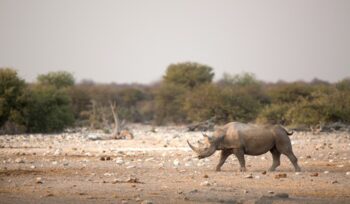
Uganda rhino reintroduction marks a historic milestone: wild rhinoceroses are roaming Ugandan soil for the first time in over 40 years. In 2026, rhinos bred at Ziwa Rhino Sanctuary were released into Kidepo Valley National Park, ending an absence caused entirely by poaching and political collapse during the Idi Amin era. The release represents decades of careful breeding, conservation funding, and community engagement. For local communities, conservationists, and a watching world, it proves that deliberate, sustained human effort can reverse even the most painful wildlife losses.