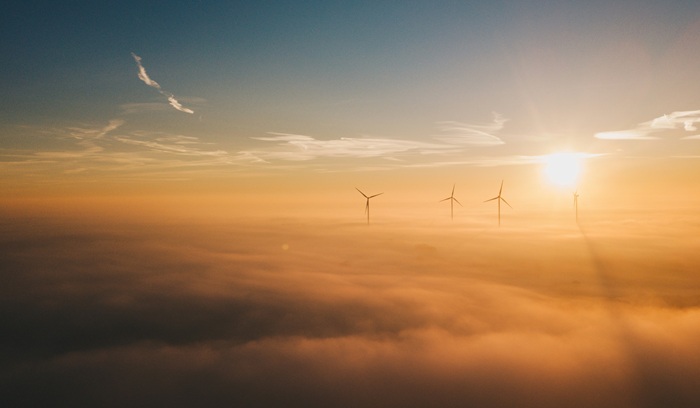
A July 2025 C.E. report from the International Renewable Energy Agency has confirmed what many economists had been predicting for years: clean energy has won on price. More than 90 percent of newly built renewable energy projects worldwide now cost less than fossil fuel alternatives — meaning the economic argument for coal and gas is collapsing in real time.
At a glance
- Renewable energy costs: Onshore wind delivered electricity at an average of $0.034 per kilowatt-hour in 2024 C.E. — 53 percent cheaper than the lowest-cost fossil fuel option.
- Capacity growth: A record 582 gigawatts of new renewable capacity was added globally in 2024 C.E., nearly 20 percent more than the year before.
- Clean energy investment: Renewables attracted $2 trillion in financing in 2024 C.E., compared with roughly $1.2 trillion for fossil fuels — an $800 billion gap.
Why the price crossover matters
For most of the 20th century, the case for renewable energy rested primarily on environmental necessity. Proponents argued that the world had to accept higher energy costs in exchange for lower emissions. That trade-off no longer exists.
Solar photovoltaic projects now deliver electricity at an average cost of $0.043 per kilowatt-hour — roughly 41 percent cheaper than fossil fuel alternatives, according to the International Renewable Energy Agency. Onshore wind is even more competitive. When the cheapest available technology is also the cleanest, the policy debate shifts fundamentally.
United Nations Secretary-General António Guterres put it plainly: governments and investors should “follow the money.” Financial markets have already started doing exactly that.
A record year for clean power
The 582 gigawatts of renewable capacity added in 2024 C.E. represents the largest single-year expansion ever recorded. Solar and wind drove most of that growth, and the United Nations described the moment as a “positive tipping point” — a phrase that carries real meaning when applied to energy systems that took more than a century to build around fossil fuels.
For developing economies, the implications are especially significant. Many nations that never built extensive coal or gas infrastructure now have a direct path to modern, reliable electricity — at lower cost and without locking in decades of carbon emissions. Researchers at the Columbia Climate School have noted that this “leapfrogging” dynamic mirrors what happened with mobile phones, where countries bypassed landline infrastructure entirely.
The investment data reinforces the trend. The $800 billion gap between renewable and fossil fuel financing in 2024 C.E. is not a rounding error — it reflects where institutional investors, sovereign wealth funds, and development banks see durable returns.
What’s still slowing the transition
The picture is not without complications. Geopolitical conflicts, supply chain pressures, and trade tariffs have raised costs in specific regions, particularly for solar panel manufacturing and rare minerals used in wind turbines. In Europe and North America, outdated permitting systems and inadequate transmission infrastructure are creating real bottlenecks — new wind and solar projects sometimes wait years to connect to the grid even after construction is complete, according to reporting from Euractiv.
Grid modernization remains one of the most underfunded pieces of the energy transition. Building generation capacity faster than the wires to carry that power creates its own inefficiencies.
Still, the direction is unmistakable. The argument that decarbonization is too expensive has lost its empirical foundation. In most of the world, building new renewable capacity is now simply the rational financial choice — independent of any climate consideration.
Public health gains are part of the math
One dimension of the cost comparison that traditional energy economics often undervalues is public health. Fossil fuel combustion is the leading cause of outdoor air pollution globally, responsible for millions of premature deaths each year, according to the World Health Organization. As renewables displace coal and gas generation, those health costs fall — a benefit that shows up in hospital systems and labor productivity even when it doesn’t appear directly on an energy bill.
This article about renewables reaching at least 49 percent of global power capacity offers useful context on how quickly the generation mix has shifted. And for a broader view of how evidence-backed progress compounds across different domains, this piece on the 40 percent fall in the global suicide rate since 1995 C.E. is a reminder that large-scale positive change, while rarely linear, does happen.
Solar and wind are now the benchmark for new power generation in most of the world. That shift is already reducing emissions, cutting energy costs for households and industries, and improving air quality in cities that have burned coal for generations. The remaining work — grid infrastructure, permitting reform, equitable access — is real. But the economic foundation for that work has never been stronger.
For more articles like this one, explore the Good News for Humankind archive on climate and energy.
Read more
For more on this story, see: Good News for Humankind — original report
For more from Good News for Humankind, see:
- Renewables now make up at least 49% of global power capacity
- Global suicide rate has fallen by 40% since 1995
- The Good News for Humankind archive on climate and energy
About this article
- 🤖 This article is AI-generated, based on a framework created by Peter Schulte.
- 🌍 It aims to be inspirational but clear-eyed, accurate, and evidence-based, and grounded in care for the Earth, peace and belonging for all, and human evolution.
- 💬 Leave your notes and suggestions in the comments below — I will do my best to review and implement where appropriate.
- ✉️ One verified piece of good news, one insight from Antihero Project, every weekday morning. Subscribe free.
More Good News
-

Washington state enacts millionaires’ tax to fund schools and families
Washington state enacted a new tax on individual income exceeding million on March 30, 2026, ending nearly a century without a personal income tax. The law funds free school meals for every K-12 student, expands the Working Families Tax Credit to 460,000 additional households, and cuts costs on childcare and essential goods. Less than half of 1% of residents owe the tax, but the benefits reach millions across the state.
-

Detroit RxKids distributes .4 million to mothers in its first month
Detroit’s RxKids program distributed .4 million in direct, unconditional cash to mothers in its first full month of operation, city officials announced in March 2026. The program gives low-income pregnant women and new mothers 00 per month during pregnancy and 00 per month for their baby’s first year of life — up to 2,000 per family. Supporters say it directly counters child poverty during one of the highest-impact windows for intervention.
-

Telangana orders 915 electric buses in major clean transit push
The Indian state of Telangana has ordered 915 electric buses, one of the largest clean transit procurements in India’s history. The move is part of a national push to electrify public transportation, reduce urban air pollution, and cut greenhouse gas emissions. Backed by India’s FAME subsidy scheme and a growing domestic manufacturing sector, the order signals that India’s electric bus transition has moved well beyond pilot programs into large-scale deployment across major cities.