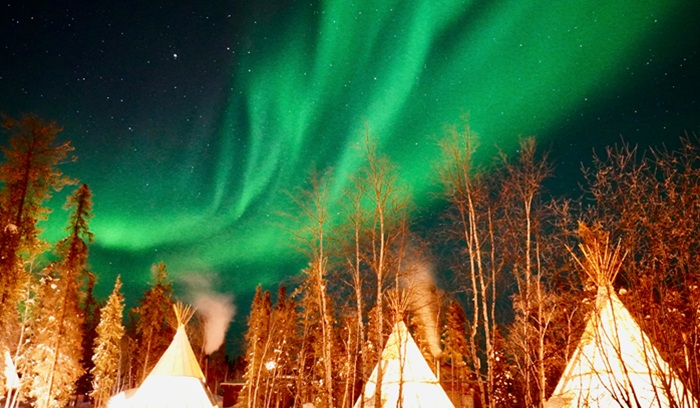
A landmark conservation agreement has secured $375 million to protect roughly 100 million hectares of land in Canada’s Northwest Territories — an area nearly twice the size of Florida. The deal, called “NWT: Our Land for the Future,” is led by 21 Indigenous nations working alongside the federal government and philanthropic partners, and it marks one of the largest Indigenous-led land protection efforts in Canadian history.
At a glance
- Indigenous-led land protection: Twenty-one Indigenous nations in the Northwest Territories are the primary stewards and decision-makers under this agreement, not federal agencies or outside conservation groups.
- Project finance for permanence: The $375 million uses an upfront funding model designed to eliminate reliance on short-term grants, giving communities stable resources for long-term planning.
- Guardian programs: A significant share of the funding will support community-based land guardian programs, cultural programming, and ecotourism jobs in small and remote communities.
Why this model is different
Most large-scale conservation efforts in Canada have historically been designed and administered by government agencies, with Indigenous communities consulted — if at all — rather than leading. This agreement flips that dynamic entirely.
The project finance for permanence model, or PFP, has been tested before. The Great Bear Rainforest agreement in British Columbia used a similar structure to secure funding and governance for one of the world’s largest temperate rainforests. The NWT deal builds on that blueprint at an even larger scale, locking in resources before conservation work begins rather than chasing grants year to year.
That financial stability matters enormously for remote Indigenous communities where funding gaps have historically derailed long-term stewardship programs. With a guaranteed base secured upfront, communities can hire, train, and retain local land guardians rather than cycling through short-term contracts.
Land and people, together
Leaders from the participating Indigenous nations have been clear that the agreement’s value goes beyond acreage. As one leader put it: “This is not just about the hectares — it’s really about the people.”
The funding will support guardian programs where community members monitor wildlife, water quality, and ecosystem health across their traditional territories. It will also expand cultural and land-based education programs, helping elders pass traditional knowledge to younger generations. And it will seed a conservation economy — ecotourism ventures, environmental stewardship jobs, and locally owned enterprises that let communities earn livelihoods from protecting the land rather than extracting from it.
Canada’s national Indigenous Guardians program has documented how guardian work strengthens both ecological outcomes and community wellbeing. This agreement supercharges that model at a scale rarely attempted anywhere in the world.
This kind of locally rooted stewardship also connects to a broader global momentum. At COP30 and in international biodiversity negotiations, Indigenous land rights have gained growing recognition as a cornerstone of effective conservation — a recognition this deal puts into practice.
A blueprint for the climate era
The Northwest Territories sit at the edge of the boreal forest and Arctic tundra, ecosystems that store enormous quantities of carbon and support biodiversity that scientists are still working to fully understand. Protecting them is not only a matter of cultural preservation — it is a direct climate intervention.
As nations scramble to meet biodiversity and emissions targets, agreements like this one offer a model that addresses both simultaneously. Community-led conservation tends to outperform state-managed protected areas in long-term ecological outcomes, according to research published in the Proceedings of the National Academy of Sciences. The reason is straightforward: people with deep, multigenerational ties to a place have stronger incentives — and often better knowledge — to protect it.
The NWT deal also arrives at a moment when Canada is working to meet its international commitment to protect 30% of its lands and waters by 2030. Indigenous-led protection agreements are increasingly central to reaching that goal, and they are doing it in ways that generate social and economic returns for communities that have often been left out of resource decisions affecting their own territories.
Similar thinking is reshaping energy systems too. Just as renewables now make up nearly half of global power capacity, Indigenous stewardship is moving from the margins to the center of conservation strategy — not as a policy preference, but because the evidence supports it.
What remains unresolved
The agreement is a milestone, but implementation will test whether its promises hold. Translating funding commitments into community capacity takes years, and historical conservation deals have sometimes stalled at the governance and administrative stages. Ensuring that Indigenous nations retain genuine decision-making authority — not just consultation rights — as the project scales will require ongoing vigilance from all parties involved.
Read more
For more on this story, see: NWT: Our Land for the Future
For more from Good News for Humankind, see:
- Renewables now make up nearly half of global power capacity
- Indigenous land rights recognized across 160 million hectares at COP30
- The Good News for Humankind archive on environment
About this article
- 🤖 This article is AI-generated, based on a framework created by Peter Schulte.
- 🌍 It aims to be inspirational but clear-eyed, accurate, and evidence-based, and grounded in care for the Earth, peace and belonging for all, and human evolution.
- 💬 Leave your notes and suggestions in the comments below — I will do my best to review and implement where appropriate.
- ✉️ One verified piece of good news, one insight from Antihero Project, every weekday morning. Subscribe free.
More Good News
-
COP30 pledges recognition of 160 million hectares of Indigenous land rights
At the COP30 World Leaders Summit in Belém, Brazil in November 2025, 15 governments pledged to formally recognize Indigenous land rights over 160 million hectares by 2030 — an area the size of Iran — through the Intergovernmental Land Tenure Commitment. Brazil committed at least 59 million hectares. More than 35 donors renewed a $1.8 billion Forest and Land Tenure Pledge. The Tropical Forest Forever Facility secured nearly $7 billion, with 20% directed to Indigenous peoples. It was the largest Indigenous participation in COP history.
-

Ghana creates its first marine protected area to rescue depleted fish stocks
Ghana has declared its first marine protected area near Cape Three Points on the Gulf of Guinea, marking a historic step to reverse decades of overfishing. The protected zone aims to restore fish populations that have collapsed under pressure from industrial trawling and illegal fishing. The decision supports 2.7 million Ghanaians whose livelihoods depend on healthy coastal fisheries and aligns Ghana with the global goal of protecting 30 percent of the world’s oceans by 2030.
-

U.S. researchers cut Alzheimer’s risk by half in first-ever prevention trial
For the first time, researchers have evidence that removing amyloid plaques from the brain before symptoms appear can cut Alzheimer’s risk by roughly half. A clinical trial published in The Lancet Neurology, led by Washington University School of Medicine in St. Louis, found that long-term treatment with the antibody drug gantenerumab significantly delayed dementia onset in people with a rare genetic form of the disease. The findings provide the clearest signal yet that intervening years before symptoms emerge can change the course of Alzheimer’s disease.