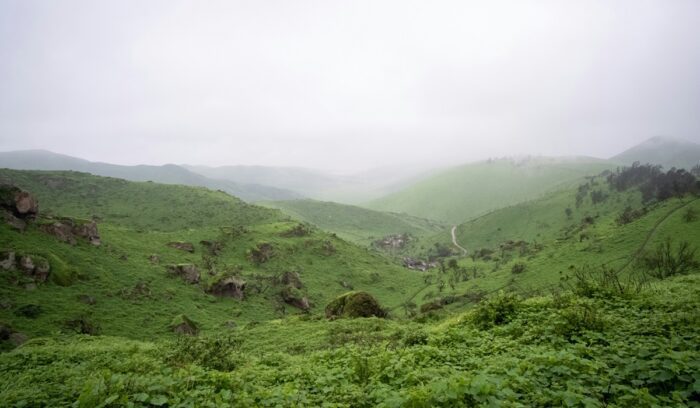
A rare fog oasis ecosystem on the arid Peruvian coast has received its first formal conservation status, protecting 6,449 hectares of one of the most unusual habitats on Earth. The site, known as Lomas y Tillandsiales de Amara y Ullujaya, sits in the Ica region of southwest Peru and will be legally protected for at least 30 years — the result of more than 15 years of scientific work and four years of hard negotiation with local and national authorities.
At a glance
- Fog oasis ecosystem: The lomas are hilltop “islands” of life in an otherwise barren coastal desert, sustained entirely by sea-generated fog produced where warm tropical and cold Antarctic ocean currents meet — a maritime climate found nowhere else on Earth.
- Endemic species: The site hosts around 95 vascular plant species from across all 675 known lomas species, with roughly 40% found nowhere else, 30% classified as threatened, and at least six critically endangered — including a lichen known only within a few hundred square meters.
- Peruvian guanaco: The protected land serves as a vital last refuge for the highly threatened Peruvian subspecies of guanaco (Lama guanicoe cacsilensis), a keystone seed disperser whose survival is tightly linked to the lomas plants it helps sustain.
Why this place is unlike anywhere else
Lomas ecosystems have evolved over tens of millions of years along the coasts of Peru and Chile. They exist because cold Antarctic currents chill the air above the ocean, creating a persistent fog that rolls inland and climbs the coastal hills, delivering moisture to plants in a landscape that receives almost no rain.
This makes them extraordinarily sensitive. “Lomas are perhaps the most highly sensitive and responsive ecosystems on the planet,” said Oliver Whaley, a scientist at the Royal Botanic Gardens, Kew (RBG Kew), who has worked in Peru for more than 25 years. “The plants that grow there are so highly evolved in this ancient arid environment that they respond to tiny changes of humidity and temperature.”
That sensitivity also makes them scientifically valuable. The ecosystems can help researchers track climatic and marine cycles in ways few other habitats can. They also hold genetic resources that matter well beyond their borders — including wild relatives of tomatoes and papayas that could be crucial for adapting crops to a warming world.
Decades of science behind a single concession
The conservation status did not come quickly. Scientists from Kew, working alongside local NGO Huarango Nature, spent two decades collecting herbarium samples and, more recently, using drones and remote sensing to map the ecosystem in detail. That data became the foundation for the legal case.
A key milestone was a 2021 study led by Justin Moat, scientist at RBG Kew and lead author, published in the International Journal of Applied Earth Observation and Geoinformation. The paper used 20 years of satellite imagery to reveal the full geographic extent of the lomas and the depth of their biodiversity — research that helped make the case for protection to Peruvian authorities.
“After so many years of work, it is incredibly exciting to see this area finally protected,” Moat said. He noted that only 4% of lomas ecosystems across Peru and Chile are currently under formal protection, which means this concession is an early step in a much larger challenge.
“This is the first concession for conservation on the desert coast of Peru, and also the first concession for lomas fog ecosystems,” Whaley said. The site will be managed by Huarango Nature in partnership with Kew, local organic farm Samaca, and Peru’s National Forest and Wildlife Service (SERFOR).
A coalition that made the difference
The achievement was built on collaboration. Local biologists, environmental law experts, community members, and national officials all played a role. Alberto Yataco, a technical administrator with SERFOR in Ica, said that Kew’s scientific capacity would help ensure the sustained management of coastal lomas biodiversity going forward.
“It has very much been a team effort, decades in the making,” Whaley said. “We are so proud of this work and celebrate with everyone involved.”
The Amara y Ullujaya site had stayed largely intact because of its distance from the coastal Pan-American Highway. But that isolation was eroding. New roads, off-road vehicle traffic, land trafficking, urban expansion, and mining had all begun to threaten the ecosystem in recent years, making formal protection an urgent priority.
What comes next
The newly protected area will support ongoing research into biodiversity and climate change impacts — work that could inform conservation efforts at other lomas sites still without protection. The ecosystem also provides services that matter to the 58% of Peru’s population living in nearby coastal zones, including clean water, carbon storage, and food sources.
The lomas also carry deep cultural and agricultural significance. Wild crop relatives found in lomas, including tomato and papaya kin, represent genetic insurance for future food systems — a benefit that extends far beyond Peru’s borders.
Still, the path ahead is steep. With just 4% of lomas under formal protection across two countries, and climate change already shifting the fog patterns these ecosystems depend on, the pressure on remaining unprotected sites will only grow. This first conservation concession sets a legal and scientific template — but replicating it at scale will require sustained resources, political will, and continued community partnership.
For now, one ancient fog oasis has its future secured. The species that have evolved within it — some found nowhere else on the planet — have at least 30 years of breathing room to tell us what they know.
Read more
For more on this story, see: Mongabay
For more from Good News for Humankind, see:
- Indigenous land rights: 160 million hectares recognized ahead of COP30
- Ghana establishes a new marine protected area at Cape Three Points
- The Good News for Humankind archive on Peru
About this article
- 🤖 This article is AI-generated, based on a framework created by Peter Schulte.
- 🌍 It aims to be inspirational but clear-eyed, accurate, and evidence-based, and grounded in care for the Earth, peace and belonging for all, and human evolution.
- 💬 Leave your notes and suggestions in the comments below — I will do my best to review and implement where appropriate.
- ✉️ One verified piece of good news, one insight from Antihero Project, every weekday morning. Subscribe free.