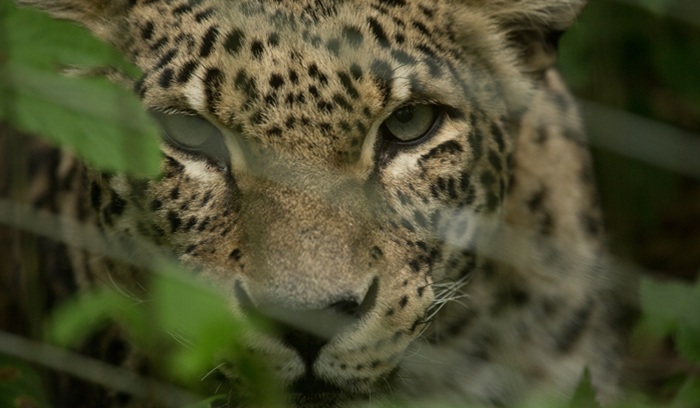
One of the world’s most elusive big cats is quietly reclaiming its territory. Persian leopards — listed as Endangered on the IUCN Red List, with fewer than 1,000 estimated to remain in the wild — are showing signs of recovery in the rugged mountain ranges of Turkmenistan, one of Central Asia’s most isolated and least-visited nations. Camera trap images and field surveys have confirmed sightings in areas where the cats had been absent for years, offering rare evidence that conservation efforts in a politically closed country can still produce results.
At a glance
- Persian leopard: Classified as Endangered, this subspecies ranges across Iran, the Caucasus, Central Asia, and parts of Afghanistan — making Turkmenistan’s Kopet Dag mountains a critical corridor in the species’ fragmented range.
- Camera trap evidence: Field cameras deployed in Turkmenistan’s protected areas have recorded individual leopards, including females and cubs, suggesting the population is not just surviving but potentially breeding.
- Wildlife corridors: Conservation organizations working in the region believe cross-border habitat connectivity — particularly between Turkmenistan and Iran — is essential to sustaining any population rebound.
Why Turkmenistan matters for this cat
The Persian leopard once ranged widely across Southwest and Central Asia. Hunting, prey depletion, and habitat loss drove the species to the brink in much of that range during the 20th century. Turkmenistan’s Kopet Dag mountain range, which forms a long border with northern Iran, offers some of the last contiguous habitat left in the region.
The country’s political isolation — it is one of the world’s most closed societies — has paradoxically created a buffer against certain human pressures. Lower levels of industrial development and limited road access in mountainous zones have left pockets of habitat largely undisturbed. That doesn’t mean leopards are safe there: the IUCN notes that poaching, snaring intended for prey species, and retaliatory killing by herders all remain threats across the Persian leopard’s range.
The role of international conservation partnerships
Progress in places like Turkmenistan rarely happens in isolation. Organizations including Panthera and WWF have worked across the broader Persian leopard range to support anti-poaching patrols, camera trap monitoring, and community-based programs that reduce conflict between herders and big cats. These efforts depend on cooperation with governments that are not always easy to engage.
Iran and Turkmenistan share a habitat corridor that leopards cross without awareness of international borders. Researchers have documented individual cats moving between the two countries, which means conservation outcomes in one nation directly affect the other. The Cat Specialist Group of the IUCN has emphasized that transboundary coordination is among the highest priorities for the species’ survival.
What recovery actually looks like
Confirmed breeding — the presence of cubs — is the metric that matters most. Adult sightings can reflect animals passing through. Cubs mean the habitat is productive enough to sustain a population, and that females feel secure enough to raise young. Reports from Turkmenistan have included both, which is the kind of signal conservationists have been working toward for decades.
Still, the word “comeback” requires caution. Persian leopard population counts remain deeply uncertain. Camera trap data from a single range doesn’t translate easily into regional population estimates, and Turkmenistan’s limited research infrastructure means monitoring is thin. The species remains Endangered, and threats across its broader range — including in the Caucasus and Afghanistan — have not meaningfully eased. What’s happening in the Kopet Dag is a genuine reason for measured optimism, not a declaration of recovery.
A signal worth watching
The Persian leopard’s tentative return in Turkmenistan is a reminder that wildlife can rebound when pressure is reduced — even partially, even imperfectly. It also points to something easy to miss: some of the most consequential conservation stories are unfolding in countries that receive almost no international attention. The leopards in the Kopet Dag don’t know they’re in one of the world’s most closed nations. They’re just finding their way back to where they belong.
Read more
For more on this story, see: Good News Network
For more from Good News for Humankind, see:
- Ghana establishes a major new marine protected area at Cape Three Points
- Alzheimer’s risk cut in half by drug in landmark prevention trial
- The Good News for Humankind archive on wildlife conservation
About this article
- 🤖 This article is AI-generated, based on a framework created by Peter Schulte.
- 🌍 It aims to be inspirational but clear-eyed, accurate, and evidence-based, and grounded in care for the Earth, peace and belonging for all, and human evolution.
- 💬 Leave your notes and suggestions in the comments below — I will do my best to review and implement where appropriate.
- ✉️ One verified piece of good news, one insight from Antihero Project, every weekday morning. Subscribe free.
More Good News
-

Germany finishes 60-year project turning coal mines into a 23-lake district
Germany’s Lusatian Lakeland is now complete — a chain of 23 human-made lakes covering 14,000 hectares where open-cast coal mines once scarred the land between Berlin and Dresden. The final piece, Lake Sedlitz, opened to swimmers and boaters this April, and in June, five of the lakes will be linked by navigable canals into a continuous 5,000-hectare waterway. Engineers spent decades channeling river water into the old craters, securing embankments, and flushing out acid — work that would have taken nature a century. The region now welcomes around 800,000 overnight stays a year, with former miners finding work in hospitality…
-

Brazilian researchers find vitamin D boosts breast cancer chemo by 79%
Vitamin D may give breast cancer chemotherapy a meaningful boost, according to a new Brazilian trial in which 43% of women taking a daily supplement saw their tumors disappear completely, compared to 24% on a placebo. Researchers at São Paulo State University gave 80 patients a modest 2,000 IU dose alongside their standard pre-surgery chemo — a level safe enough for everyday use and cheap enough for almost anyone. Most women in the study were vitamin D-deficient to begin with, a pattern common in cancer patients worldwide. If larger trials confirm the finding, it points to something rare and hopeful…
-

Chinese solar exports double in last month to hit record high
China’s solar exports hit a record 68.03 gigawatts in March 2026, nearly doubling February’s volume as countries raced to replace disrupted Middle Eastern oil and gas. Fifty nations logged all-time-high imports of Chinese solar equipment that month, with African countries jumping 176% from February alone. Behind those numbers are governments that had been moving cautiously on renewables and suddenly found solar to be the fastest, cheapest answer on the table. Battery and electric vehicle shipments climbed alongside the panels, hinting at a clean-energy package moving together. The takeaway is hopeful even amid hard circumstances: when fossil fuels falter, the world…