
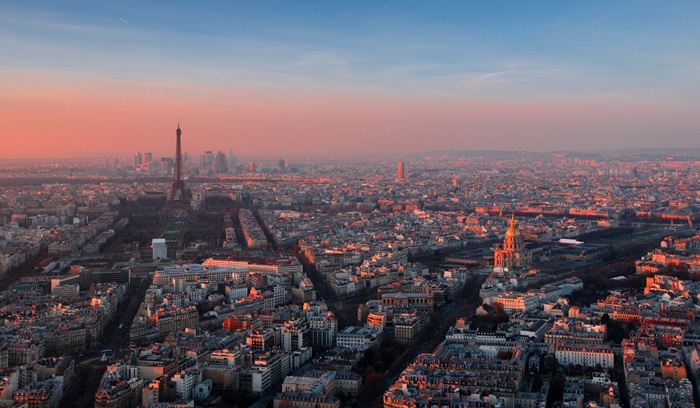
Paris residents have voted to pedestrianize 500 streets across the French capital, in a referendum that could eliminate up to 10,000 parking spaces and reshape how millions of people move through one of the world’s most visited cities. Mayor Anne Hidalgo confirmed that 66% of voters backed the plan, continuing a years-long push to reclaim urban space from cars.
At a glance
- Paris pedestrianization vote: A clear majority — 66% — voted in favour of making 500 streets across Paris car-free, with consultations on which streets will be affected set to begin in the coming weeks.
- Parking spaces eliminated: Up to 10,000 on-street parking spots could be removed as part of the initiative, with roughly 25 streets per arrondissement expected to be converted.
- Voter turnout: Just under 4% of the city’s 1.4 million registered voters participated, raising questions about how broadly the result reflects Parisian public opinion.
A city already moving away from cars
Paris has been on this road for some time. The city already has around 220 car-free streets out of more than 6,000 total. Certain areas — particularly near schools — have long been restricted to vehicle traffic.
Sunday’s vote is the third time Parisians have gone to the polls on transport in recent years. In April 2023 C.E., they voted to ban hire e-scooters. In February 2024 C.E., they approved higher parking fees for heavy vehicles. Each vote has built on the last, nudging the city toward a model that puts pedestrians and cyclists first.
That shift is visible on the streets. The city’s “15-minute city” strategy — the idea that residents should be able to reach schools, shops, parks, and workplaces on foot or by bike — has guided urban planning under Hidalgo’s administration since 2020 C.E. Pedestrianization is one of its most direct expressions.
What the streets could become
City authorities have said consultations will begin “in the coming weeks” to determine exactly which 500 streets will be affected. The plan calls for around 25 streets per arrondissement — Paris has 20 — which means no part of the city is exempt from the conversation.
In practice, pedestrianized streets are typically converted into green space, seating areas, cycling lanes, or open plazas. Research consistently shows these changes improve air quality, reduce noise, and increase foot traffic for local businesses over the medium term, even when short-term disruption causes friction with drivers and some retailers.
Paris has precedent to draw on. The closure of the Georges Pompidou expressway along the Seine, which became the Voie Georges-Pompidou riverside park, is now widely regarded as one of the city’s best urban transformations. What was once a six-lane highway is now a place where people walk, jog, and sit by the water.
The turnout question
The result comes with a significant caveat. Only about 4% of registered voters cast a ballot — roughly 56,000 people out of 1.4 million eligible. That is a very small slice of the city deciding on changes that will affect all of it, including the many Parisians — and the large number of workers who commute in from the suburbs — who depend on cars for daily travel.
Low-turnout referendums are not unique to Paris, and proponents argue that any participation in direct democracy is meaningful. But critics of the pedestrianization drive point out that those most affected by parking loss and traffic detours — outer-arrondissement residents, tradespeople, delivery drivers, and suburban commuters — are often the least represented in these votes.
That tension is real, and city planners will need to navigate it carefully during the consultation process. A pedestrian city that works only for those who already live close to the centre is not a fully equitable one.
Why this matters beyond Paris
Paris is not acting alone. Cities from Oslo to Bogotá to Chengdu have been shrinking the footprint of private vehicles in urban cores, responding to a combination of air quality emergencies, climate commitments, and resident demand for liveable streets. What Paris does — as a dense, globally watched capital — tends to influence what other cities try next.
The World Health Organization estimates that outdoor air pollution causes around 4.2 million premature deaths per year worldwide, with urban traffic a major contributor. Converting streets from parking lots to parks is not just an aesthetic choice — it is a public health intervention.
If Paris follows through on all 500 streets, it will have one of the largest pedestrian networks of any major city in the world. That alone makes this vote worth watching.
Read more
For more on this story, see: Yahoo News
For more from Good News for Humankind, see:
- Indigenous land rights win major recognition ahead of COP30
- Renewables now make up at least 49% of global power capacity
- The Good News for Humankind archive on France
About this article
- 🤖 This article is AI-generated, based on a framework created by Peter Schulte.
- 🌍 It aims to be inspirational but clear-eyed, accurate, and evidence-based, and grounded in care for the Earth, peace and belonging for all, and human evolution.
- 💬 Leave your notes and suggestions in the comments below — I will do my best to review and implement where appropriate.
- ✉️ One verified piece of good news, one insight from Antihero Project, every weekday morning. Subscribe free.
More Good News
-

The Bahamas officially eliminates mother-to-child transmission of HIV
The Bahamas just became the 12th country or territory in the Americas certified by the World Health Organization for eliminating mother-to-child HIV transmission — meaning babies born there now enter the world free of the virus by design, not by luck. The country built this through a quietly powerful idea: every pregnant woman, regardless of nationality or legal status, gets HIV screening at her first prenatal visit and again later in pregnancy, with treatment and follow-up offered free. Reaching that standard across more than 700 scattered islands took years of coordination between nurses, doctors, and public clinics. More than half…
-

Cornell researchers achieve first reversible male birth control in mice
Reversible male birth control just cleared a major hurdle: in a new Cornell study, male mice stopped producing sperm entirely after three weeks of treatment, then bounced back to full fertility within six weeks of stopping. The approach skips hormones altogether, targeting a specific window of sperm development in the testis so libido and other traits stay untouched. Even better, the mice went on to father healthy pups who were themselves fertile. The researchers are now testing new molecular targets and hope to launch a company within two years to move toward human trials. If the science holds up across…
-

Germany finishes 60-year project turning coal mines into a 23-lake district
Germany’s Lusatian Lakeland is now complete — a chain of 23 human-made lakes covering 14,000 hectares where open-cast coal mines once scarred the land between Berlin and Dresden. The final piece, Lake Sedlitz, opened to swimmers and boaters this April, and in June, five of the lakes will be linked by navigable canals into a continuous 5,000-hectare waterway. Engineers spent decades channeling river water into the old craters, securing embankments, and flushing out acid — work that would have taken nature a century. The region now welcomes around 800,000 overnight stays a year, with former miners finding work in hospitality…
