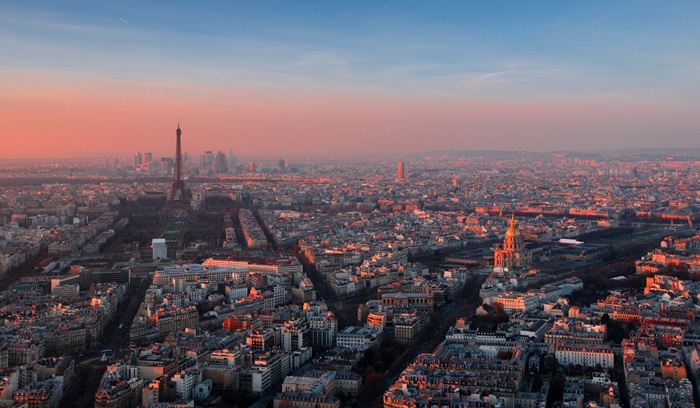
Paris residents have voted to pedestrianize 500 streets across the French capital, in a referendum that could eliminate up to 10,000 parking spaces and reshape how millions of people move through one of the world’s most visited cities. Mayor Anne Hidalgo confirmed that 66% of voters backed the plan, continuing a years-long push to reclaim urban space from cars.
At a glance
- Paris pedestrianization vote: A clear majority — 66% — voted in favour of making 500 streets across Paris car-free, with consultations on which streets will be affected set to begin in the coming weeks.
- Parking spaces eliminated: Up to 10,000 on-street parking spots could be removed as part of the initiative, with roughly 25 streets per arrondissement expected to be converted.
- Voter turnout: Just under 4% of the city’s 1.4 million registered voters participated, raising questions about how broadly the result reflects Parisian public opinion.
A city already moving away from cars
Paris has been on this road for some time. The city already has around 220 car-free streets out of more than 6,000 total. Certain areas — particularly near schools — have long been restricted to vehicle traffic.
Sunday’s vote is the third time Parisians have gone to the polls on transport in recent years. In April 2023 C.E., they voted to ban hire e-scooters. In February 2024 C.E., they approved higher parking fees for heavy vehicles. Each vote has built on the last, nudging the city toward a model that puts pedestrians and cyclists first.
That shift is visible on the streets. The city’s “15-minute city” strategy — the idea that residents should be able to reach schools, shops, parks, and workplaces on foot or by bike — has guided urban planning under Hidalgo’s administration since 2020 C.E. Pedestrianization is one of its most direct expressions.
What the streets could become
City authorities have said consultations will begin “in the coming weeks” to determine exactly which 500 streets will be affected. The plan calls for around 25 streets per arrondissement — Paris has 20 — which means no part of the city is exempt from the conversation.
In practice, pedestrianized streets are typically converted into green space, seating areas, cycling lanes, or open plazas. Research consistently shows these changes improve air quality, reduce noise, and increase foot traffic for local businesses over the medium term, even when short-term disruption causes friction with drivers and some retailers.
Paris has precedent to draw on. The closure of the Georges Pompidou expressway along the Seine, which became the Voie Georges-Pompidou riverside park, is now widely regarded as one of the city’s best urban transformations. What was once a six-lane highway is now a place where people walk, jog, and sit by the water.
The turnout question
The result comes with a significant caveat. Only about 4% of registered voters cast a ballot — roughly 56,000 people out of 1.4 million eligible. That is a very small slice of the city deciding on changes that will affect all of it, including the many Parisians — and the large number of workers who commute in from the suburbs — who depend on cars for daily travel.
Low-turnout referendums are not unique to Paris, and proponents argue that any participation in direct democracy is meaningful. But critics of the pedestrianization drive point out that those most affected by parking loss and traffic detours — outer-arrondissement residents, tradespeople, delivery drivers, and suburban commuters — are often the least represented in these votes.
That tension is real, and city planners will need to navigate it carefully during the consultation process. A pedestrian city that works only for those who already live close to the centre is not a fully equitable one.
Why this matters beyond Paris
Paris is not acting alone. Cities from Oslo to Bogotá to Chengdu have been shrinking the footprint of private vehicles in urban cores, responding to a combination of air quality emergencies, climate commitments, and resident demand for liveable streets. What Paris does — as a dense, globally watched capital — tends to influence what other cities try next.
The World Health Organization estimates that outdoor air pollution causes around 4.2 million premature deaths per year worldwide, with urban traffic a major contributor. Converting streets from parking lots to parks is not just an aesthetic choice — it is a public health intervention.
If Paris follows through on all 500 streets, it will have one of the largest pedestrian networks of any major city in the world. That alone makes this vote worth watching.
Read more
For more on this story, see: Yahoo News
For more from Good News for Humankind, see:
- Indigenous land rights win major recognition ahead of COP30
- Renewables now make up at least 49% of global power capacity
- The Good News for Humankind archive on France
About this article
- 🤖 This article is AI-generated, based on a framework created by Peter Schulte.
- 🌍 It aims to be inspirational but clear-eyed, accurate, and evidence-based, and grounded in care for the Earth, peace and belonging for all, and human evolution.
- 💬 Leave your notes and suggestions in the comments below — I will do my best to review and implement where appropriate.
- ✉️ One verified piece of good news, one insight from Antihero Project, every weekday morning. Subscribe free.
More Good News
-

Poland to recognize same-sex marriages from E.U. states
Same-sex marriages performed elsewhere in the EU must now be formally recognized in Poland, the country’s Supreme Administrative Court ruled — a turning point for a nation that still offers no domestic legal recognition for same-sex unions. Rights groups estimate that 30,000 to 40,000 Polish citizens have married abroad, and many can now see those unions entered into Poland’s civil registry for the first time. The case began with a couple who wed in Germany in 2018 and were turned away by Warsaw officials; when the ruling was read, activists in the courtroom broke into applause. In a country where…
-

More than 50 nations attend world-first conference on phasing out fossil fuels
Fossil fuel phaseout talks just crossed a real threshold: for the first time, more than 50 nations sat down together specifically to plan a way off coal, oil, and gas. The two-day gathering in Santa Marta, Colombia, brought together an unusually wide mix — major producers like Australia, Norway, and Canada alongside Pacific island nations like Tuvalu and Vanuatu, with Europe and emerging economies in between. No binding deals were expected, but the recommendations will feed into a voluntary roadmap being shaped under Brazil’s COP30 leadership. It’s a small, hopeful shift: producers and consumers finally talking openly about a transition…
-

Singapore stops sourcing and breeding dolphins
Resorts World Sentosa, home to more than 20 Indo-Pacific bottlenose dolphins, is halting both wild sourcing and captive breeding at its Singapore oceanarium. The resort is now assembling an independent expert panel to figure out what’s next for the animals in its care, including a 7-year-old named Kenzo. It’s a meaningful shift from one of Asia’s most prominent entertainment venues, and one animal welfare groups have pushed toward for over a decade. With Mexico, Canada, and France already banning cetacean captivity for entertainment, this quiet decision in Singapore signals that the tide is turning across Asia too, reshaping what travelers…