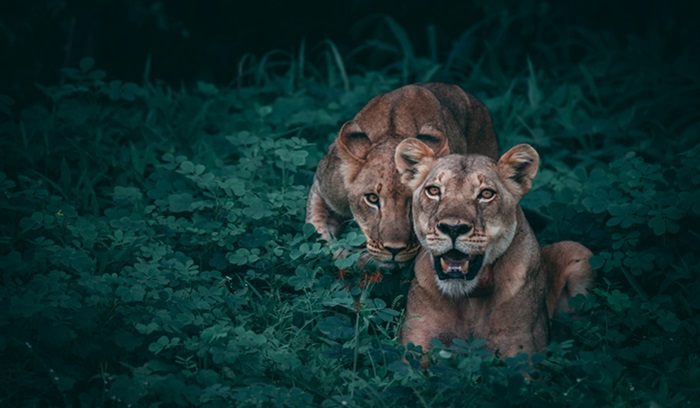
A sweeping global enforcement effort has pulled nearly 20,000 threatened animals out of illegal trafficking networks — rescuing big cats, pangolins, primates, and tens of thousands of birds and turtles from criminal supply chains that span the globe. Operation Thunder 2024, led by Interpol and the World Customs Organization (WCO), ran for nearly four weeks across 138 countries and regions, resulting in 365 arrests and more than 2,200 seizures.
At a glance
- Wildlife trafficking seizure: Authorities recovered 12,427 birds, 5,877 turtles, 1,731 reptiles, 33 primates, 18 big cats, and 12 pangolins — nearly 20,000 live protected animals in total.
- Criminal networks dismantled: Six transnational organizations suspected of trafficking species protected under CITES were identified, along with more than 100 companies implicated in the illegal trade.
- Global operation scale: The campaign ran from Nov. 11 to Dec. 6, 2024 C.E., coordinating police, customs, border patrol, and wildlife officials across six continents.
What the rescues looked like on the ground
The sheer variety of what was recovered tells the story of how vast and varied wildlife crime has become.
In Turkey, officials stopped a vehicle at the Syrian border and found 6,500 songbirds crammed inside. At India’s Chennai International Airport, customs agents discovered 5,193 red-eared ornamental slider turtles hidden inside passenger suitcases arriving from Malaysia. U.S. authorities intercepted a metric ton of sea cucumbers — considered a delicacy in several markets — smuggled from Nicaragua. Both Australia and the U.K. reported seizures of bear bile, a traditional medicine ingredient extracted through a surgical tube inserted directly into a living bear’s gallbladder.
Timber was among the largest hauls by volume: 214.9 metric tons, primarily intercepted in sea cargo. Most other confiscations took place at airports and mail processing hubs, where traffickers rely on the sheer volume of packages to smuggle contraband past inspectors.
Why this kind of coordination matters
Wildlife crime is estimated to generate up to $21 billion annually worldwide, making it the fourth-largest international criminal trade after weapons, drugs, and human trafficking, according to Interpol. That scale requires an equally large response.
Interpol Secretary-General Valdecy Urquiza put it directly: “Organized crime networks are profiting from the demand for rare plants and animals, exploiting nature to fuel human greed. This has far-reaching consequences: it drives biodiversity loss, destroys communities, contributes to climate change and even fuels conflict and instability.”
WCO Secretary-General Ian Saunders noted that wildlife crime is “rapidly growing” and “highly lucrative” — and still often deprioritized by enforcement agencies. The cooperation mechanisms built through Operation Thunder, he said, are helping to change that by improving intelligence sharing across borders.
One particularly important tool in those efforts: DNA forensics. Where possible, wildlife forensic experts collected DNA samples from recovered animals before transferring them to conservation centers. Those samples help build prosecutorial cases — but they also map trafficking routes, helping investigators predict and intercept future shipments. The Convention on International Trade in Endangered Species (CITES) provides the legal framework that makes these cross-border prosecutions possible.
Online trafficking is growing fast
One of the more striking findings from Operation Thunder 2024 C.E. was how much of the illegal trade has moved online.
Investigators found suspects using multiple social media profiles and accounts linked across platforms and online marketplaces to expand their reach and obscure their operations. This mirrors a broader trend tracked by organizations like TRAFFIC, which monitors the wildlife trade globally and has documented a significant shift toward e-commerce channels in recent years.
The United Nations Office on Drugs and Crime has similarly noted that online platforms lower the barrier to entry for wildlife traffickers — making enforcement harder but also creating new digital evidence trails that investigators can follow.
Real progress, with real limits
Operations like Thunder represent genuine enforcement wins. Hundreds of animals that would otherwise have spent their lives in cages, or been killed for parts, are instead being cared for in conservation centers. Six criminal networks have been disrupted. Hundreds of companies are now under scrutiny.
But nearly 20,000 seized animals also represents a fraction of what moves through illegal channels each year. The World Wildlife Fund estimates that wildlife trafficking affects hundreds of species across every continent. Enforcement sweeps, however well-coordinated, can only do so much without parallel efforts to reduce demand — particularly in markets where trafficked animals are consumed as food, medicine, or status symbols.
That work is slower, harder, and less visible than a four-week global operation. But the partnerships built through efforts like Operation Thunder are a foundation for it.
Read more
For more on this story, see: Mongabay
For more from Good News for Humankind, see:
- Ghana creates a new marine protected area at Cape Three Points
- Renewables now make up at least 49% of global power capacity
- The Good News for Humankind archive on wildlife conservation
About this article
- 🤖 This article is AI-generated, based on a framework created by Peter Schulte.
- 🌍 It aims to be inspirational but clear-eyed, accurate, and evidence-based, and grounded in care for the Earth, peace and belonging for all, and human evolution.
- 💬 Leave your notes and suggestions in the comments below — I will do my best to review and implement where appropriate.
- ✉️ One verified piece of good news, one insight from Antihero Project, every weekday morning. Subscribe free.
More Good News
-
Nearly 20 million measles deaths averted in Africa since 2000
Measles vaccines in Africa have prevented an estimated 19.5 million deaths since 2000 — roughly 800,000 lives saved every year for nearly a quarter century. A new WHO and Gavi analysis credits steady investment in cold-chain systems, community health workers, and political will, with coverage for the critical second measles dose climbing more than tenfold over that stretch. This year, Cabo Verde, Mauritius, and Seychelles became the first sub-Saharan nations to officially eliminate measles and rubella, a milestone once considered out of reach. The story is a powerful reminder that global health progress, though uneven, compounds quietly over decades —…
-

Romania finally recognizes trans man’s identity in landmark E.U. victory
Romanian trans rights took a real leap forward this week, as courts finally ordered the government to legally recognize Arian Mirzarafie-Ahi as male — a recognition the U.K. granted him back in 2020. For years, he lived with two identities depending on which border he crossed, until his case climbed all the way to the E.U.’s top court and came home with a binding answer. That ruling now obligates every E.U. member state to honor gender recognition documents issued by another. It’s a quiet but powerful shift: transgender people across Europe gain stronger footing not through new laws, but through…
-
Alaska judge permanently shields Tongass old-growth forests from logging
The Tongass National Forest just won a major day in court, with a federal judge ruling in March 2026 that the U.S. Forest Service is not legally required to ramp up logging to meet timber industry demand. The decision protects the world’s largest temperate old-growth rainforest — home to roughly a third of what remains of this ecosystem globally, along with wild salmon runs, brown bears, and trees older than 800 years. Tribal nations, fishing crews, and tourism operators stood alongside federal defenders in the case, a reminder that the forest’s value reaches far beyond timber. Wins like this give…