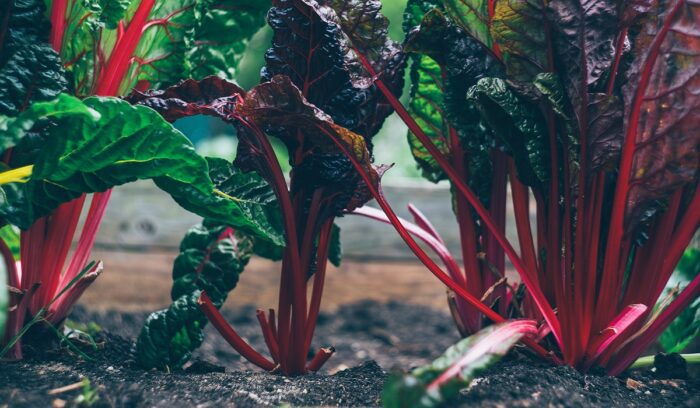
Somewhere on the sun-warmed slopes of the Iberian Peninsula, around 6,000 B.C.E., a shift was quietly underway. People who had spent generations hunting deer and gathering wild seeds were beginning to tend small plots of grain and keep animals penned nearby. It was not a revolution so much as a gradual reorientation — one that would remake the land and the people living on it over the following millennia.
What the evidence shows
- Neolithic expansion: Early farmers arrived on the Iberian Peninsula as part of a broader westward movement of agricultural peoples from the eastern Mediterranean, bringing domesticated crops and livestock with them.
- Cardium culture: An open-sea navigation culture from the eastern Mediterranean, known for its distinctive pottery, extended its influence to Iberia’s eastern coasts, possibly as early as the 5th millennium B.C.E., carrying farming knowledge and practices.
- Early European Farmers: Genetic evidence shows that the principal ancestral origin of modern Iberians traces to Early European Farmers who arrived during the Neolithic, reshaping both the population and the land-use patterns of the peninsula.
Where this knowledge came from
The story of farming in Iberia is not one of isolated invention. It was part of a continental-scale diffusion. Agriculture had taken root in the Fertile Crescent thousands of years earlier, and farming communities spread westward across Europe over many generations, moving along river valleys, coastlines, and mountain passes.
By the time these practices reached the Iberian Peninsula, they carried with them wheat, barley, sheep, goats, and cattle — all domesticated far to the east. The Cardium culture, named for the cockle shell used to decorate its pottery, appears to have moved along Mediterranean sea routes, seeding farming settlements on Iberia’s eastern shores before the knowledge spread further inland.
This was not simply a transfer of tools. It was a transfer of a way of seeing the world — one in which a hillside could be planted, an animal could be bred, and a future harvest could be planned for. The cognitive and social infrastructure this required was as significant as the grain seeds themselves.
The people who were already there
The Iberian Peninsula was not empty. Anatomically modern humans had been living there for roughly 40,000 years before farming arrived. Mesolithic hunter-gatherers had deep knowledge of the local landscape — its rivers, its game, its seasonal rhythms. Some of them almost certainly adopted farming practices gradually, trading and interacting with incoming Neolithic communities rather than being displaced all at once.
Genetic research tells a more complex story than a simple replacement. While Early European Farmers do make up the largest ancestral component of modern Iberians, older hunter-gatherer lineages persisted in the population. The real history was likely one of contact, exchange, intermarriage, and slow transformation — not a clean break.
What those earlier inhabitants called themselves, what languages they spoke, and how they understood the newcomers arriving with their animals and seeds remains largely unknown. The archaeological record captures their tools and bones but not their words.
Lasting impact
The arrival of farming on the Iberian Peninsula set in motion processes that still shape the land today. Settled agriculture made possible larger, more permanent communities. Surplus food supported specialization — potters, traders, builders. Over centuries, megalithic cultures developed across the peninsula, leaving behind stone tombs and monuments whose construction required coordinated labor on a scale hunter-gatherer bands rarely achieved.
Iberia would go on to become one of Europe’s most agriculturally productive regions. The Roman Empire later relied heavily on Iberian grain, olive oil, and wine. That productivity had its roots in the Neolithic moment when someone first broke soil on the peninsula’s eastern coast and planted a seed they had carried across the sea.
The domesticated animals brought during this period — sheep, goats, cattle — became the foundation of pastoral economies that shaped Iberian culture for thousands of years. Transhumance, the seasonal movement of livestock between highland and lowland pastures, remained a central feature of Iberian rural life well into the modern era.
Blindspots and limits
The picture is incomplete in important ways. The precise timing and pace of Neolithic arrival in Iberia is still being refined by archaeologists, and the Wikipedia source drawn on here does not firmly document plant and animal domestication specifically at ~6000 B.C.E. — the 5th millennium B.C.E. is better-attested in this source for Cardium culture influence. The voices of the people who lived through this transition — both the incoming farmers and the existing inhabitants — are entirely absent from the record. We know what they built and what they ate; we do not know how they felt about the change, or what was lost as older lifeways gave way.
Read more
For more on this story, see: Wikipedia — Iberian Peninsula: History
For more from Good News for Humankind, see:
- Indigenous land rights and 160 million hectares protected at COP30
- Ghana establishes marine protected area at Cape Three Points
- The Good News for Humankind archive on prehistory
About this article
- 🤖 This article is AI-generated, based on a framework created by Peter Schulte.
- 🌍 It aims to be inspirational but clear-eyed, accurate, and evidence-based, and grounded in care for the Earth, peace and belonging for all, and human evolution.
- 💬 Leave your notes and suggestions in the comments below — I will do my best to review and implement where appropriate.
- ✉️ One verified piece of good news, one insight from Antihero Project, every weekday morning. Subscribe free.