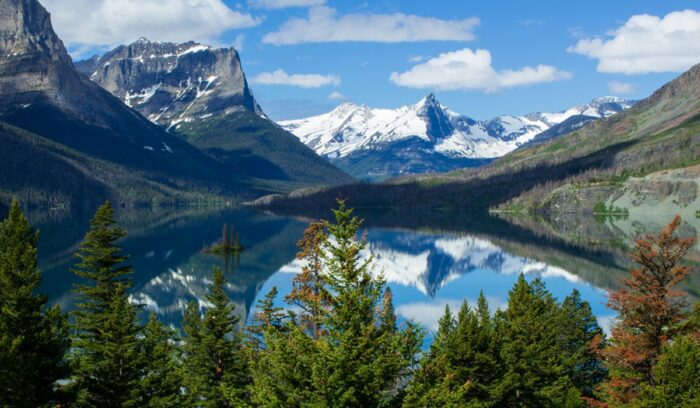
The National Park Foundation has received a $100 million gift from Lilly Endowment Inc. — the largest grant in the foundation’s nearly 60-year history and the largest private grant ever made to benefit U.S. national parks. The money is earmarked to expand who gets to experience more than 400 park sites, protect threatened wildlife, and tell a fuller version of American history.
At a glance
- National park grant: The $100 million gift from Lilly Endowment Inc. is the largest in the National Park Foundation’s history and the largest private donation ever made to the U.S. national park system.
- Youth access programs: A portion of the funds will create new opportunities for young people — especially those from underserved communities — to visit and connect with national parks.
- Untold histories: The foundation plans to use part of the grant to tell more complete stories of communities “whose voices and contributions have not been fully told as a part of the American story.”
Why this grant matters
The National Park Service manages more than 400 sites and welcomes over 320 million visitors each year. But federal funding — $3.3 billion in fiscal year 2024 C.E. — has long struggled to keep pace with maintenance backlogs, ecosystem pressures, and the work of making parks genuinely accessible to all Americans.
Private philanthropy has historically stepped in to fill those gaps. This grant, announced in August 2024 C.E., takes that role to a new scale.
“This grant will allow us to supercharge our efforts to ensure our national parks are for everyone, for generations to come,” said Will Shafroth, president and CEO of the National Park Foundation.
Four priorities for the money
The foundation outlined four areas the grant will support. The first is creating youth access programs so more young people — particularly those who have faced financial or logistical barriers — can visit parks. The second is conserving threatened ecosystems and wildlife across the system.
The third priority is expanding the historical narratives told within parks. Indigenous peoples, Black Americans, and other communities have shaped the lands and stories that national parks represent, but those contributions have often been minimized or omitted in official interpretations. The foundation is committing funds to change that.
The fourth priority is ensuring visitors have a high-quality experience — which matters both for public support of the park system and for the health benefits that time in nature provides.
About the donor
Lilly Endowment Inc. is based in Indianapolis and was founded in 1937 C.E. by J.K. Lilly Sr. and his sons, Eli and J.K. Jr., members of the family behind pharmaceutical company Eli Lilly and Company. The endowment’s chairman and CEO, N. Clay Robbins, said the founders were “inspired by the beauty and wonders of the natural world and supportive of research and educational programs about archaeology and the cultural history of our nation.”
That origin story — a private family foundation investing in shared public land — reflects a long American tradition of private philanthropy supporting the national park system, dating back to early donors who helped fund infrastructure and wildlife protection in parks like Yellowstone, which Congress established in 1872 C.E. as the first U.S. national park.
A system built over 150 years
The National Park Service itself was created in 1916 C.E., when President Woodrow Wilson signed the Organic Act establishing it as the steward of the growing list of national parks and monuments. Today that list spans deserts, coastlines, battlefields, and urban green spaces — a public commons held in trust for every American.
The National Park Foundation, the service’s official fundraising partner, was established by Congress in 1967 C.E. to channel private support toward park needs that federal budgets couldn’t always meet.
What still needs work
A single grant, however historic, won’t resolve systemic underfunding or the access gaps that have kept national parks out of reach for millions of Americans. Research consistently shows that park visitors skew white and affluent — a pattern rooted in economics, transportation, and the exclusionary history of some park lands themselves, including the forced removal of Black families from areas that became parks. Philanthropic investment can help, but advocates say it must be paired with structural policy change.
Still, a $100 million commitment explicitly focused on access and inclusive history is a meaningful signal that the conversation around who national parks belong to is shifting. The National Park Foundation has said it will report publicly on how the funds are deployed — an accountability step that will matter as much as the gift itself.
Read more
For more on this story, see: NPR
For more from Good News for Humankind, see:
- Indigenous land rights get a boost — 160 million hectares recognized at COP30
- Ghana creates a new marine protected area at Cape Three Points
- The Good News for Humankind archive on conservation
About this article
- 🤖 This article is AI-generated, based on a framework created by Peter Schulte.
- 🌍 It aims to be inspirational but clear-eyed, accurate, and evidence-based, and grounded in care for the Earth, peace and belonging for all, and human evolution.
- 💬 Leave your notes and suggestions in the comments below — I will do my best to review and implement where appropriate.
- ✉️ One verified piece of good news, one insight from Antihero Project, every weekday morning. Subscribe free.