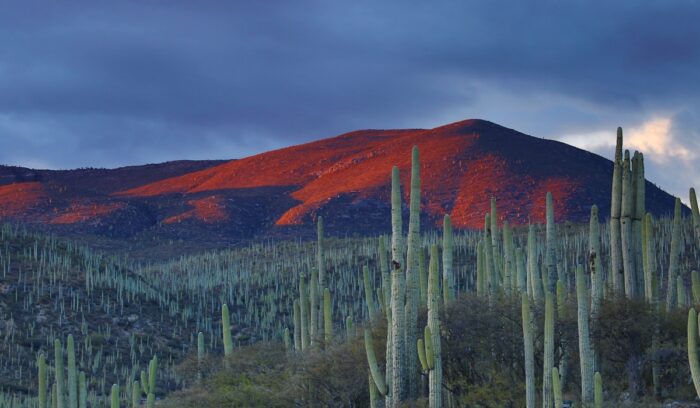
Mexico added 13 new protected areas across six states in 2023 C.E., pushing the country’s total number of federally protected natural areas to 200. The announcement, made at a press conference by Secretary of the Environment and Natural Resources María Luisa Albores González, covered six new national parks and seven flora and fauna protection areas totaling 17,918 hectares (about 44,276 acres).
At a glance
- Mexico protected areas: The 13 new sites span six states — Baja California, Baja California Sur, Quintana Roo, Sinaloa, Guerrero, and Oaxaca — bringing the federal total to 200.
- Conservation mandate: President Andrés Manuel López Obrador directed the government to protect areas with “high environmental value,” leading to over 4 million hectares (9.8 million acres) secured since 2018 C.E.
- Future sites: Mexico’s National Commission of Protected Natural Areas (Conanp) expected to declare at least three additional protected areas within the same month as the announcement.
What was protected and where
The new sites range dramatically in size and ecosystem type. In the Baja Peninsula, three national parks stand out: the 85-hectare San Quintín National Park in Baja California, the 2,076-hectare Nopoló National Park, and the 6,217-hectare Loreto II National Park, both in Baja California Sur.
Quintana Roo gained four small but ecologically significant flora and fauna protection areas, including the 4-hectare Playa Delfines, the 16-hectare Jacinto Pat, the 37-hectare San Buenaventura, and the 10-hectare Cenote Aerolito — the last of which protects a rare underwater cave system.
Oaxaca received three new sites: the 1,923-hectare Bajos de Coyula Flora and Fauna Protection Area, the 2,237-hectare Huatulco II National Park, and the 1,812-hectare Ricardo Flores Magón National Park. Guerrero gained the 723-hectare Vicente Guerrero National Park and the 282-hectare Hermenegildo Galeana Flora and Fauna Protection Area. Sinaloa added the 2,489-hectare Juan M. Banderas Flora and Fauna Protection Area.
A historic conservation push
The López Obrador administration framed the milestone as a defining piece of its legacy. “It gives us much pleasure that in this administration we can leave behind such a grand legacy for the Mexican people,” Secretary Albores González said at the press conference.
López Obrador himself set a candid personal benchmark earlier in 2023 C.E. “I want to go down in history as the president with the second-most protected reserves created,” he said. “Lázaro Cárdenas has the first spot. I want to aspire to that.” Cárdenas, who governed Mexico from 1934 C.E. to 1940 C.E., is widely regarded as the father of Mexico’s conservation system.
Since taking office in 2018 C.E., the administration has protected over 4 million hectares of land and water through Conanp, the federal body responsible for managing Mexico’s protected natural areas network. The 200-area milestone places Mexico among the countries in Latin America with the most extensive formal conservation infrastructure.
Why small sites matter too
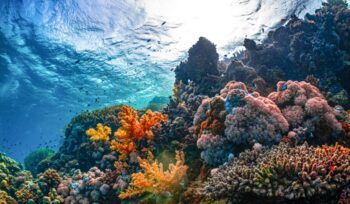
Some of the new areas are tiny by global standards — a few measure just four or ten hectares. But size does not determine ecological value. Small, precisely targeted reserves can protect breeding beaches, freshwater cenotes, or coastal mangrove patches that larger landscape-level parks miss entirely. The cenote and coastal sites in Quintana Roo fall squarely into that category, sheltering habitats that support the Mesoamerican Reef, the second-largest coral reef system on Earth.
Mexico’s broader protected area network now covers a significant share of its national territory and marine zones, contributing to global biodiversity commitments under the Kunming-Montreal Global Biodiversity Framework, which set a target of protecting 30% of land and ocean by 2030 C.E.
Challenges ahead
One honest limitation clouds the announcement: management plans for the new protected areas were not available at the time of the declaration. A protected area without an active management framework, adequate staffing, and community engagement can exist largely on paper. Research from the International Union for Conservation of Nature consistently shows that the difference between effective and nominal protection often comes down to resources and relationships with local and Indigenous communities — factors that take years to build and are harder to announce than a boundary on a map.
The speed of the declarations — 13 sites in a single week, with three more to follow — raises fair questions about whether on-the-ground capacity will match the ambition. Mongabay’s original reporting noted the absence of management plans as an open question the government had not yet addressed.
Still, the commitment to reach and surpass 200 federally recognized sites signals that conservation has been treated as a priority worth measuring — and that Mexico’s next administration will inherit a larger, more formally recognized network to build on.
Read more
For more on this story, see: Mongabay
For more from Good News for Humankind, see:
- Ghana establishes a new marine protected area at Cape Three Points
- Indigenous land rights and 160 million hectares secured ahead of COP30
- The Good News for Humankind archive on Mexico
About this article
- 🤖 This article is AI-generated, based on a framework created by Peter Schulte.
- 🌍 It aims to be inspirational but clear-eyed, accurate, and evidence-based, and grounded in care for the Earth, peace and belonging for all, and human evolution.
- 💬 Leave your notes and suggestions in the comments below — I will do my best to review and implement where appropriate.
- ✉️ One verified piece of good news, one insight from Antihero Project, every weekday morning. Subscribe free.