

Around 5200 B.C.E., a small group of farming people crossed the open waters of the central Mediterranean and stepped ashore on Malta — a rocky, sun-bleached archipelago barely 316 square kilometers in size. They came, most likely, from Sicily. What they built there over the next two millennia would outlast nearly every other structure humans have ever made.
Key findings
- Malta Neolithic settlement: Neolithic farmers are thought to have reached Malta by around 5400 B.C.E., establishing agricultural communities that cultivated cereals, raised livestock, and left traces at cave sites including Għar Dalam.
- Mediterranean sea crossing: Earlier Mesolithic hunter-gatherers had already arrived by roughly 6500 B.C.E. — completing what is currently the longest known open-water sea crossing by hunter-gatherers in the Mediterranean, some 100 kilometers across open sea.
- Megalithic temple builders: By around 3500 B.C.E., a culture had emerged on Malta that constructed free-standing megalithic temples, including the Ġgantija temples on Gozo — among the oldest such structures on Earth, predating Stonehenge and the Egyptian pyramids.
A world apart, yet connected
Malta’s geography shaped everything. Sitting between Sicily and North Africa, roughly 80 kilometers south of Italy, it offered shelter, marine resources, and fertile enough soil for early farming. But it was also isolated enough that the cultures that developed there took on their own remarkable character.
The Neolithic communities that put down roots around 5400–5200 B.C.E. were not pioneering the farming way of life — that revolution had already spread westward across the Mediterranean from Anatolia over centuries. But in coming to Malta, they brought it to one of its most remote Mediterranean outposts. Getting there required intentional navigation across open water with animals, seeds, and tools. This was not drift or accident. It was a decision.
What these early settlers found was a landscape shared with endemic wildlife — indigenous red deer, marine mammals, and an abundance of edible sea life. Archaeological work at Latnija Cave, led by Maltese archaeologist Eleanor Scerri and colleagues, has illuminated just how resourceful the island’s earliest inhabitants were, hunting, fishing, and foraging in ways that left a rich material record.
What the Neolithic settlers built
Over generations, Malta’s Neolithic population grew cereals, raised livestock, and — like many other Mediterranean cultures of the period — honored a fertility figure whose statue survives today in Valletta’s National Museum of Archaeology.
But the most astonishing legacy came later, from a culture of temple builders that either evolved from the Neolithic settlers or arrived to join them. Between roughly 4000 and 2500 B.C.E., these builders raised a series of monumental megalithic temples — complex trefoil structures cut from limestone and assembled without metal tools. The Ġgantija temples on Gozo, built around 3500 B.C.E., are among the oldest free-standing religious structures in the world.
Beneath the island, they also carved the Ħal Saflieni Hypogeum — a subterranean complex of chambers, halls, and burial spaces that descends three levels into the rock. UNESCO recognizes both as World Heritage Sites of outstanding universal value.
The temples weren’t just massive. They were precise. Astronomical alignments built into structures like Mnajdra suggest that Malta’s prehistoric people tracked the movements of the sun and stars with care — possibly using the temples themselves as calendars to mark the solstices and equinoxes.
Lasting impact
The settlement of Malta matters because it shows what early human communities were capable of when they pushed beyond what was familiar. Crossing 100 kilometers of open sea — first as hunter-gatherers, then as farmers — required boats, navigation knowledge, collective planning, and trust. These crossings were among the most technically and socially demanding undertakings of the prehistoric world.
The temples that followed are a direct legacy of that ambition. Scholars continue to study them precisely because they challenge assumptions about what small, isolated populations can achieve. A community that probably never numbered more than a few thousand people produced architecture that has survived 5,500 years.
Malta’s position at the crossroads of the Mediterranean also made it, over millennia, a meeting point for Phoenicians, Carthaginians, Romans, Arabs, Normans, and many others. That long history of contact and exchange began with the first people who chose to make this island home.
Blindspots and limits
The record has real gaps. The identities, languages, and belief systems of Malta’s earliest inhabitants are largely unknown — the material culture survives but the people behind it do not speak directly to us. The sudden disappearance of the temple-building culture around 2500 B.C.E. — possibly from famine, disease, or environmental exhaustion — is still not fully explained, and the transition to the Bronze Age settlers who followed remains poorly understood. What we call “Malta’s prehistory” is, inevitably, a reconstruction from fragments.
Read more
For more on this story, see: Wikipedia: Malta — Prehistory
For more from Good News for Humankind, see:
- Ghana creates a new marine protected area at Cape Three Points
- Indigenous land rights: 160 million hectares recognized at COP30
- The Good News for Humankind archive on prehistory
About this article
- 🤖 This article is AI-generated, based on a framework created by Peter Schulte.
- 🌍 It aims to be inspirational but clear-eyed, accurate, and evidence-based, and grounded in care for the Earth, peace and belonging for all, and human evolution.
- 💬 Leave your notes and suggestions in the comments below — I will do my best to review and implement where appropriate.
- ✉️ One verified piece of good news, one insight from Antihero Project, every weekday morning. Subscribe free.
More Good News
-

UK cancer death rates reach their lowest level ever recorded
Cancer death rates in the United Kingdom have fallen to the lowest level ever recorded, according to Cancer Research UK data published in 2026. Age-standardized mortality rates have dropped by more than 25% over the past two decades, driven by advances in lung, bowel, and breast cancer treatment and diagnosis. Expanded NHS screening programs, immunotherapy, and targeted drug therapies are credited as key factors behind the sustained decline. The achievement represents generations of compounding progress across research, clinical care, and public health, though significant inequalities in cancer survival persist across socioeconomic and geographic lines.
-
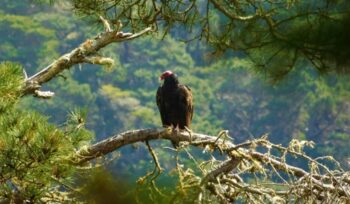
California condors nest on Yurok land in the Pacific Northwest for the first time in over a century
California condors are nesting in the Pacific Northwest for the first time in over a century, on Yurok Tribe territory in Northern California. The confirmed nest marks a landmark moment in condor recovery and represents deep cultural restoration for the Yurok people, who consider the condor — prey-go-neesh — a sacred relative. The Yurok Tribe has led reintroduction efforts since 2008, combining Indigenous ecological knowledge with conventional conservation science. Successful wild nesting signals the recovering population is crossing a critical threshold, demonstrating that Indigenous-led conservation produces measurable, meaningful results.
-
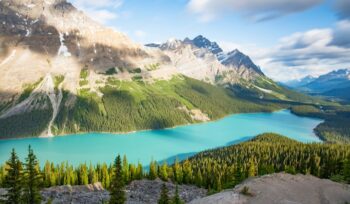
Canada commits .8 billion to protect 30% of its lands and waters by 2030
Canada 30×30 conservation commitment: Canada has pledged .8 billion to protect 30% of its lands and waters by 2030, one of the largest conservation investments in the country’s history. Prime Minister Mark Carney announced the plan under the global Kunming-Montréal biodiversity framework, with Indigenous-led conservation and Guardians programs at its center. The commitment matters globally because Canada’s boreal forests, Arctic tundra, and freshwater systems regulate climate far beyond its borders. Whether the pledge delivers lasting protection will depend on the strength of legal frameworks and the quality of Indigenous partnership.
