
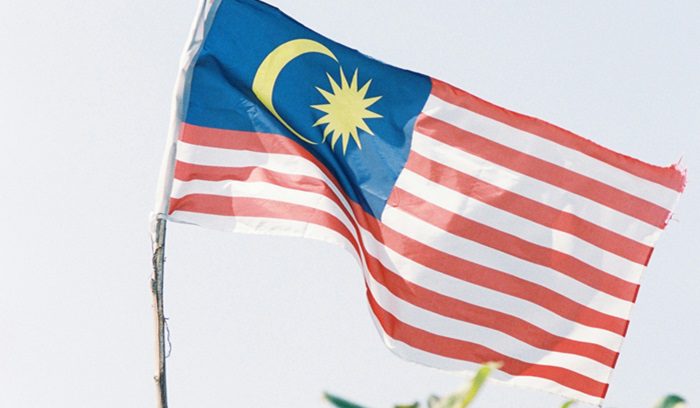
On September 16, 1963 C.E., a document signed in London changed the map of Southeast Asia. Four territories — Malaya, Singapore, Sarawak, and North Borneo — became one federation under a new name: Malaysia. The Malaysia Agreement, formally known as MA63, was more than a legal instrument. It was the culmination of decades of decolonization, negotiation, and a fundamental assertion that the peoples of the region had the right to determine their own future.
What the agreement established
- Malaysia Agreement: Signed between the United Kingdom, the Federation of Malaya, North Borneo, Sarawak, and Singapore, MA63 provided the legal framework for Britain to relinquish sovereignty over the Borneo territories and Singapore, vesting authority in the new federation.
- Decolonization process: The agreement followed a United Nations-endorsed principle that all peoples have the right to self-determination — a principle the General Assembly had formally proclaimed in Resolution 1514 in 1960 C.E.
- Cobbold Commission: Before signing, a five-man inquiry commission headed by Lord Cobbold assessed whether the peoples of North Borneo and Sarawak supported the merger — a deliberate effort to anchor the new federation in popular consent rather than colonial fiat.
A path built from colonial complexity
The territories that came together in 1963 C.E. had long, distinct histories under British influence. Before World War II, British Malaya comprised three overlapping categories of political arrangement — federated states, unfederated states, and crown colonies — each with different relationships to London. The Federated Malay States, the Unfederated Malay States, and the Straits Settlements were all administered differently, and Singapore remained a separate crown colony under direct British rule.
The Federation of Malaya had already achieved independence on August 31, 1957 C.E., following the Malayan Declaration of Independence. But the question of what would happen to Singapore, Sarawak, and North Borneo remained open. Merging them into a larger federation offered economic coherence and regional security — particularly during a Cold War era in which newly independent states across Asia and Africa were navigating competing geopolitical pressures.
The Cobbold Commission’s 1962 C.E. report concluded that the formation of Malaysia should proceed — but its chairman also stressed, in a private letter to British Prime Minister Harold Macmillan, that a federation without Singapore would “have few attractions.” That private caveat reveals how delicate the entire architecture was from the beginning.
What Malaysia Day represented
September 16, 1963 C.E. became Malaysia Day — now a national public holiday. The date marks not just a legal transition but a symbolic one: the moment when sovereignty passed from a colonial power to a multi-ethnic federation spanning the Malay Peninsula and the northern coast of Borneo across the South China Sea.
The agreement included specific provisions for Singapore, Sarawak, and Sabah (North Borneo), recognizing that each territory brought different demographics, legal traditions, and economic structures. The negotiators were aware they were not simply expanding Malaya — they were creating something genuinely new, and the fine print reflected that intention.
For the peoples of Sarawak and Sabah in particular, MA63 represented a negotiated entry into federation — not absorption. The agreement outlined their rights and protections as equal partners, a point Lord Cobbold had explicitly insisted upon in the commission’s findings.
The complexity that followed
The new federation almost immediately faced tests. Brunei, though invited, did not sign — the Sultan sought recognition as the senior ruler in the federation, and disagreements over oil revenue and the aftermath of a 1962 C.E. revolt made agreement impossible. Brunei would remain a British protectorate until gaining sovereignty on January 1, 1984 C.E.
More consequentially, Singapore’s place in the federation proved untenable. Political tensions between the People’s Action Party led by Lee Kuan Yew and the federal government in Kuala Lumpur — rooted in disagreements over economic policy, racial politics, and representation — came to a head in 1965 C.E. On August 9, 1965 C.E., Singapore separated from Malaysia and became a sovereign state. It had been part of the federation for less than two years.
Indonesia’s Konfrontasi — a policy of military and political opposition to the formation of Malaysia — also challenged the new nation from the outside, with armed incursions continuing until a peace agreement in 1966 C.E. The federation that had looked so coherent on paper was tested almost immediately by internal and external forces.
Lasting impact
Malaysia’s founding through the Malaysia Agreement established a model — imperfect and contested — for multi-ethnic, multi-religious nation-building in Southeast Asia. The federation built institutions, infrastructure, and economic policy across a geographically fragmented country that spans two land masses separated by open ocean.
Malaysia Day itself was not recognized as a national public holiday until 2010 C.E., a decades-long gap that reflected ongoing debates about how fully the contributions of Sabah and Sarawak were acknowledged within the federation. The belated recognition came partly as a response to persistent advocacy from East Malaysians who felt their role in the nation’s founding had been minimized.
The renewed public conversation about MA63 in recent decades — especially after the 2018 C.E. general election that ended six decades of uninterrupted rule by one coalition — speaks to how founding documents live long after their signing. Promises made in 1963 C.E. are still debated, still litigated, and still shape how Malaysians understand their country.
Blindspots and limits
Many academics and politicians have argued that the protections and autonomy promised to Sarawak and Sabah under MA63 have been eroded over time by the federal government — a source of genuine and ongoing grievance in East Malaysia. The agreement also largely reflects negotiations among political elites and colonial administrators; the voices of ordinary Bornean communities, Indigenous peoples, and rural populations were filtered through a commission rather than expressed through direct democratic participation. The Cobbold Commission itself acknowledged divisions of opinion within the territories, and the framework it produced — however carefully constructed — carried the imprint of its time.
Read more
For more on this story, see: Malaysia Agreement — Wikipedia
For more from Good News for Humankind, see:
- Ceylon gains independence from Britain after decades of colonial rule
- Mali declares independence, ending decades of French colonial rule
- The Good News for Humankind archive on Malaysia
About this article
- 🤖 This article is AI-generated, based on a framework created by Peter Schulte.
- 🌍 It aims to be inspirational but clear-eyed, accurate, and evidence-based, and grounded in care for the Earth, peace and belonging for all, and human evolution.
- 💬 Leave your notes and suggestions in the comments below — I will do my best to review and implement where appropriate.
- ✉️ One verified piece of good news, one insight from Antihero Project, every weekday morning. Subscribe free.


