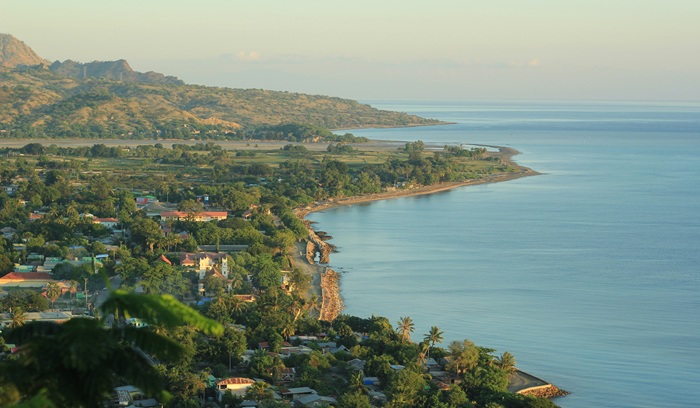
One of the world’s youngest nations has cleared one of its most stubborn public health burdens. The World Health Organization has officially certified Timor-Leste as malaria-free — a designation that caps more than 20 years of sustained, evidence-driven work and places the small Southeast Asian nation among a select group of countries that have eliminated the disease entirely.
At a glance
- Malaria-free certification: The WHO granted Timor-Leste official malaria-free status after the country recorded zero indigenous cases for more than three consecutive years, meeting a core WHO certification requirement.
- Scale of the turnaround: As recently as 2006 C.E., Timor-Leste reported over 223,000 malaria cases annually. By 2021 C.E., that number had reached zero.
- Regional milestone: Timor-Leste is only the third country in the WHO South-East Asia region to achieve this certification, joining a global list of 47 countries and one territory.
A nation that rebuilt its health system from scratch
Context matters here. Timor-Leste gained independence in 2002 C.E. after decades of occupation and conflict that left its infrastructure fractured and its institutions barely formed. The national malaria program launched just a year later, in 2003 C.E., meaning this public health campaign essentially grew alongside the country itself.
That parallel construction — building a functioning health system while simultaneously fighting a serious infectious disease — makes the outcome more striking. Health workers operated with limited resources across remote terrain, reaching villages and families that formal healthcare had rarely touched before.
The Ministry of Health established a three-tiered delivery structure: hospitals, community health centers, and local health posts. That layered approach gave the program both the reach and the flexibility to function at the community level, not just in urban centers.
What the strategy actually looked like
The campaign worked because it combined several reinforcing tactics rather than relying on any single intervention.
The government distributed free insecticide-treated bed nets widely and made malaria diagnosis and treatment free for all citizens — removing cost as a barrier to care at every step. Rapid diagnostic tests replaced slower, less accessible methods. Effective drug therapies replaced outdated treatments. Targeted vector control measures reduced mosquito populations in high-transmission areas.
Perhaps as importantly, officials built a real-time surveillance system capable of detecting cases quickly — including at border crossings, where the risk of reintroduction remains ongoing. That system isn’t mothballed now that certification is achieved. It’s the infrastructure that keeps the country malaria-free going forward.
Why community participation made the difference
Programs like this one succeed or fail at the local level. In Timor-Leste, community health workers carried much of the load — educating families, conducting screenings, and distributing supplies in areas that larger health institutions couldn’t easily serve. Their work was essential, even as it often went unrecognized in official accounts.
The WHO’s certification explicitly notes the role of community engagement alongside government commitment. That combination — top-down political will and bottom-up participation — is increasingly recognized as the model that works for disease elimination campaigns in resource-limited settings.
Other countries facing similar burdens, particularly across sub-Saharan Africa where malaria still kills hundreds of thousands each year, are watching what Timor-Leste has demonstrated. The Roll Back Malaria Partnership has pointed to certification stories like this one as evidence that elimination is achievable with sustained investment and coordinated action.
What remains to be done
Certification is not the end of the work. Malaria can be reintroduced through travel, border movement, or gaps in surveillance — and Timor-Leste shares a land border with Indonesian West Timor, where transmission continues. Maintaining zero cases requires ongoing vigilance and funding that can be difficult to sustain once a disease is no longer visibly present.
The country also faces broader health challenges. Maternal and child mortality rates remain high relative to regional neighbors, and access to care in remote areas, while improved, is still uneven. Malaria-free status is a significant marker, not a finish line.
Still, what Timor-Leste has accomplished belongs in the same conversation as other long-arc public health victories — like the advances in disease prevention now emerging from decades of scientific investment, or the kind of sustained community-level mobilization seen in Indigenous-led efforts to protect health and land simultaneously. Progress built slowly, at the community level, tends to hold.
A country that barely existed as an independent state in 2002 C.E. has now eliminated a disease that has plagued humanity for millennia. That’s worth sitting with for a moment.
Read more
For more on this story, see: World Health Organization certifies Timor-Leste as malaria-free
For more from Good News for Humankind, see:
- Alzheimer’s risk cut in half by drug in landmark prevention trial
- Indigenous land rights and COP30: 160 million hectares
- The Good News for Humankind archive on global health
About this article
- 🤖 This article is AI-generated, based on a framework created by Peter Schulte.
- 🌍 It aims to be inspirational but clear-eyed, accurate, and evidence-based, and grounded in care for the Earth, peace and belonging for all, and human evolution.
- 💬 Leave your notes and suggestions in the comments below — I will do my best to review and implement where appropriate.
- ✉️ One verified piece of good news, one insight from Antihero Project, every weekday morning. Subscribe free.
More Good News
-

Canada commits .8 billion to protect 30% of its lands and waters by 2030
Canada has announced a .8 billion investment to protect 30% of its lands and waters by 2030, one of the largest conservation commitments in the country’s history. Prime Minister Mark Carney unveiled the funding to meet international biodiversity targets, with Indigenous communities playing a central role in stewarding conserved lands. The announcement positions Canada as a global leader in nature protection at a moment when biodiversity loss is accelerating worldwide.
-

132 nations add 40 migratory species to UN protection list in historic summit
One hundred thirty-two nations extended international legal protection to 40 new migratory species at the UN Convention on the Conservation of Migratory Species COP15 summit in Campo Grande, Brazil, on March 29, 2026. The newly protected animals include the snowy owl, giant otter, striped hyena, and great hammerhead shark. A new UN report released at the summit found that 49% of populations already covered by the treaty are in decline, raising the stakes for implementation between now and the next conference in 2029.
-
For the first time, human-caused extinction rate falls below 0.001%
In this speculative 2090 C.E. vision, scientists confirm the human-caused extinction rate has fallen below 0.001% per year — a 100-fold reduction from its worst peak, driven by rewilding, Indigenous stewardship, and the global clean energy transition.