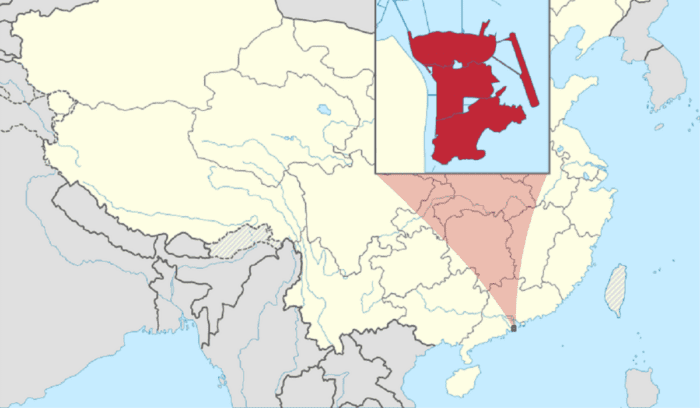
Long before Portuguese sailors anchored in the Pearl River Delta, long before any dynasty claimed jurisdiction over its rocky headlands, people were already living along what would become one of the world’s most storied coastlines. Archaeological finds on the Macau Peninsula and Coloane Island have pushed the record of human activity in the Macau region back approximately 4,000 years — a discovery that quietly rewrites the opening chapter of one of Asia’s most layered places.
What the evidence shows
- Macau early settlement: Archaeological evidence recovered from the Macau Peninsula and Coloane Island points to human cultural activity dating back roughly 3,500 to 4,000 years, placing human presence in the region well into the late Neolithic period.
- Pearl River Delta prehistory: The finds fit within a broader pattern of coastal habitation across the Pearl River Delta, where Neolithic and early Bronze Age communities exploited rich intertidal zones, fishing grounds, and maritime routes long before recorded history.
- Material culture: The archaeological record includes artifacts consistent with the Baiyue peoples — the diverse, non-Han groups who populated much of coastal southern China during this era — suggesting Macau’s earliest known inhabitants were part of a wide, interconnected regional world.
A coastline shaped by deep time
Southern China’s coast has been occupied and contested by waves of human communities for tens of thousands of years. By around 4,000 B.C.E., the Pearl River Delta region was home to Neolithic peoples who had developed sophisticated relationships with the sea — fishing, shellfish gathering, and likely inter-island trade.
Macau’s position at the mouth of the Pearl River made it strategically valuable long before anyone thought in those terms. A sheltered peninsula, fresh water sources, and proximity to productive fishing grounds would have made it attractive to any community capable of reaching it by water or land. The people who left traces here were not pioneers in isolation — they were part of a broader maritime world taking shape across coastal East and Southeast Asia.
The Baiyue peoples, a collective term used by later Chinese chroniclers for the diverse non-Han groups of southern China, are the most likely ancestors of Macau’s earliest known inhabitants. These communities were skilled seafarers and fishers who left archaeological signatures across the coasts of Guangdong, Fujian, and the islands of the South China Sea.
What came after
The human story of Macau did not proceed in a straight line from those early inhabitants to the famous Portuguese trading post of the 16th century C.E. Centuries passed. Dynasties rose and fell. The Qin dynasty brought the region under the administrative umbrella of Nanhai Prefecture around 221 B.C.E., and the Han dynasty marked the beginning of more sustained settlement documented in historical records.
By the 5th century C.E., merchant ships traveling between Southeast Asia and Guangzhou were already using the area as a waystation — a place to take on fresh water, food, and shelter from storms. In 1277 C.E., some 50,000 refugees fleeing the Mongol conquest of China poured into the coastal area, fundamentally reshaping its demographics. Fishermen from Guangdong and Fujian provinces followed, building the A-Ma Temple and establishing the community whose presence gave Macau its very name — derived, most likely, from “A-Ma Gau,” meaning the bay of A-Ma.
The Portuguese arrived in the mid-16th century C.E. and, by 1557 C.E., had established a permanent settlement at an annual rent paid to Chinese authorities. But the civilization they encountered was not a blank slate. It was the latest layer in a human habitation stretching back four millennia.
Lasting impact
The significance of Macau’s prehistoric occupation runs deeper than a single date. It places the region within a continuum of human coastal adaptation — the same broad impulse that drove communities across East and Southeast Asia to follow shorelines, read tides, and build lives at the edge of land and sea.
That deep history helps explain why Macau became what it did: a place where cultures could meet, trade, and coexist, however uneasily. The Historic Centre of Macau, now a UNESCO World Heritage Site, preserves the Portuguese-era architecture — but the human story encoded in the peninsula’s soil begins thousands of years earlier.
Understanding Macau’s prehistoric roots also matters for how the region understands itself today. The narrative of Macau as a product of Portuguese colonialism, however historically important, is incomplete without acknowledging the Indigenous and Chinese communities whose presence shaped the land long before any European flag was planted.
Archaeologists working in the Pearl River Delta continue to recover evidence that fills in the picture of late Neolithic and early Bronze Age life along China’s southern coast. Research at sites across Guangdong Province — particularly shell middens, stone tools, and ceramic fragments consistent with the regional Neolithic tradition — suggests that communities like those who first lived in Macau were part of a sophisticated, interconnected coastal civilization.
Blindspots and limits
The archaeological evidence from Macau remains limited in scope. The exact nature of the earliest human activity — whether it represents year-round settlement, seasonal occupation, or periodic use by fishing communities — has not been definitively established. Rapid urban development across the peninsula over the past century has also compromised many sites, meaning the full prehistoric record of Macau may never be recoverable.
Read more
For more on this story, see: Wikipedia — History of Macau
For more from Good News for Humankind, see:
- Ghana creates a new marine protected area at Cape Three Points
- Indigenous land rights: 160 million hectares secured ahead of COP30
- The Good News for Humankind archive on prehistory
About this article
- 🤖 This article is AI-generated, based on a framework created by Peter Schulte.
- 🌍 It aims to be inspirational but clear-eyed, accurate, and evidence-based, and grounded in care for the Earth, peace and belonging for all, and human evolution.
- 💬 Leave your notes and suggestions in the comments below — I will do my best to review and implement where appropriate.
- ✉️ One verified piece of good news, one insight from Antihero Project, every weekday morning. Subscribe free.