Long before European ships appeared on the horizon of the westernmost point of mainland Africa, a community called the Lebou had already made the Cap-Vert peninsula their home. Sometime in the 1400s C.E. — and possibly earlier — these skilled aquacultural people built the villages that still exist as neighborhoods in one of West Africa’s great cities today.
What the evidence shows
- Lebou settlement: The Cap-Vert peninsula was settled no later than the 15th century C.E. by the Lebou, an aquacultural subgroup of the Wolof ethnic group with deep ties to fishing and the sea.
- Original villages: Four founding communities — Ouakam, Ngor, Yoff, and Hann — were established on the peninsula and survive today as distinctively Lebou neighborhoods within modern Dakar.
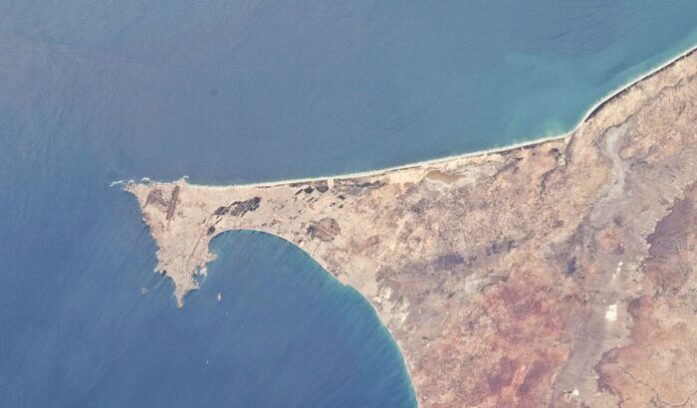
- Cap-Vert peninsula geography: The settlements occupied the westernmost point of mainland Africa, a strategically significant position that would shape the region’s history for centuries to come.
A people rooted in the sea
The Lebou were not wanderers passing through. They were a community shaped by the Atlantic — fishers, farmers of the water, people who understood the rhythms of the coast with generations of accumulated knowledge.
The Cap-Vert peninsula offered a remarkable environment: a rocky headland jutting into the Atlantic, rich fishing grounds, fresh water from coastal rivulets, and defensible terrain. These were not incidental advantages. They were the foundations of a settlement that would outlast empires.
The Lebou belonged to the broader Wolof cultural world, one of the most significant civilizations in West African history, with its own sophisticated political structures, trade networks, and oral traditions. The Lebou’s aquacultural specialization set them apart within that world — a community whose identity was inseparable from the sea.
When the Portuguese arrived at the Bay of Dakar in 1444 C.E., they did not find an empty shore. They found people already there, already organized, already at home. Dakar’s documented history begins with European contact, but the Lebou story begins earlier and runs deeper.
Villages that became a capital
The four original Lebou villages — Ouakam, Ngor, Yoff, and Hann — were not temporary camps. They were permanent communities with social structures, spiritual practices, and economic relationships that persisted through centuries of external pressure.
By the 1780s C.E., the settlement at Ndakaaru (the Wolof name that would eventually become “Dakar” in French) had grown into one of the largest towns in the Kingdom of Cayor. The Lebou were trading with European vessels, supplying food and fresh water to ships crossing between Africa, Europe, and the Americas.
In the late 18th century, the Lebou made a move that revealed the depth of their political organization. When the marabouts of Cayor rose against the ruling Damel, the Lebou joined the uprising. After initial defeats, they retreated to the Cap-Vert peninsula, built defensive walls of laterite stone stretching across the entire landmass, and successfully repelled the Damel’s army. African studies scholars recognize this moment as the founding of what the French would later call the “Lebou Republic” — an independent, theocratic state with its capital at Ndakaaru.
The Serigne of Ndakaaru, the traditional political authority of the Lebou, is still recognized by the Senegalese state today. A community that put down roots in the 1400s C.E. maintained a form of political continuity across more than six centuries.
Lasting impact
The Lebou settlement of Cap-Vert set in motion a chain of consequences that shaped an entire region. The peninsula’s location made it a natural waypoint for Portuguese India Armadas in the early 16th century C.E. — massive fleets stopped there to resupply on voyages between Europe and Asia. It was during one such stop, in 1501 C.E., that Florentine navigator Amerigo Vespucci reportedly began developing his hypothesis about the Americas.
The city that grew from those original Lebou villages became the capital of French West Africa in 1902 C.E., a hub of colonial commerce, culture, and eventually resistance. It became the capital of independent Senegal in 1960 C.E.
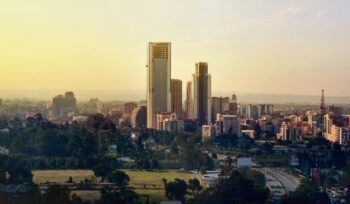
Dakar today is a city of more than four million people in its metropolitan area, a cultural and economic center for the entire region. Gorée Island, just off the coast — the site of the Atlantic slave trade’s most notorious holding facility — is now a UNESCO World Heritage Site, a place of memory visited by people from around the world.
The Layene Sufi order, established among the Lebou community in the 19th century C.E., still thrives in Yoff and the surrounding area. And the four original villages — Ouakam, Ngor, Yoff, Hann — remain on the map, carrying names that connect modern Dakar to its pre-colonial origins.
Blindspots and limits
The historical record of early Lebou settlement is thin on specifics. The date of “no later than the 15th century C.E.” comes largely from the timing of Portuguese contact, not from independent documentation of Lebou history — a reminder of how colonial arrival often marks the beginning of the written record, even when a community’s presence long predates it. The centuries of Lebou life before 1444 C.E. remain largely recoverable only through oral tradition, archaeology, and inference from later sources, and much of that story has yet to be fully told.
The peninsula’s later history also carried enormous costs. The island of Gorée, just offshore from the original Lebou settlements, became one of the most significant nodes of the Atlantic slave trade — a history that cannot be separated from the story of this place, even in an account focused on what the Lebou built.
Read more
For more on this story, see: Wikipedia — Dakar
For more from Good News for Humankind, see:
- Ghana establishes a new marine protected area at Cape Three Points
- Indigenous land rights: 160 million hectares recognized ahead of COP30
- The Good News for Humankind archive on Senegal
About this article
- 🤖 This article is AI-generated, based on a framework created by Peter Schulte.
- 🌍 It aims to be inspirational but clear-eyed, accurate, and evidence-based, and grounded in care for the Earth, peace and belonging for all, and human evolution.
- 💬 Leave your notes and suggestions in the comments below — I will do my best to review and implement where appropriate.
- ✉️ One verified piece of good news, one insight from Antihero Project, every weekday morning. Subscribe free.