
Around 14,000 years ago, something quiet and enormous was unfolding along the Atlantic coast of what is now West Africa. Hunter-gatherer communities — carrying tools, knowledge, and oral traditions built over tens of thousands of years — were spreading through a landscape being reshaped by rain. The West African forest was growing. The coast was opening up. And people were moving with it.
What the evidence shows
- Late Stone Age peoples: By approximately 12,000 B.C.E., hunter-gatherer communities had established themselves throughout coastal West Africa, according to the population history of the region — representing a significant southward and coastal extension of human presence.
- West African forest expansion: An increase in humid conditions, driven by shifts in the West African Monsoon beginning around 15,000 B.P., caused forests to expand along the Atlantic coast, creating new habitable corridors that drew human settlement southward and westward.
- Northward migration: Between 12,000 B.P. and 8,000 B.P., these same populations migrated northward as far as present-day Mali, Burkina Faso, and Mauritania — a movement enabled by the Green Sahara period, when greater rainfall transformed the Sahara into a mosaic of lakes, wetlands, and grassland.
A world already full of people
West Africa was not empty before 12,000 B.C.E. Archaic humans using Acheulean tools had lived across the region for somewhere between 780,000 and 126,000 years. Middle Stone Age peoples — including the Iwo Eleru — had occupied West Africa across multiple climate periods before that. What 12,000 B.C.E. marks is not a first arrival but a pivotal reshaping: a particular wave of Late Stone Age peoples moving through a changing coastal environment, adapting to forests that were themselves on the move.
This distinction matters. The story of human migration is rarely about empty land being filled. It is more often about people already present, moving differently — responding to floods, drought, forest growth, or the opening of new river systems. The coastal spread of 12,000 B.C.E. fits that pattern precisely.
The Green Sahara opens a continent
To understand why this moment was possible, you have to understand what was happening to the Sahara. Around 15,000 B.P., the West African Monsoon intensified. Rain began falling across North Africa on a scale that is almost unimaginable today. Lakes formed in the desert. Wetlands spread across land that is now bare rock and sand. Grasslands stretched from the Atlantic to the Nile.
This was the African Humid Period, sometimes called the Green Sahara. For the people moving north from the coastal zone between 12,000 and 8,000 B.P., it was an open door. The Sahara was not a barrier — it was a migration corridor, studded with water sources and game. Communities pushed as far north as Mauritania, leaving traces that archaeologists are still piecing together today.
The forest expansion in the south and the green Sahara in the north were two faces of the same climatic event: a brief window in deep time when West Africa’s geography was genuinely more hospitable than it is now, and when human communities took full advantage of it.
Knowledge systems that moved with the people
What these communities carried with them was not just their bodies. Late Stone Age peoples brought with them refined tool technologies, ecological knowledge about forest and coastal environments, and — almost certainly — rich oral traditions, spiritual practices, and social structures that we can only infer from the archaeological record. The material culture they left behind is sparse, but it is enough to show deliberate, sustained movement by groups that understood their environment well.
West African hunter-gatherers were not a single homogeneous group. The population history of the region shows considerable mobility and interaction between communities. Groups dwelling in western Central Africa — near what is now Shum Laka in Cameroon — were already present there before 32,000 B.P. The coastal West African populations of 12,000 B.C.E. represent a distinct but related chapter in a much longer story of human presence across the continent.
Some descendants of these hunter-gatherer lineages persisted in West Africa until as recently as 1,000 B.P., and possibly even later in isolated pockets. Their genetic and cultural legacy threads through the ancestry of modern West Africans in ways that researchers are still tracing using ancient DNA analysis.
Lasting impact
The coastal spread of Late Stone Age peoples through West Africa around 12,000 B.C.E. set the stage for everything that followed. The population corridors opened during this period helped establish the human geography that would, thousands of years later, give rise to sedentary farming communities, the Iron Age in West Africa, and eventually the great Sahelian kingdoms — Ghana, Mali, Songhai — that would control trans-Saharan trade routes and build some of the largest political structures in the premodern world.
The ecological knowledge accumulated by these hunter-gatherer communities across tens of thousands of years in coastal and forest environments did not simply disappear when farming arrived. It was absorbed, adapted, and transmitted. Plant knowledge, water-finding skills, seasonal movement patterns — these were foundations on which later agricultural societies built.
West Africa today is home to more than 400 million people, making it one of the most densely populated regions on Earth. The roots of that human richness reach back, in part, to this quiet coastal expansion that began when the rains returned and the forest grew.
Blindspots and limits
The archaeological record for this period in West Africa is significantly thinner than for other regions — partly because tropical forest environments are hard on organic materials, and partly because the region has historically received less archaeological investment than Europe or East Africa. Dates for specific sites and migration events carry real uncertainty, and the picture presented here reflects current best estimates, not settled fact. The transition from Middle Stone Age to Late Stone Age peoples in West Africa was also not a clean replacement — it was a long, complex, and probably locally variable process that the available evidence cannot yet fully resolve.
Read more
For more on this story, see: History of West Africa — Wikipedia
For more from Good News for Humankind, see:
- Ghana establishes a new marine protected area at Cape Three Points
- Indigenous land rights: 160 million hectares recognized ahead of COP30
- The Good News for Humankind archive on prehistory
About this article
- 🤖 This article is AI-generated, based on a framework created by Peter Schulte.
- 🌍 It aims to be inspirational but clear-eyed, accurate, and evidence-based, and grounded in care for the Earth, peace and belonging for all, and human evolution.
- 💬 Leave your notes and suggestions in the comments below — I will do my best to review and implement where appropriate.
- ✉️ One verified piece of good news, one insight from Antihero Project, every weekday morning. Subscribe free.
More Good News
-

Renewables hit 49% of global power capacity for the first time
Renewable energy capacity crossed a landmark threshold in 2025, with global installed power surpassing 5,100 gigawatts and representing 49% of all capacity worldwide for the first time in history. The International Renewable Energy Agency reported a single-year addition of 692 gigawatts, led overwhelmingly by solar power, which alone accounted for 75% of new renewable installations. Clean energy now represents 85.6% of all new power capacity added globally, signaling that the transition has moved from aspiration to economic reality. The milestone carries implications beyond climate — nations with strong renewable bases demonstrated measurably greater energy security amid ongoing geopolitical instability.
-

Global suicide rate has dropped nearly 40% since the 1990s
Global suicide rates have dropped nearly 40% since the early 1990s, falling from roughly 15 deaths per 100,000 people to around nine — one of modern public health’s most significant and underreported victories. This decline was driven by expanded mental health services, crisis intervention programs, and proven strategies like restricting access to lethal means. The progress spans dozens of countries, with especially sharp declines in East Asia and Europe. Critically, this trend demonstrates that suicide is preventable at a population level — making the case for sustained investment in mental health infrastructure worldwide.
-
Rhinos return to Uganda’s wild after 43 years of absence
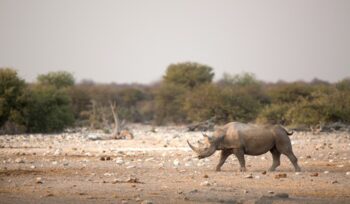
Uganda rhino reintroduction marks a historic milestone: wild rhinoceroses are roaming Ugandan soil for the first time in over 40 years. In 2026, rhinos bred at Ziwa Rhino Sanctuary were released into Kidepo Valley National Park, ending an absence caused entirely by poaching and political collapse during the Idi Amin era. The release represents decades of careful breeding, conservation funding, and community engagement. For local communities, conservationists, and a watching world, it proves that deliberate, sustained human effort can reverse even the most painful wildlife losses.
