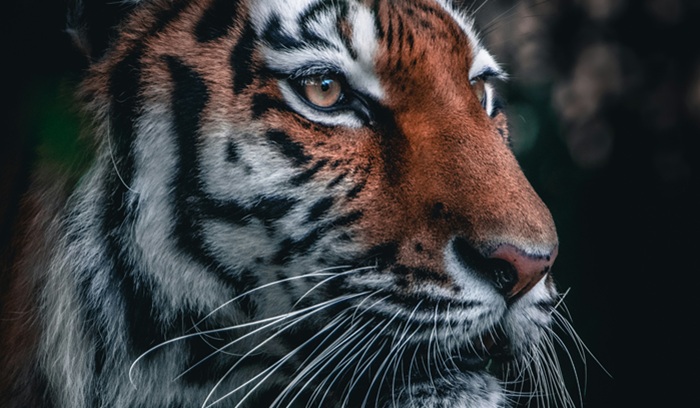
For the first time in 70 years, wild tigers are roaming along the shores of Lake Balkhash in Kazakhstan — and the forest that will sustain them was planted by human hands. Conservationists have restored tens of thousands of native trees along the Ili River delta, rebuilding a habitat that was once hunted and cleared into silence. The project represents one of the most ambitious ecological repair missions in the world, combining reforestation, prey recovery, and international cooperation to bring back a species that was declared regionally extinct in the 1950s.
- Conservationists planted 37,000 native seedlings along the Ili River delta in a single year to rebuild the tugay forest ecosystem.
- A breeding pair of tigers named Bodhana and Kuma arrived from the Stichting Leeuw sanctuary in the Netherlands as the project’s founding animals.
- Kazakhstan’s government has set a target of 50 self-sustaining wild tigers in the Ile-Balkhash Nature Reserve by 2035.
Kazakhstan’s tiger reintroduction begins with restoring the forest
The Caspian tiger once ranged across a vast arc of Central Asia, from Turkey to western China. Intensive hunting and the systematic destruction of riverside woodlands drove the species to extinction by the 1950s, leaving the region’s ecosystems fundamentally out of balance. Scientists identified the Ile-Balkhash Nature Reserve as the best candidate for what would become the first international tiger reintroduction project of its kind.
Before a single cat could be released, teams spent years replanting the tugay forests — dense, riparian woodlands that grow along riverbanks in arid terrain. These forests provide the deep cover tigers need to stalk prey and the shade that allows them to survive the punishing Central Asian summer. Researchers from the World Wildlife Fund tracked the recovery of native vegetation closely, and as the trees grew, water levels in the delta began to stabilize.
That stabilization was not a side effect — it was the plan. A functioning tugay forest regulates soil moisture, reduces erosion, and creates the microclimate conditions that smaller animals require to thrive. By restoring the bottom of the ecosystem first, project leaders ensured the forest could actually support a top predator before one arrived.
Tiger reintroduction required rebuilding the entire food web
A tiger cannot survive in a forest without food. Before Bodhana and Kuma arrived, conservationists spent five years releasing hundreds of Bukhara deer into the reserve to rebuild the natural prey base. The IUCN Red List classifies Bukhara deer as a vulnerable species, which means their recovery inside the reserve is itself a meaningful conservation milestone.
Scientists deployed a network of camera traps across the reserve to track deer and wild boar populations, ensuring the prey base was large enough to support resident tigers without pushing the cats toward human settlements. This sequenced approach — trees first, then prey, then predators — reflects a careful, evidence-based method that other reintroduction programs rarely execute so completely. Four additional tigers from Russia are expected to join the reserve this year, expanding the founding population.
Amur tigers, native to Russia’s Far East, are serving as proxies for the extinct Caspian tiger, whose genetic legacy they carry more closely than any other living subspecies. Scientists acknowledge that adaptation to Kazakhstan’s climate is not guaranteed, and the project team continues to collect behavioral and ecological data to guide decisions as the population grows.
Local communities are gaining jobs, cleaner water, and healthier land
The ecological benefits of this project reach well beyond the reserve’s borders. Reforestation along the Ili River delta has reduced soil erosion, improved groundwater quality, and stabilized the water levels that local farmers rely on for agriculture and livestock. A healthier ecosystem means fewer pest pressures and more productive grazing land — tangible gains for families who have lived near the reserve for generations.
The project has also created a direct economic dividend. Local residents are being hired as forest rangers, wildlife technicians, and guides for a growing number of ecotourism visitors. What was once a neglected and degraded stretch of steppe is now a nationally significant protected area, giving communities a source of pride and a long-term economic stake in the reserve’s success.
International partners, including the United Nations Development Programme, have helped fund conservation strategies and water management policies designed to protect the delta from upstream agricultural pressure and shifting rainfall patterns. The government has also expanded the size of the protected area to give the ecosystem more room to function and recover.
A measured look at what comes next
Experts are cautiously optimistic, but they are careful not to overstate the project’s current success. Reintroducing a top predator after 70 years of absence is a high-stakes undertaking with no guaranteed outcome. The Ili River’s water supply remains a key vulnerability: if upstream agricultural demand or climate-driven drought reduces river flow significantly, the newly planted forests could dry back, eliminating the habitat the tigers depend on.
Project managers are responding to these risks with ongoing monitoring, adaptive management, and strict water allocation policies. The fact that Bodhana and Kuma have already begun mating suggests the environment is meeting the tigers’ basic needs — a promising early sign, though far from the finish line. The ultimate measure of success will come in the 2030s, when scientists assess whether a wild-born generation of Kazakh tigers can sustain itself without continued human support.
The conservation community is watching closely. This project stands as one of the few efforts anywhere in the world that has attempted to restore a complete ecosystem — soil, water, vegetation, prey, and predator — from the ground up. If Kazakhstan reaches its 2035 goal, it will offer a replicable model for ecological recovery on every continent.
More stories of ecosystems coming back to life
Kazakhstan’s forest-first approach to predator recovery echoes a broader global shift toward active ecological repair — and Good News for Humankind has been tracking this movement closely. Uganda’s reintroduction of rhinos to Kidepo Valley reflects the same logic: rebuild the habitat, then restore the species that shaped it. On a different continent and ecosystem, Ghana’s new marine protected area at Cape Three Points shows how formal protection of a recovering habitat can anchor entire communities to conservation outcomes.
These stories — a Kazakh steppe filling with tiger tracks, an East African savanna welcoming its first rhinos in decades, a West African coastline drawing a boundary around its future — are all chapters in the same unfolding story. You can read more of them in the Good News for Humankind archive, subscribe to the daily newsletter to receive them as they break, or explore the broader questions driving restoration journalism at the Antihero Project.
Sourcing
This story was generated by AI based on a template created by Peter Schulte. It was originally reported by Live Science.
More Good News
-

Washington state enacts millionaires’ tax to fund schools and families
Washington state enacted a new tax on individual income exceeding million on March 30, 2026, ending nearly a century without a personal income tax. The law funds free school meals for every K-12 student, expands the Working Families Tax Credit to 460,000 additional households, and cuts costs on childcare and essential goods. Less than half of 1% of residents owe the tax, but the benefits reach millions across the state.
-

Detroit RxKids distributes .4 million to mothers in its first month
Detroit’s RxKids program distributed .4 million in direct, unconditional cash to mothers in its first full month of operation, city officials announced in March 2026. The program gives low-income pregnant women and new mothers 00 per month during pregnancy and 00 per month for their baby’s first year of life — up to 2,000 per family. Supporters say it directly counters child poverty during one of the highest-impact windows for intervention.
-
Telangana orders 915 electric buses in major clean transit push
The Indian state of Telangana has ordered 915 electric buses, one of the largest clean transit procurements in India’s history. The move is part of a national push to electrify public transportation, reduce urban air pollution, and cut greenhouse gas emissions. Backed by India’s FAME subsidy scheme and a growing domestic manufacturing sector, the order signals that India’s electric bus transition has moved well beyond pilot programs into large-scale deployment across major cities.