
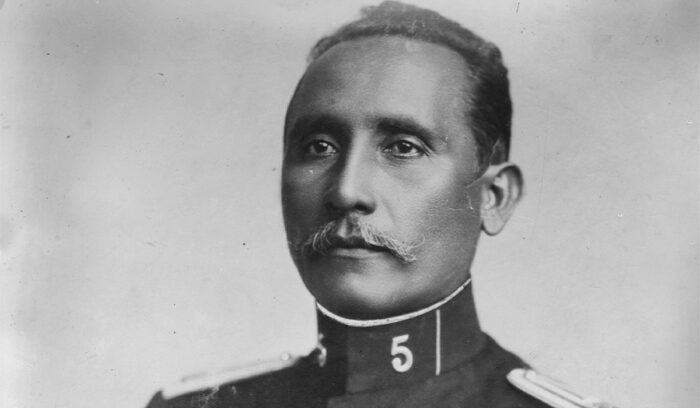
In the middle of a campaign to extend telegraph lines deep into the Amazon, a Brazilian army officer named Cândido Rondon encountered something that would redefine his life’s purpose: dozens of Indigenous nations living under no legal protection whatsoever, exposed to violent displacement, forced labor, and outright extermination. The institution he helped bring into being in 1910 C.E. would become the first formal attempt by any government in the Americas to protect Indigenous peoples not by assimilating them, but by recognizing their right to exist on their own terms.
What the record shows
- Indigenous protection Brazil: On June 20, 1910 C.E., the Brazilian government formally established the Serviço de Proteção aos Índios (SPI) by Decree No. 8,072, creating the world’s first federal body specifically tasked with protecting Indigenous peoples from settler violence and forced removal.
- Rondon’s guiding principle: Cândido Rondon, who was himself of Indigenous and mixed descent, led the SPI with a foundational philosophy often summarized as “Die if you must, but never kill” — ordering agents to approach uncontacted peoples without weapons and absorb attacks rather than retaliate.
- Scale of need: By 1910 C.E., Brazil’s Indigenous population had already declined catastrophically from an estimated 2–3 million at European contact to a fraction of that number, across what remained of more than 2,000 distinct nations — a collapse driven by disease, enslavement, and systematic violence across four centuries of colonization.
The world Rondon entered
When Portuguese ships arrived on Brazil’s coast in 1500 C.E., they encountered one of the most linguistically and culturally diverse regions on Earth. The Tupi peoples occupied nearly the entire Brazilian coastline. The interior held hundreds of Jê-speaking and other nations. Communities like the Marajoara on Marajó island had built sophisticated societies with complex pottery, earthworks, and populations in the tens of thousands.
Four centuries of colonization dismantled most of this. Disease alone — smallpox, measles, influenza — killed millions who had no prior exposure. What disease left, forced labor, land seizure, and outright massacres continued. By the time Rondon was leading telegraph expeditions into the Amazon interior in the early 1900s C.E., entire peoples were being killed or displaced to make room for rubber tappers, ranchers, and settlers.
Rondon, born in 1865 C.E. in Mato Grosso to a family that included Indigenous Bororo ancestry, understood this violence as both a moral failure and a national one. He believed Brazil could not call itself a modern republic while tolerating the extermination of peoples who had built their civilizations in the same territory for millennia. He brought that conviction to government.
What the SPI actually did
The SPI was tasked with a genuinely novel mission: protect Indigenous peoples without requiring them to give up their languages, practices, or territories. Agents were to make peaceful contact with uncontacted communities, establish protected areas, and stand between settlers and Indigenous villages.
In practice, the results were uneven — but the principle was new. Rondon’s approach to first contact became internationally recognized. The idea that the state had a protective obligation toward Indigenous peoples, rather than simply a mandate to convert or absorb them, was a significant departure from the colonial-era legal frameworks that had governed the Americas for four centuries. The SPI also conducted ethnographic documentation, preserving records of languages and customs that would otherwise have been lost entirely.
The agency established a network of posts across the Brazilian interior. At its best, these posts provided a physical barrier between Indigenous communities and encroachment. At its worst — and history requires saying this clearly — some posts became sites of corruption, exploitation, and abuse. Rondon himself was not immune to the paternalism of his era, and the SPI’s framework, however protective in intent, still treated Indigenous peoples as wards of the state rather than fully sovereign nations.
Lasting impact
The SPI ran until 1967 C.E., when a government inquiry found evidence of widespread abuses by its own agents and it was replaced by FUNAI — the Fundação Nacional do Índio — which continues to operate today. But the institutional logic Rondon helped establish — that the Brazilian state bears a legal responsibility for Indigenous peoples’ survival and territorial integrity — became embedded in Brazilian law.
That logic reached its fullest expression in Brazil’s 1988 C.E. Constitution, which formally recognized Indigenous land rights and the right of peoples to maintain their own social organizations, customs, and languages. Brazil today has the largest number of documented uncontacted peoples of any country in the world — around 67 as of 2007 C.E. data — and FUNAI’s existence is the institutional reason any of them have legal protection at all.
Internationally, Rondon’s methods influenced the development of international norms around Indigenous rights, including principles that would eventually inform the United Nations Declaration on the Rights of Indigenous Peoples, adopted in 2007 C.E. The idea that contact with uncontacted peoples must be conducted with their consent and safety as the primary concern traces a direct line back to Rondon’s 1910 C.E. protocols.
Rondon himself became Brazil’s most decorated soldier and, in 1956 C.E., was nominated for the Nobel Peace Prize — one of the few military figures ever nominated primarily for protecting civilians rather than defeating enemies.
Blindspots and limits
The SPI was not a story of uncomplicated progress. The agency operated within an assimilationist state framework that saw Indigenous peoples as populations to be gradually integrated into Brazilian national life rather than as independent nations with inherent sovereignty. Rondon’s personal ethics often exceeded his institution’s actual conduct: a 1967 C.E. government investigation found SPI agents had committed murders, sold Indigenous children into labor, and stolen land the agency was supposed to protect.
The deeper structural problem — that Indigenous land rights existed at the mercy of federal policy rather than as an enforceable legal entitlement — would not be even partially addressed until the 1988 C.E. Constitution, and remains contested in Brazilian courts and politics today. The SPI’s founding was a beginning, not a resolution. Recognizing that is part of understanding why it mattered.
Brazil’s Indigenous population, which had fallen to around 300,000 by the late 20th century C.E., had recovered to nearly 1.7 million by the 2022 IBGE census, representing 391 distinct ethnic groups. That recovery is fragile, ongoing, and inseparable from the legal and institutional frameworks that trace their origins to 1910 C.E.
Read more
For more on this story, see: Indigenous peoples in Brazil — Wikipedia
For more from Good News for Humankind, see:
- Brazil strikes intruders of Amazon’s most deforested Indigenous land
- Ecuador formally establishes Yasuní National Park, protecting Earth’s most biodiverse patch of Amazon
- The Good News for Humankind archive on Brazil
About this article
- 🤖 This article is AI-generated, based on a framework created by Peter Schulte.
- 🌍 It aims to be inspirational but clear-eyed, accurate, and evidence-based, and grounded in care for the Earth, peace and belonging for all, and human evolution.
- 💬 Leave your notes and suggestions in the comments below — I will do my best to review and implement where appropriate.
- ✉️ One verified piece of good news, one insight from Antihero Project, every weekday morning. Subscribe free.


