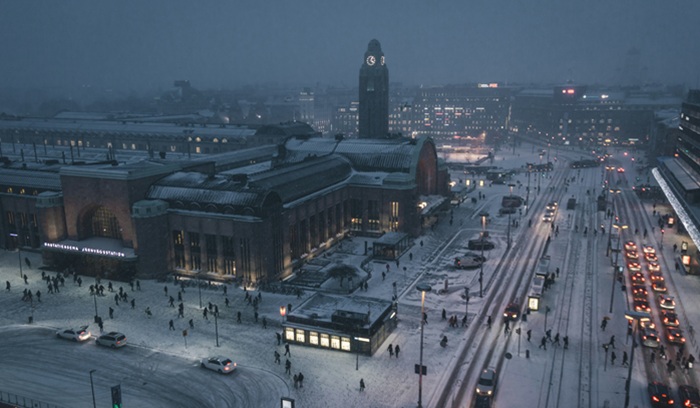
At a glance
- Vision Zero: Helsinki’s road safety strategy is built on the Swedish-born Vision Zero philosophy, which holds that the road system — not individual drivers — bears primary responsibility for preventing deaths.
- Speed limits: More than half of Helsinki’s roads now carry a 30 km/h speed limit, roughly 18–19 mph, a change that dramatically reduces both the frequency and severity of crashes.
- Last fatality: Helsinki’s last recorded traffic death occurred in July 2024, setting the clock on what became a historic year-long stretch of zero fatalities in a city of nearly 700,000 people.
How Helsinki got here
The city did not arrive at zero through a single policy or a lucky year. It got there through roughly three decades of layered investment in infrastructure, enforcement, and planning philosophy. Helsinki began shifting its approach to road design in earnest after Sweden introduced Vision Zero in the late 1990s. The strategy spread across the Nordic region and eventually became the spine of Finland’s national traffic safety framework. Helsinki implemented it city by city, street by street. Speed reduction came first and mattered most. Research consistently shows that a pedestrian struck at 30 km/h has a survival rate far higher than one struck at 50 km/h. Helsinki acted on that evidence and redesigned hundreds of kilometers of roads accordingly. Raised crosswalks, narrowed traffic lanes, better lighting, and expanded cycling infrastructure followed. Traffic cameras at fixed locations — particularly in higher-speed corridors — improved driver compliance without requiring constant police presence. The cameras changed behavior over time, not just on the day of installation.The role of public transit and urban design
One often-overlooked factor in Helsinki’s success is how few of its residents actually need to drive. The city operates one of the most comprehensive public transit networks in northern Europe, combining metro, tram, bus, and regional rail into a single integrated system. High rates of walking and cycling reduce the number of vehicles on the road at any given moment. Fewer cars moving at lower speeds means fewer collisions — and when collisions do occur, they are less likely to be fatal. This is not accidental. City planners have spent decades designing neighborhoods where walking and transit are the path of least resistance. The European Transport Safety Council has cited Helsinki’s approach as a model, noting that proactive system design outperforms reactive enforcement every time.Data, investigation, and the culture of safety
Every fatal road accident in Finland triggers a formal investigation. A dedicated team examines the circumstances, identifies contributing factors, and produces recommendations. Those recommendations feed back into infrastructure planning and policy. This process means that each death — however rare — generates actionable information. The system learns. Helsinki also gathers continuous data on driver speeds, crash locations, and near-misses, using that information to target upgrades where they matter most. That culture of analysis sits alongside a broader civic expectation: that road deaths are not normal. They are not written off as the unavoidable cost of a mobile society. Deutsche Welle and ZME Science both reported on the milestone, noting that Helsinki’s approach has shifted the baseline of what cities believe is achievable.What other cities can take from this
Helsinki is not uniquely positioned to succeed. It is a mid-sized northern European city with cold winters, a mix of urban density and suburban sprawl, and the same competing pressures — freight, commuters, cyclists — that other cities face. Oslo reached zero pedestrian and cyclist fatalities in 2019. Stockholm has posted some of the lowest road death rates in the world for years. The pattern across these cities is consistent: speed reduction, infrastructure redesign, public transit investment, and systematic crash investigation, applied together over time. Ghana’s marine protected area milestone and the 160-million-hectare Indigenous land rights push at COP30 reflect a similar logic — that long-term outcomes depend on policy frameworks built around protection, not just reaction. The question other cities face is not whether this is possible. Helsinki has answered that. The question is whether political will and sustained investment can be maintained across the years it takes to see results. One honest complication: Helsinki’s success depends partly on conditions that not every city shares — relatively high public transit ridership, strong institutional capacity, and a cultural consensus around collective safety. Cities with less of those starting conditions will face steeper climbs. That does not make the model less relevant. It makes adaptation more important than direct replication. The World Health Organization estimates that 1.19 million people die in road crashes globally each year, making traffic violence one of the leading causes of death for people aged 5 to 29. Helsinki has shown that at least part of that toll is optional. A city of 694,000 people chose to treat traffic deaths as a solvable problem. Then it spent decades solving it. That is the finding worth carrying forward. See also how the Good News for Humankind archive on urban safety and sustainability tracks similar progress around the world.Read more
For more from Good News for Humankind, see:
- Ghana’s marine protected area at Cape Three Points
- Indigenous land rights and 160 million hectares at COP30
- The Good News for Humankind archive on urban progress and sustainability
About this article
- 🤖 This article is AI-generated, based on a framework created by Peter Schulte.
- 🌍 It aims to be inspirational but clear-eyed, accurate, and evidence-based, and grounded in care for the Earth, peace and belonging for all, and human evolution.
- 💬 Leave your notes and suggestions in the comments — I will do my best to review and implement where appropriate and possible.
- 📬 One verified piece of good news, one insight from Antihero Project, every weekday morning. Subscribe free.
More Good News
-

Canada commits .8 billion to protect 30% of its lands and waters by 2030
Canada has announced a .8 billion investment to protect 30% of its lands and waters by 2030, one of the largest conservation commitments in the country’s history. Prime Minister Mark Carney unveiled the funding to meet international biodiversity targets, with Indigenous communities playing a central role in stewarding conserved lands. The announcement positions Canada as a global leader in nature protection at a moment when biodiversity loss is accelerating worldwide.
-

132 nations add 40 migratory species to UN protection list in historic summit
One hundred thirty-two nations extended international legal protection to 40 new migratory species at the UN Convention on the Conservation of Migratory Species COP15 summit in Campo Grande, Brazil, on March 29, 2026. The newly protected animals include the snowy owl, giant otter, striped hyena, and great hammerhead shark. A new UN report released at the summit found that 49% of populations already covered by the treaty are in decline, raising the stakes for implementation between now and the next conference in 2029.
-

For the first time, human-caused extinction rate falls below 0.001%
In this speculative 2090 C.E. vision, scientists confirm the human-caused extinction rate has fallen below 0.001% per year — a 100-fold reduction from its worst peak, driven by rewilding, Indigenous stewardship, and the global clean energy transition.